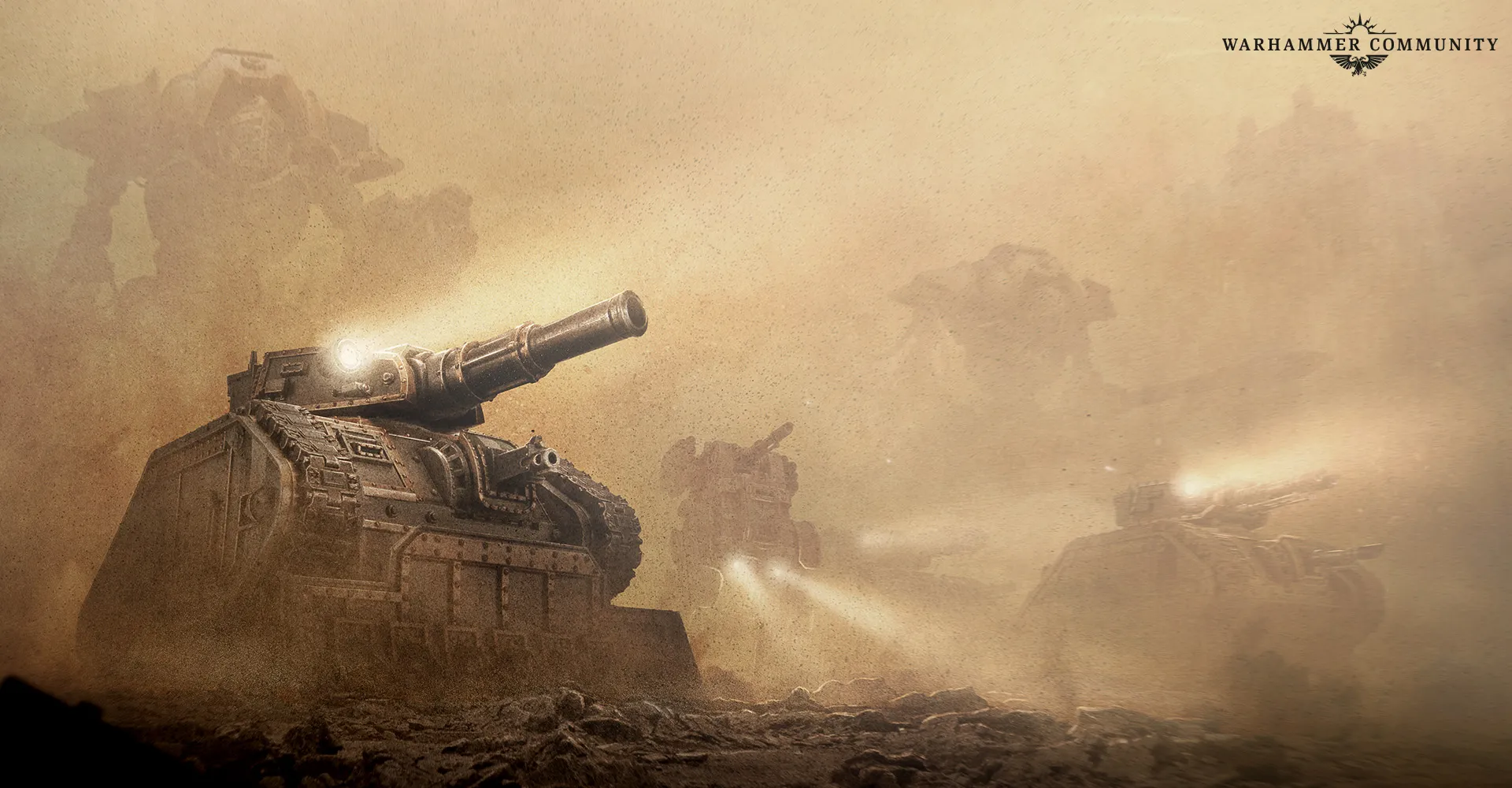
The Baneblade is a prized Imperial war machine whose manufacture depends on closely guarded technical knowledge. Imperial Armour explores its scarcity through restricted designs, specialised forge worlds and the history of the Macharius heavy tank.
For collectors, availability has a more immediate meaning: stock at a regional seller, the manufacturer’s range announcements and rules support for the intended game. Each has a useful source to check.
Checking availability and support
Start with the exact product and region. Variant names and box configurations matter when matching the tank you want to the listing a seller offers.
| Question | Where to check |
|---|---|
| Availability to order | The relevant regional seller’s current listing or direct confirmation |
| A permanent range change | A dated manufacturer announcement identifying the product |
| Rules for the intended game | The army rules and updates for that edition |
A store listing records availability at that seller and time. A permanent discontinuation requires an explicit range announcement; the material discussed here leaves that question open. For a purchase, confirm the listing directly with the seller. For a game, use the appropriate unit entry and updates.
Why Imperial Armour makes Baneblades scarce
The Baneblade entry in Imperial Armour Volume One, Second Edition: Imperial Guard describes an old Standard Template Construct design whose specialised systems and restricted construction data limit production to a select group of forge worlds. Mars holds a central place in that manufacturing system.
The entry contrasts accounts of entire historical divisions with an army fortunate enough to receive three tanks, and more commonly a single vehicle. Demand comes from battlefield power and the morale effect of having such a machine supporting the troops.
Scarcity follows from that gap between military demand and access to the complete design. The tanks remain valuable to the armies seeking them, while specialised production controls how many arrive.
Complete designs and second-generation tanks
The same entry describes tanks built using incomplete versions of the data available to Mars and its favoured forge worlds. Their silhouettes can resemble the complete design while their internal systems differ substantially.
In this account, the complete design’s main gun fires rocket-propelled ammunition. Second-generation examples use ordinary battle-cannon ammunition. Other differences include the hull weapon and its mounting, internal armour bracing, engine and transmission performance, communications and tactical logis systems.
White Dwarf #334’s True Baneblades, published in October 2007, offers a comparable explanation. It uses counterfeit as an in-universe classification for incomplete designs. The term describes the fictional machine’s technical lineage.
These accounts make the tank’s provenance part of its character. The outward shape is only one part of a design whose most valuable details include its machinery, ammunition and internal systems.
Lucius and the Macharius
The Macharius Heavy Tank entry in the same Imperial Armour volume follows Magos Nalax as he reconstructs missing plans from archival fragments and related vehicle data. A lengthy approval process on Mars eventually gives Lucius permission to manufacture the design.
The entry also says Lucius gained permission to build STC Baneblades. Demand later exceeded its capacity, and the need to equip Krieg’s regiments helped create a role for Macharius production.
Lucius therefore produces both the sanctioned Baneblade and an alternative heavy tank. Access to designs, official approval and industrial capacity all shape what the forge world can supply.
For the Astra Militarum, an available substitute can fill a need that the preferred machine’s limited output leaves unmet. The Macharius story gives that logistical pressure a history of its own: reconstruction, petition, approval and production.
A tank with its own paper trail
The Baneblade entry adds a personal detail to this industrial picture. Machines constructed from the complete STC design are registered, named and numbered. Their locations, campaigns and crew histories are reported to the originating forge world, and access to those records is controlled.
Each tank is both a military asset and a documented individual machine. Its history travels through the institutions that built it, giving a single vehicle a place in campaigns, crew traditions and forge-world records.
That is the distinctive scarcity explored by Imperial Armour: armies need the tank’s power, forge worlds guard the knowledge that makes it possible, and every sanctioned machine carries an identity of its own.