
Three hundred and seventeen weapons turrets around the perimeter. A hundred and twenty defence lasers, of which thirty-two sit permanently live and the other eighty-eight need four days’ notice before they can be brought to bear. Four hundred-plus missile silos spread across the surrounding country. That’s a Space Marine fortress-monastery as the Rogue Trader rulebook costed it out in 1987, across four pages of floor plan, and the number I keep snagging on is the four days.
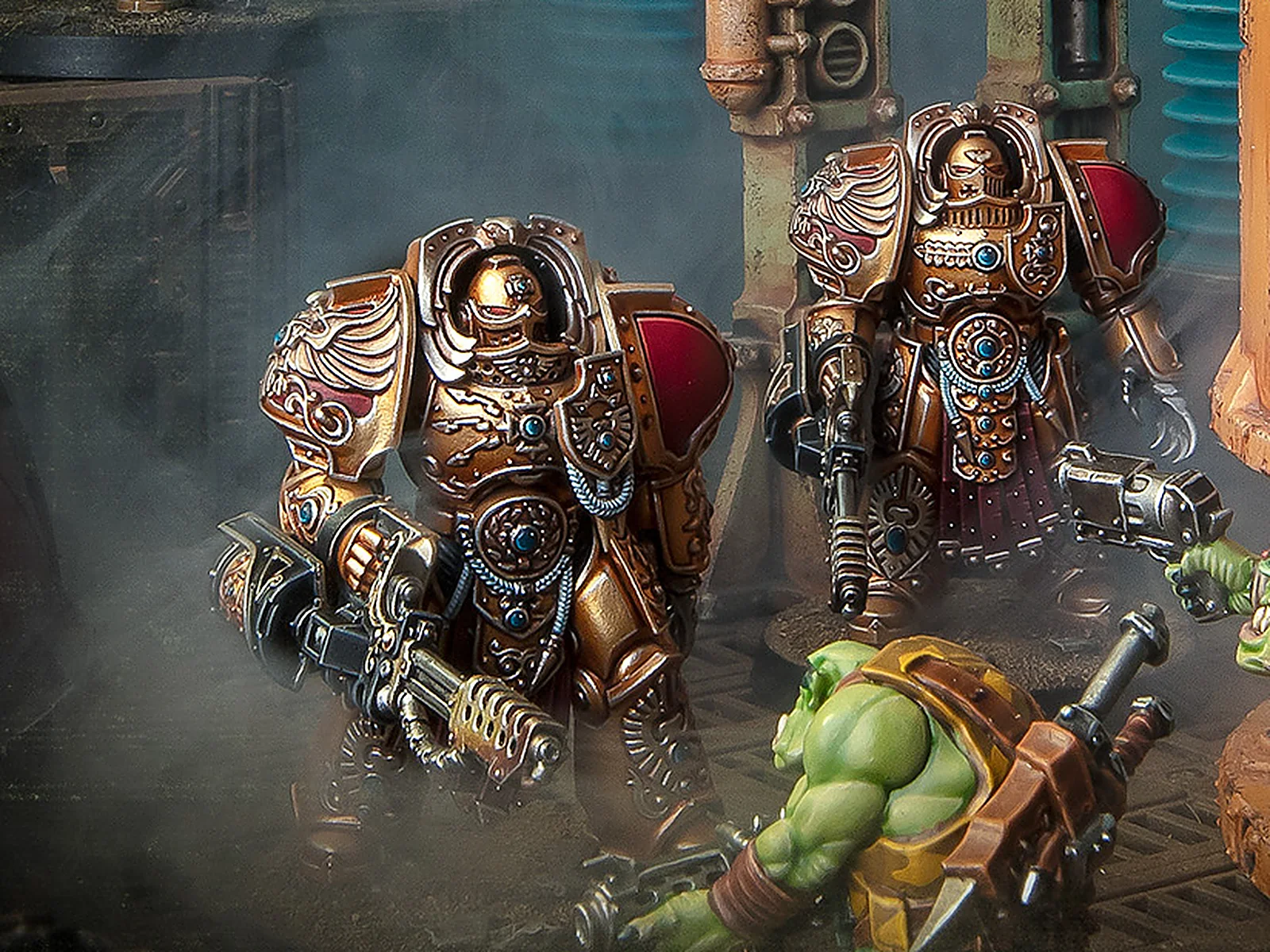
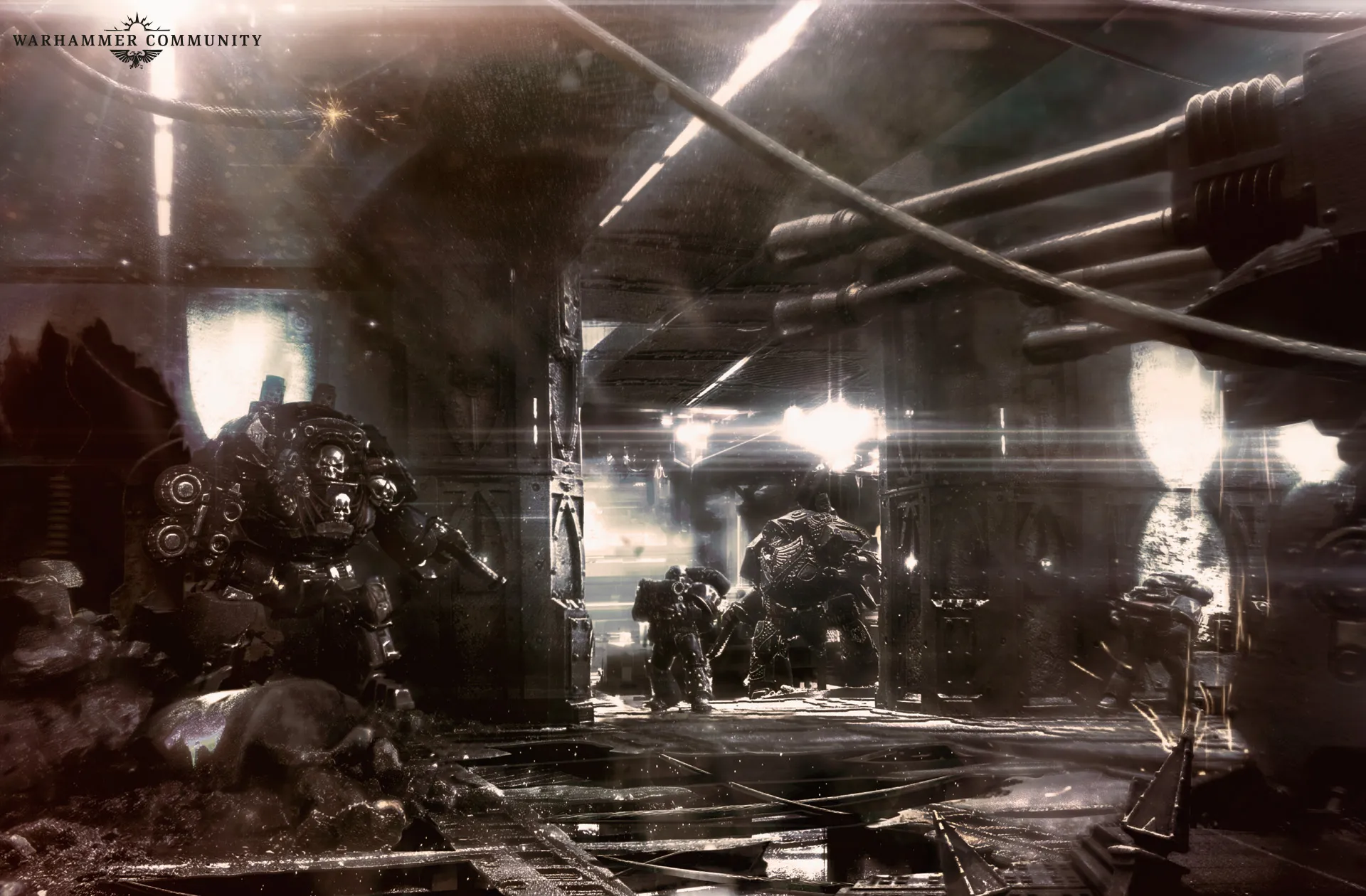
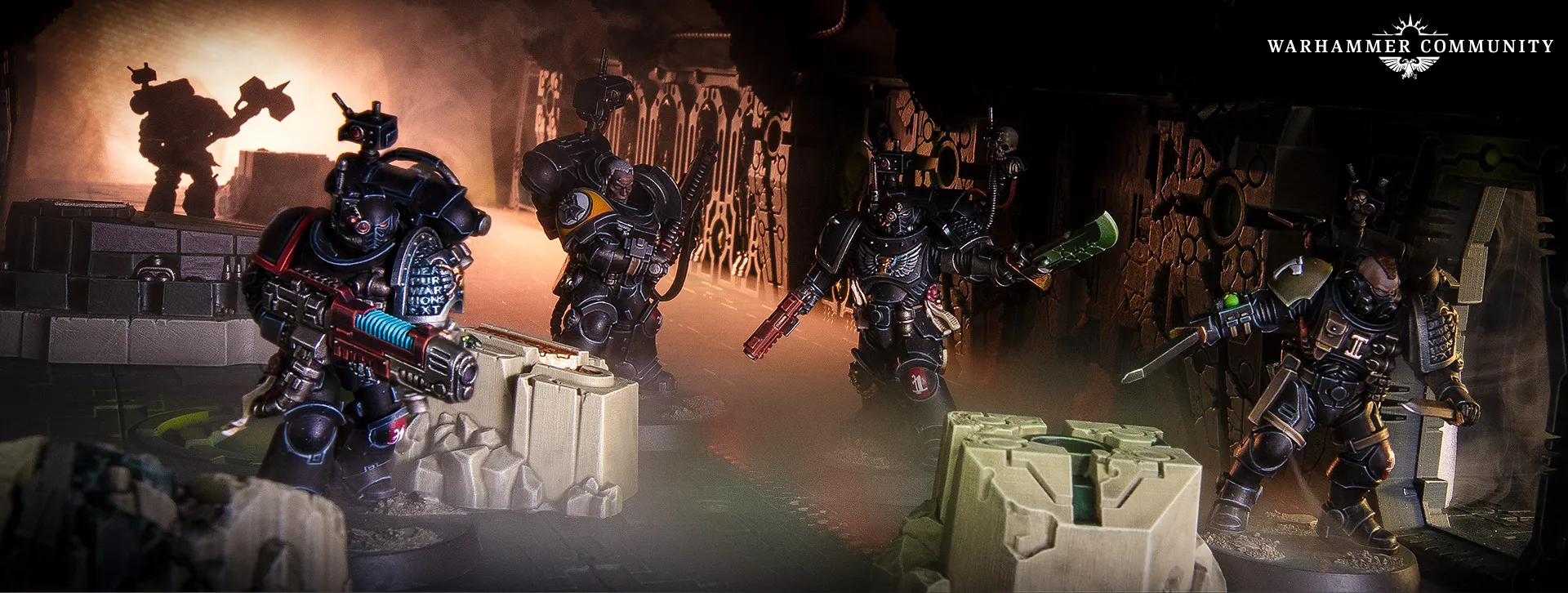
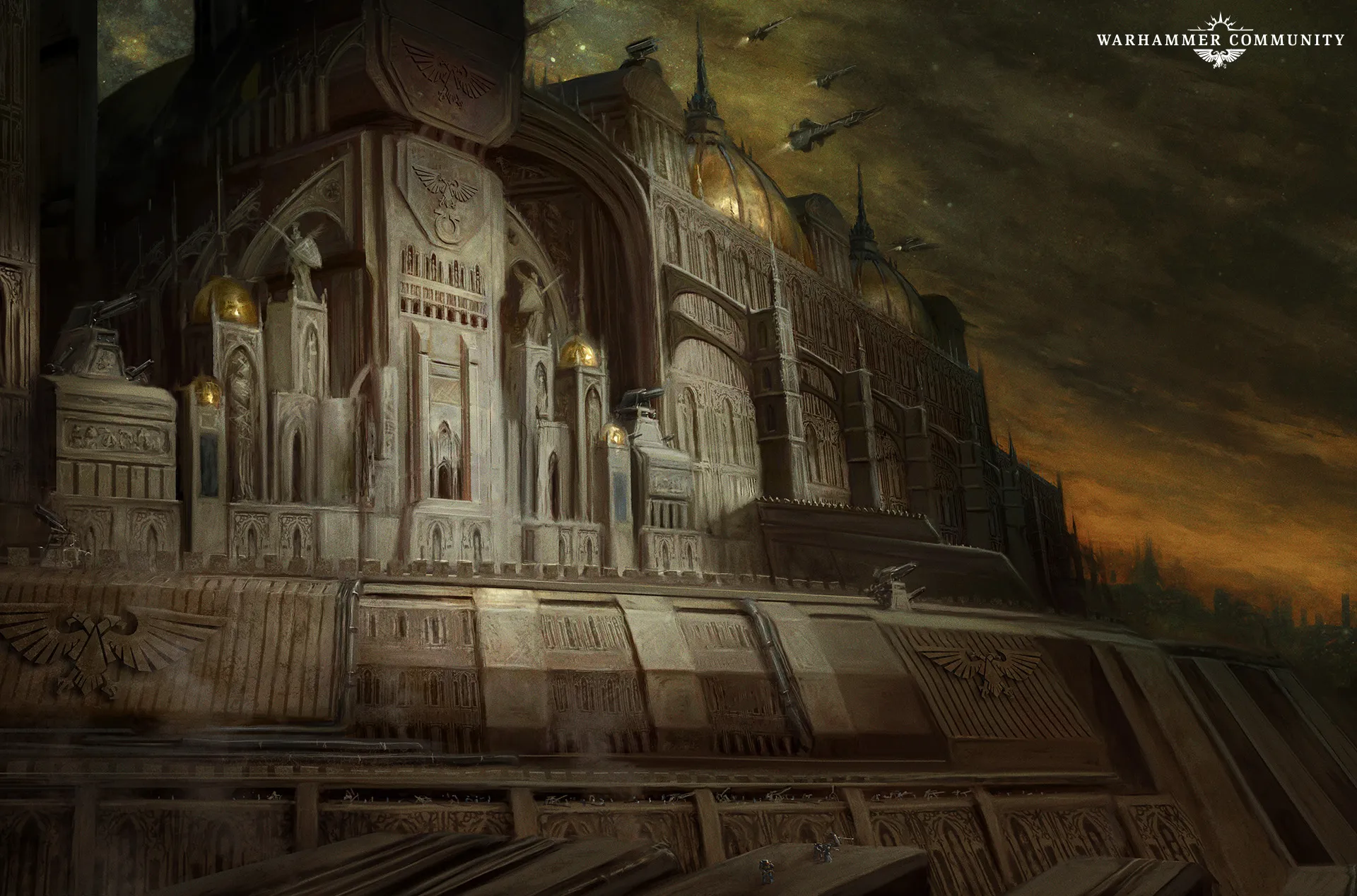
GW has put the fortress-monastery back on the table. The new Codex: Space Marines carries a major lore section on them, and Warhammer Community marked it by running a fortress-monastery art retrospective on the 18th, the day before pre-orders opened, with a dozen paintings of the things going back decades. The codex apparently takes you inside the Fortress of Hera.
The old floor plan came from the Space Wolves, back when their stronghold sat on a world called Lucan. Rogue Trader used it as the worked example of what any Chapter’s home looks like, room by room. Later editions moved the building to the polar landmass of Asaheim, renamed it the Fang, and the room list came along more or less intact.
What’s actually inside a fortress-monastery
There’s a Penitorium, where battle-brothers who’ve transgressed are held as a form of remedial punishment. Deeper down, beneath the Apothecarion, the Dungeons hold common prisoners, who don’t stay long before they’re taken upstairs for interrogation. Foundries staffed by workers called Brother Artisans, with a testing range next door. A Refectory where meals are eaten in silence after the most senior brother present says the prayer. Scriptories dotted around the base with terminals that pull unclassified files out of the Librarium.
The Catacombs are flooded on purpose. Mineral-rich water, so the bones of the honoured dead fossilise in place instead of rotting. The water gets fed in and kept topped up, which means checking the level is somebody’s standing duty.
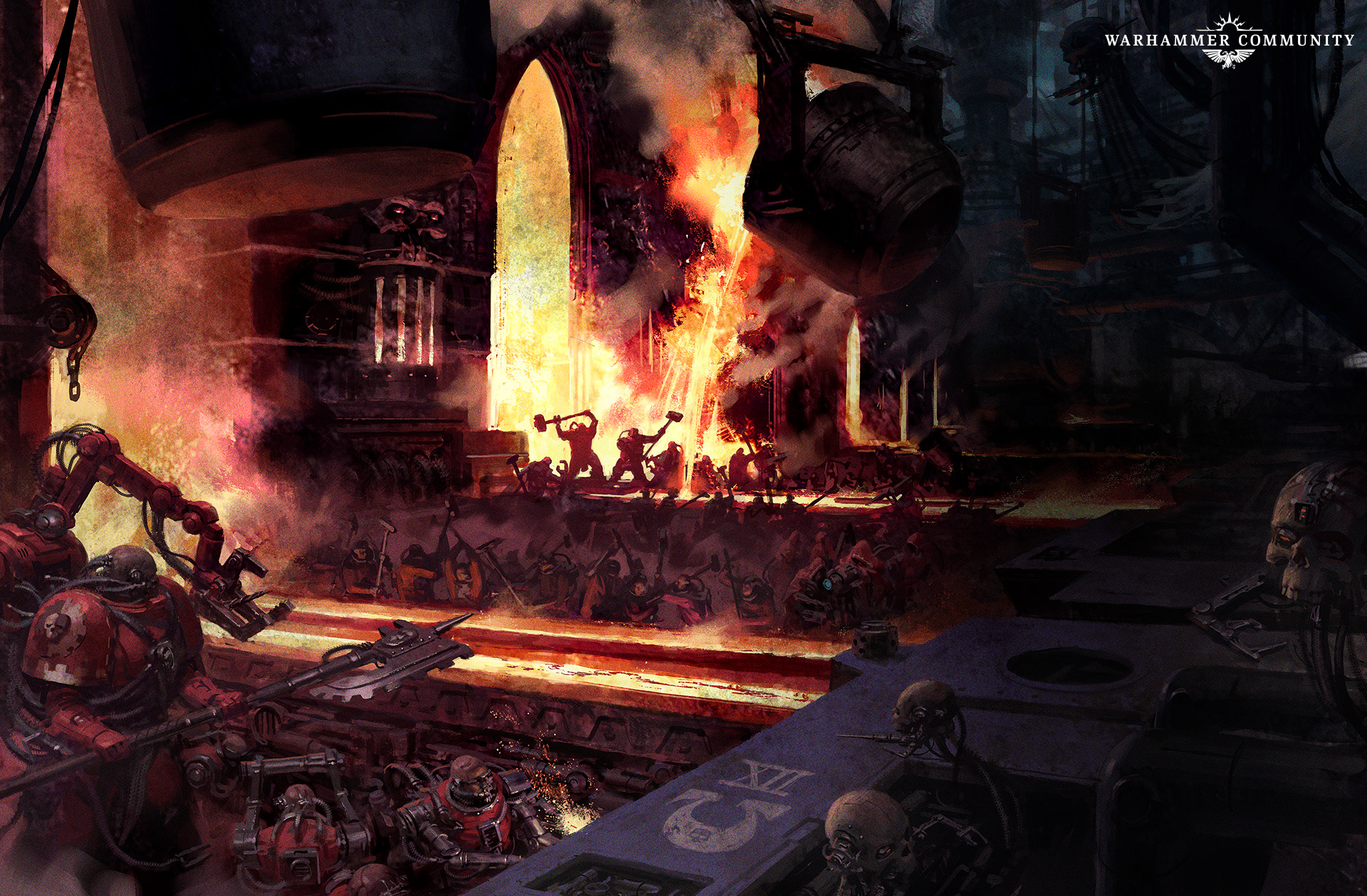
The Solitorium sits outside the walls. It’s a remote spot where a brother goes to be alone, and Rogue Trader says the stay can run from a few days to years on end. Marines who want promotion are expected to shut themselves in one and put themselves through weeks of self-deprivation to prove they’re worth it.
The armoury is a large underground complex, and its doors read the Master of Ordnance’s gene-print. He has to be physically there for anyone to draw ammunition. The Chapter Master can override it in an emergency with a secret spoken code, and the book declines to tell you what the code is, which I’ve always liked.
Then there are the Guest Chambers. The description is “relatively luxurious chambers reserved for important visitors such as members of the Administratum.” There are four Teleportoria in the complex, and Teleportorium One is designated for receiving guests. Beyond it sits the Great Hall, the largest single room on the planet, hung with battle trophies and Horus Heresy armour behind plexiglass, with Leman Russ’s personal spacecraft suspended from the ceiling along the hall’s entire length.
So you’re an adept. Administratum, decent grade, sent to sort something out. You get teleported in. You arrive in the one room they’ve set aside for arrivals. You get walked through the enormous hall with the primarch’s ship on the roof, you get put up in a nice suite, you have your meeting, you go home. That’s the visit, and the only rooms you can describe afterwards are the two they walked you through.
The Chapter Master answers to no one
White Dwarf #301’s Chapter Masters feature, back in 2005, states it about as plainly as GW ever has: a Chapter Master sits outside the conventional Imperial hierarchy, isn’t answerable to the High Lords of Terra, and commits his Chapter to war at his own discretion. Imperial agents may petition him for aid, and there had better be a strong case. Petition is the word the article uses.
The fortress is where that abstraction turns into masonry. The Chapter Master is frequently the planetary governor as well; where he isn’t, Lexicanum’s summary of the Rogue Trader material has him cutting a deal with the sitting governor and paying a tithe for the ground his walls stand on. Governors are generally delighted, because nobody picks a fight with a world that has Space Marines parked on it.
I wrote about the Grey Knights and their private forge moon a couple of weeks ago, and the line that stuck with me was from Imperial Armour Volume 1: the Adeptus Mechanicus have no power to intervene or dictate what happens inside a fortress-monastery’s walls. The book gives that as the general rule covering every Chapter in the Imperium.
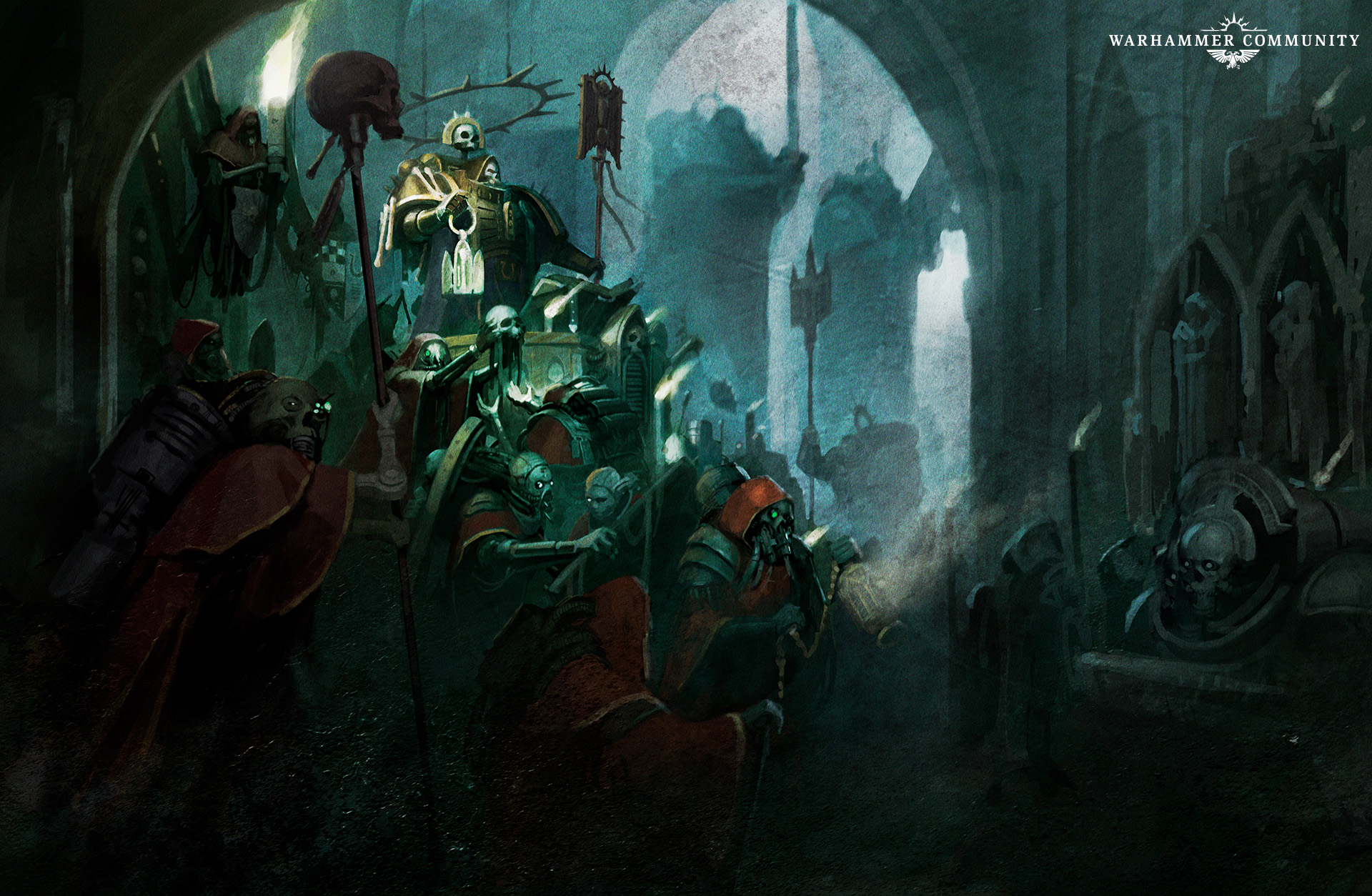
Guilliman demonstrated the principle the moment he had a fortress of his own to run. Gathering Storm: Rise of the Primarch has him, freshly resurrected and preparing to leave Macragge, ordering the great Library of Ptolemy sealed behind adamantium bulkheads and servitor guns, barred to all comers on pain of death. In the same passage a cyber-synod of the Ecclesiarchy descends on the Fortress of Hera and insists on confirming his divinity, and he only agrees after Celestine and Greyfax explain how much trouble the Ministorum can cause. He had a new war room built, the Strategium Ultra, and left.
I bought a Fortress of Redemption in about 2012, midway through 6th, on the reasoning that my Imperial Fists ought to have something to defend. Big grey lump of a kit, the bastion with the lascannon turret on top. It is still in its box in the loft, which is to say it has been boxed for longer than my kid has been alive, and that’s not a comparison I enjoy running. Pete has built two. Painted both. One of them sits in his front room as an ornament and his partner has stopped commenting on it. When I told him I’d been reading up on fortress-monasteries this week he asked whether the Redemption had made it out of the loft yet, and I said I’d get to it.
Honestly I don’t know what scale that kit is meant to be. It’s a bastion with a chapel on it. A fortress-monastery is a mountain with a spaceport in the top of it and four hundred missile silos in the fields around. The gap between the two is somewhere between an outbuilding and a garden shed, and GW has never shown the slightest urgency about closing it…
What happened at the Fang
White Dwarf #359, November 2009, Adam Troke writing up the Space Wolves’ stronghold: reckoned by many to be the mightiest fortress in the Imperium save only the ancient defences of Terra. No weakness in the defences of the Fang, no secret flaw. Orbital defence lasers concealed in the mountain’s slopes, big enough to shatter starships. Thermal reactors that have run without fault since Leman Russ strode the stars. The same article then walks you through two invasions.
The Battle of the Fang, M32, is the one worth knowing. Magnus the Red spent years raiding worlds around Fenris and feeding Great Wolf Harek Ironhelm a series of warp-dreams, each one pulling the Chapter further from home, until the bulk of the Space Wolves were committed to a full-scale offensive on Gangava. Which was a real stronghold, garrisoned by Magnus’s allies, and entirely the wrong place. What remained on Fenris was a token force of perhaps a few hundred: Wolf Scouts caught out in the wilderness of Asaheim, and Blood Claws barely raised from their initiation. They woke Bjorn the Fell-Handed to lead them, and held for forty days and forty nights, at one point luring Thousand Sons into the catacombs beneath the fortress and dropping the tunnels on them.
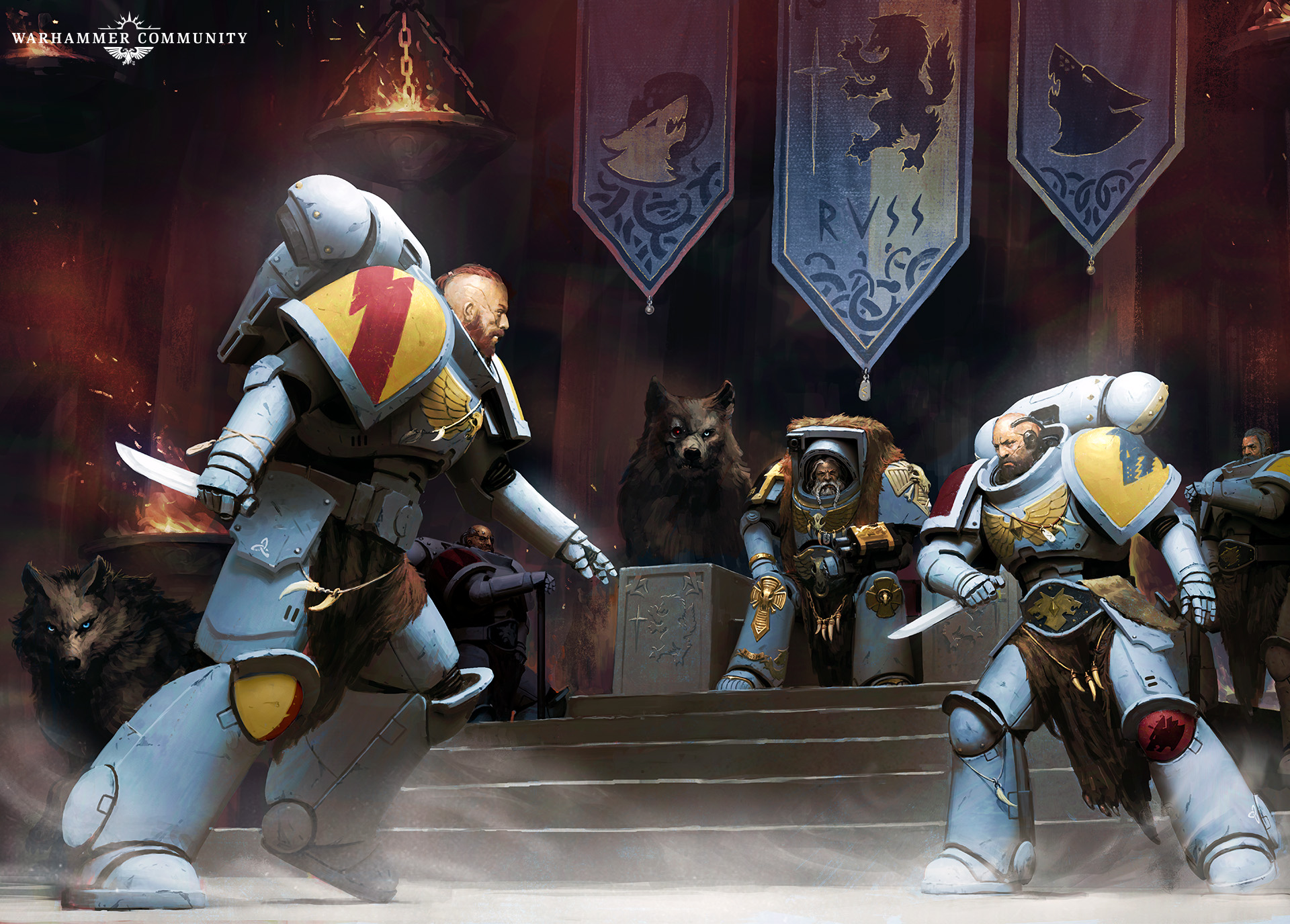
Harek came back, fought Magnus on the slopes, and died doing it. Magnus took a wound and withdrew. The Space Wolves are recorded as having won, and White Dwarf #413’s version of events explains what that victory actually cost: Magnus’s real objective was the Chapter’s research into the Wulfen Curse, which had come close to reproducing the Canis Helix without its flaw. He got inside and burned centuries of it before he withdrew.
Macragge has a breach on the record too. Lexicanum’s account of the siege during the Psychic Awakening has Chaos forces getting into the Fortress of Hera itself and reaching the Shrine of the Primarch, where Marneus Calgar and a detachment of 1st Company veterans stopped them more or less on top of Guilliman’s body.
Which makes me wonder whether I’ve got this backwards. The sovereignty reading rests on one White Dwarf feature from 2005 and a paragraph of Imperial Armour, and GW cheerfully contradicts itself about Chapter autonomy every other edition. The walls get breached whenever a writer needs a siege. Maybe it’s a big castle that photographs well and I’m reading constitutional law into a floor plan somebody drew in 1987 to explain where the Marines keep their vegetables. Then I go back to the guest chambers. Whoever drew that plan worked out where the Administratum sleeps, and put it along the corridor from the room the teleporter drops them in.
My Chapter’s fortress-monastery is quietly dying
My lot keep theirs in orbit. The Phalanx is a mobile battle station described in Sentinels of Terra and in Gathering Storm as nearer a planetoid than a conventional vessel, dwarfing the largest Battle Barge and carrying the firepower of a fleet. Rogal Dorn brought it into the Emperor’s service at their first meeting. Nobody remembers how it was built.
For most of the last ten thousand years it has held station in the Sol System, its orbit synchronous with Terra’s. Both books use the same phrasing about what’s happened to it since: more of its systems fail each year, and the skill required to repair them has long passed out of living memory. The Techmarines keep at it. It leaves Sol rarely now, for great vengeance or dire need, and both books reach for the word shadow.
I love the Phalanx. Big golden brick. A fortress-monastery you can fly is the best idea anyone at GW has had about Space Marine property, and the Chapter that owns it is gradually losing the ability to keep the lights on in the back half. The Black Templars do without a fixed home altogether, raising small keeps on the worlds they conquer and leaving most of them to rot.
The 11th Edition books have been running much longer lore sections than the last lot. Codex: Orks went from roughly forty pages of background in 2024 to nearly a hundred this year, and I sat down and counted 88 of them. If the Space Marine book gives the fortress-monastery the same treatment, somebody at GW has had to decide in writing what is actually inside the Fortress of Hera. I want the room list. I want to know whether they kept the Terrarium.