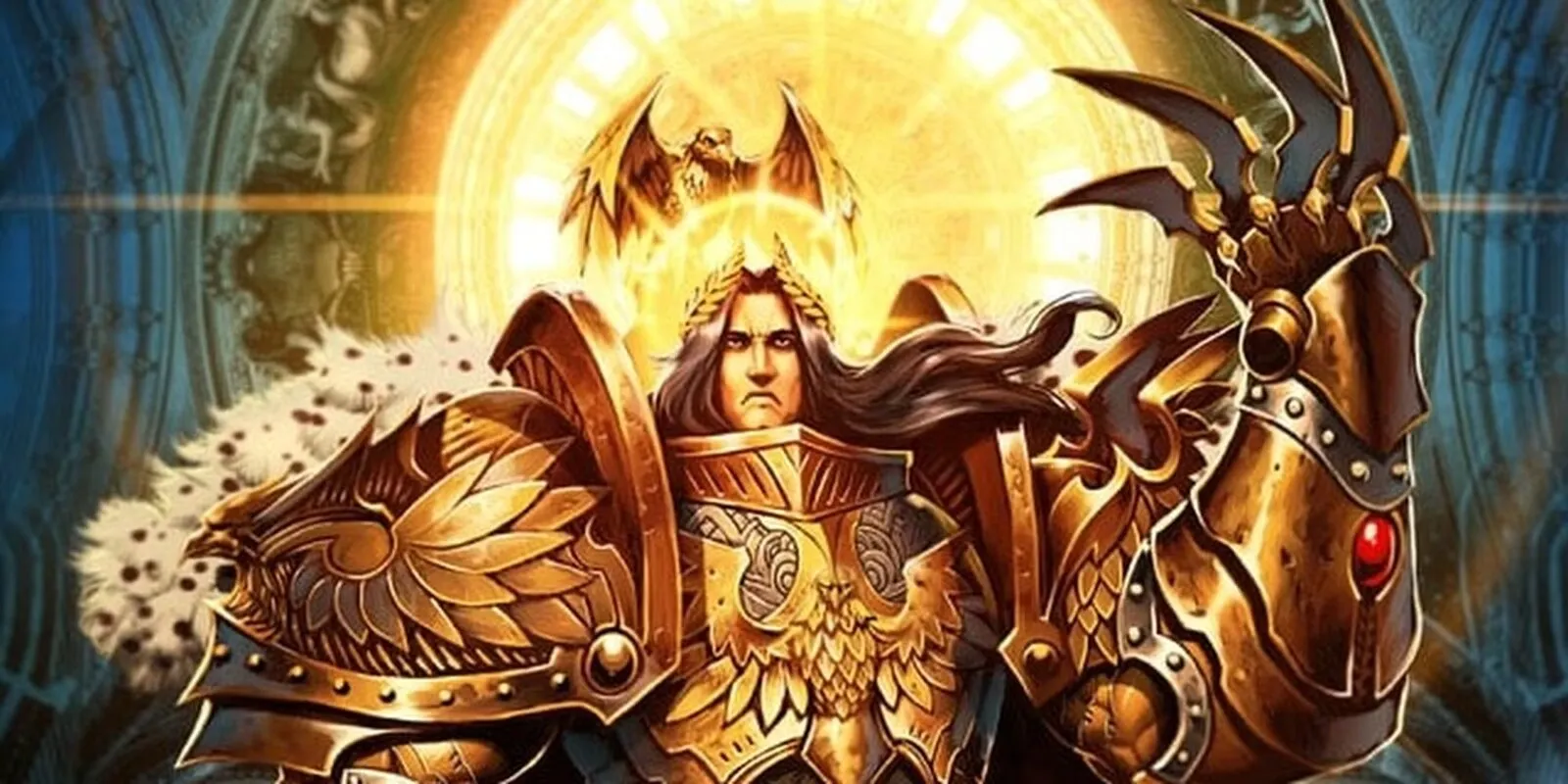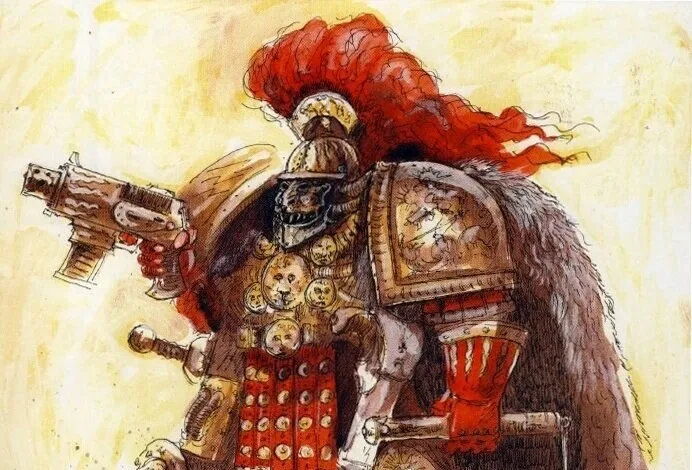
The Imperial histories are very clear about how the Thunder Warriors died. All of them, to the last man, at the Battle of Mount Ararat: the final clash of the Unification Wars, the one that won Terra. Their greatest champion, Arik Taranis, raised the Emperor’s Lightning Banner at the Declaration of Unity and then died of his wounds, earning the posthumous title “Lightning Bearer.”
A few years back Games Workshop put out a list of 500 facts about the setting, and fact 472 said the quiet part out loud. The Emperor never meant the Thunder Warriors to outlive the Unification Wars. They were a weapon, forged for one job, to be cast aside once that job was done.
Bell of Lost Souls went back into all this recently with a piece on one of the odder footnotes of the period: the times the Thunder Warriors and the early Space Marines actually fought each other. They did, more than once. And the Thunder Warriors, half-dead and supposedly obsolete by then, tended to come out of those fights ahead.
What a Thunder Warrior actually was
Quick version for anyone who came to the hobby through the tabletop and never went spelunking in the deep Heresy stuff. Before the Space Marines, there were the Thunder Warriors. Same basic idea, gene-enhanced transhuman soldiers built by the Emperor, just a cruder, earlier draft. The geneticists weren’t as skilled yet, the tech wasn’t as good, and (going by Lexicanum’s sourcing) the people doing the work weren’t even entirely willing participants.
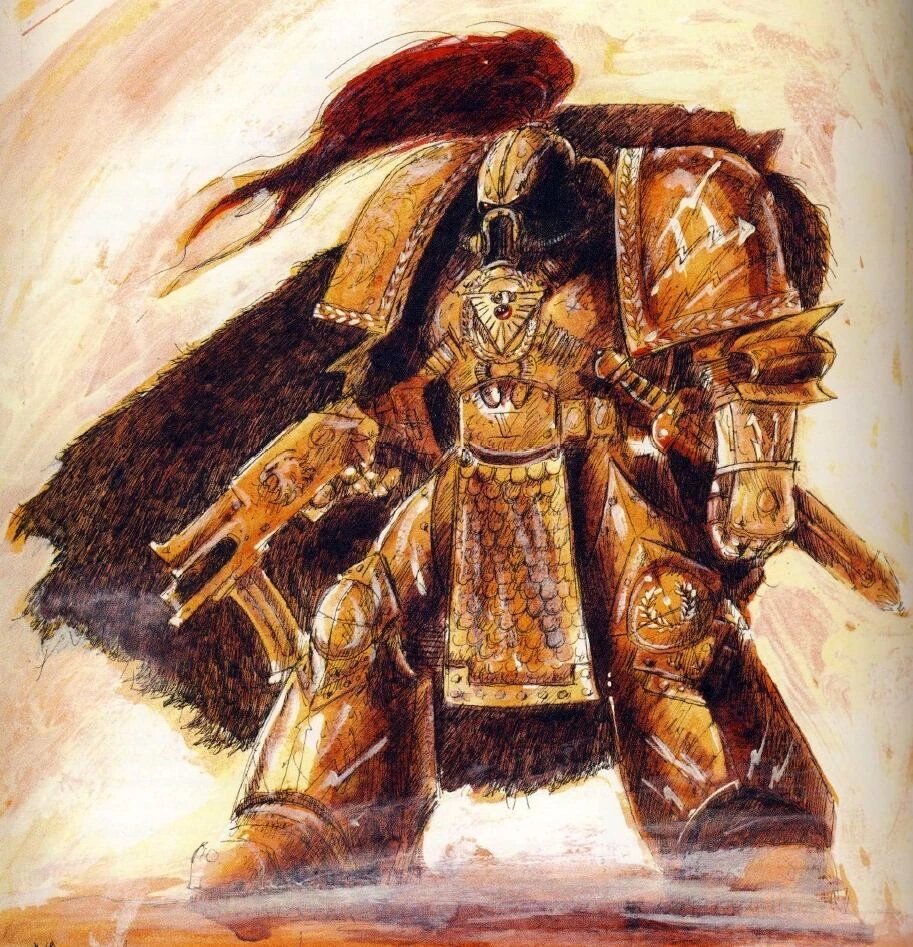
They were bigger than Astartes. Stronger. Thicker bones, the kind that let a Thunder Warrior shatter a Space Marine’s skull with a headbutt or kick clean through a normal man’s torso. They were so resistant to psychic attack that trying to mind-control one would physically hurt the psyker attempting it. Early on they wore segmented metal plate with leather strapping and carried lasrifles, before the war kitted them out with anything fancier.
On paper they were organised a lot like the Legions that came after. Twenty regiments, the Legiones Cataegis, each one named by the Emperor personally. Each had a “Primarch” at its head, except a Thunder Warrior Primarch wasn’t a separate breed of demigod the way Horus or Guilliman would be. He was just the best killer in the unit, promoted by the Emperor for being the best killer in the unit. The fourth regiment, the Iron Lords, specialised in siege work.
The catch was that they fell apart. The gene-template was unstable, and they paid for it constantly: fits of bloodlust, mental breakdowns, cellular degeneration. A Thunder Warrior might campaign for years and then drop dead one afternoon with no warning, or simply stop following orders mid-battle. None of them lived long. The lore has never settled why the instability went unfixed, only that it did.
The detail I like best is that they kept their humanity. They had a sense of humour, dry gallows stuff by the accounts. They lived like warlords, took trophies, relished the fighting. The hypno-conditioning that scrubs the personality out of a modern Astartes and leaves something closer to a guided missile hadn’t been invented yet. So the Thunder Warriors were still people, with all the mess that implies.
The Unification, in numbers
The wars themselves were a long grind across a ruined Terra carved up between roughly ninety warlords. The Thunder Warriors broke the techno-barbarian states one after another: the cannibal Maulland Sen Confederacy, the Panpacific Empire under the tyrant Narthan Dume, the warp-dabbling realm of Ursh. The first attempt on the Ethnarchy alone cost twenty thousand Thunder Warriors and a million other dead. The last big stand-up fight, the Massacre at Gaduaré in old Franc, saw five thousand Thunder Warriors kill fifty thousand rebel militia. Five thousand against fifty. That ratio stuck in my head.
What actually happened at Mount Ararat
Then, Mount Ararat. Officially the last battle of the war, where the Thunder Warriors spent the last of themselves to win the final victory and the Emperor’s banner went up over a united planet.
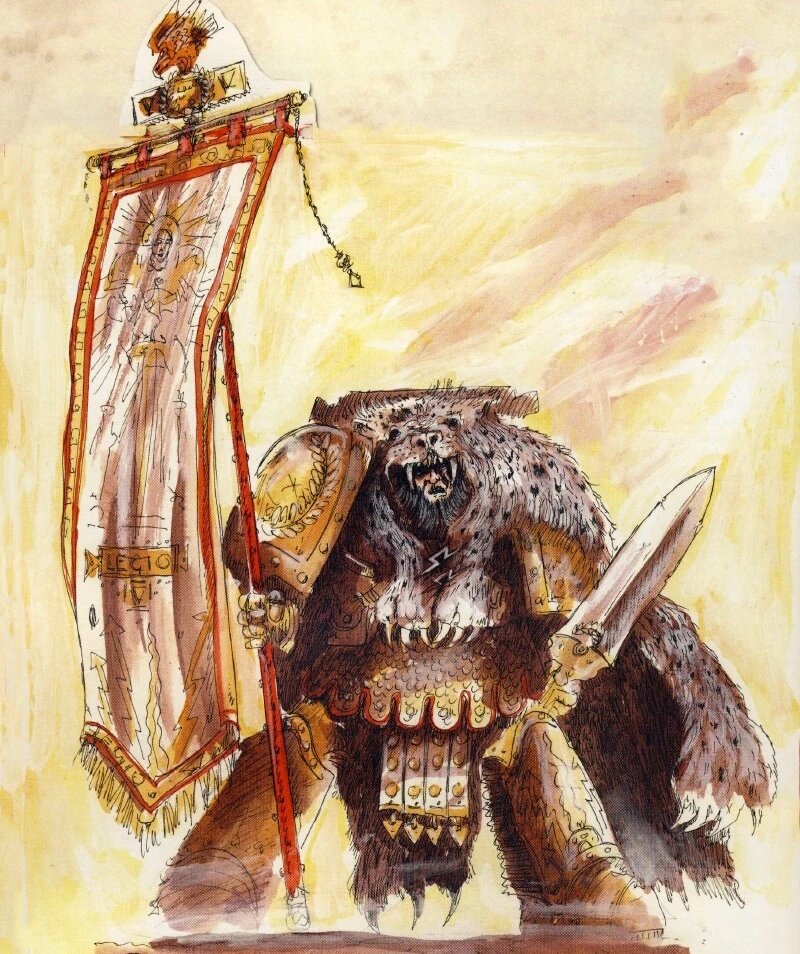
The version Arik Taranis tells, much later, is uglier. The Emperor gathered the best of his Thunder Warriors and arranged for them to die at Ararat, feeding wave after wave into a battle that was already won, then sending the Adeptus Custodes to finish off whoever crawled out the far side. The first true Space Marines were already coming online, more stable and more controllable, and you could make them in bulk.
I came at all of this backwards, through a Black Library novel. The Outcast Dead, by Graham McNeill. I had it as an audiobook for a commute, this would’ve been 2013 or so, one of the old MP3 downloads from before the app got usable, and there’s a crime lord in it called Babu Dhakal who runs the slum underbelly of Terra’s Petitioner’s City. About two-thirds through, it lands that Babu Dhakal is a Thunder Warrior. One of the last living ones. I said “no way” out loud in the car like an idiot and rewound thirty seconds to check I’d actually heard it. The reveal hits a lot harder if you went in not really knowing the Unification lore, which I didn’t.
The one who got away
Because Babu Dhakal is Arik Taranis. The Lightning Bearer himself, the hero the chronicles swear died on the mountain, alive and hiding in plain sight for over a century, running prostitution and gambling and black-market food under a dead man’s name. (“Babu” means father.) He’d picked up enough of the Emperor’s gene-craft during the war to keep his own failing body going for a good while longer.
What he’s actually chasing through The Outcast Dead is a cure. The renegade Astartes of the title are carrying Emperor-made gene-seed, and Taranis wants a progenoid gland off one of them, the organ that grows the stuff, on the theory he can reverse-engineer a fix for his own kind. Two of the deadliest things ever to walk Terra, him and his old comrade Ghota, both reduced to running a crime syndicate while their own bodies slowly quit on them.
The part of his story I keep turning over is that Taranis doesn’t hate the Emperor for any of it. In the books he understands completely. He knows the Thunder Warriors were always a means to an end, that he and every brother he had were tools meant to be retired once they’d served, and he doesn’t even seem to resent it.
Although, maybe I’m reading too much into it. He’s also a hyper-violent gang boss who murdered his way to the top of the worst city on the planet. Maybe what looks like grim acceptance from the outside is just a predator who stopped caring centuries ago. I genuinely go back and forth on it.
There were others in worse states, scattered around. A short story called Dreams of Unity has four Thunder Warriors surviving as pit fighters in the Terran underworld, kept going by a former astropath who harvested organs from the dead ones to patch up the living ones. Gladiators stitched together out of the spare parts of their own kind. I had to sit with that one for a minute.
When the Thunder Warriors fought the Space Marines
This is the bit BoLS dug back into, and it complicates the tidy “obsolete prototype” reading more than the Imperium would probably like. When a band of survivors calling themselves the Dait’Tar rose up during the Cerberus Insurrection, the Emperor sent the Twelfth Legion, the future World Eaters, to put them down. These particular Thunder Warriors were degenerating, badly outnumbered, decades past whatever prime they’d had. They still killed four to five times their number in Astartes before they fell.
During an attempt on the Imperial Palace, a couple of dozen survivors under one of their old Primarchs, Ushotan, threw themselves at the new Legions looking for a death in battle. They got it; the Astartes massacred them. But Ushotan himself was killed by Constantin Valdor, the first and greatest of the Custodians.
There’s a genuinely bleak bit of arithmetic in all of this. The Astartes were the better long-term product, no argument, and they went on to build the Imperium that’s still standing ten thousand years later, roughly four hundred times longer than I’ve been gluing little plastic men together. But in a straight fight, model for model, a deteriorating Thunder Warrior could still out-kill a fresh Astartes. Lethality was never the problem the Emperor was solving for. He needed soldiers who’d stay controllable and who’d still be alive in a century, and the Thunder Warriors were neither.
It fits the pattern of how the Emperor treated nearly everything he made. The primarchs were engineered with hard limits built into them. The ordinary citizens of the Imperium are, functionally, fuel. The Thunder Warriors just got there first, and got the most honest version of the arrangement. They were used up and then deleted, and the histories quietly refiled them as the martyrs of Mount Ararat.
There’s no Thunder Warriors kit, incidentally, which is most of the reason nobody learns any of this until a novel ambushes them with it. A handful of Forge World Heresy characters brushed up against the lore and that’s about the extent of it on the tabletop. Every now and then someone on a hobby forum starts kitbashing a warband of survivors out of old Terminator bodies and Heresy bits, and the project always seems to stall around the fourth model, because there’s barely any art to work from and the entire source is three novels and a short story. I keep meaning to check whether anyone ever finished one.