Something keeps pulling me back to the Morpheon Line. It’s a fortification network built around Hive Tempestora — miles of trenches, bunkers, gun emplacements — and the whole thing faces inward. Not outward to repel invaders. Inward, pointed at the Ork garrison inside the hive itself.
Hive Tempestora has been under Ork control since Big Mek Glitztoof took it over after Ghazghkull left to muster his Great Waaagh!. Those Orks have had decades to settle in, dig workshops into the underhive, argue about whose mek deserves more gubbinz. And the Imperial response has been to build a wall around them and wait. It’s not a siege, exactly — it’s closer to quarantine. You’ve got an industrial hive city you can’t retake and can’t abandon, so you cordon it. Let the Orks rot inside it. Keep building defenses until someone figures out a better plan.
I can’t decide if that’s brilliant or deeply, deeply sad. Probably both.
Games Workshop published Part 2 of their Lore of Armageddon series this week, and it covers the planet’s surface — hive cities, the equatorial jungle, the Fire Wastes and Deadlands. Part 1 handled the wider Armageddon System and its surrounding planets, which had all sorts of weird pre-Imperial archaeology hints buried in it. Part 2 is more grounded. Hive cities, ash wastes, and a quiet running tally of what each war has taken off the board.
The Two Halves
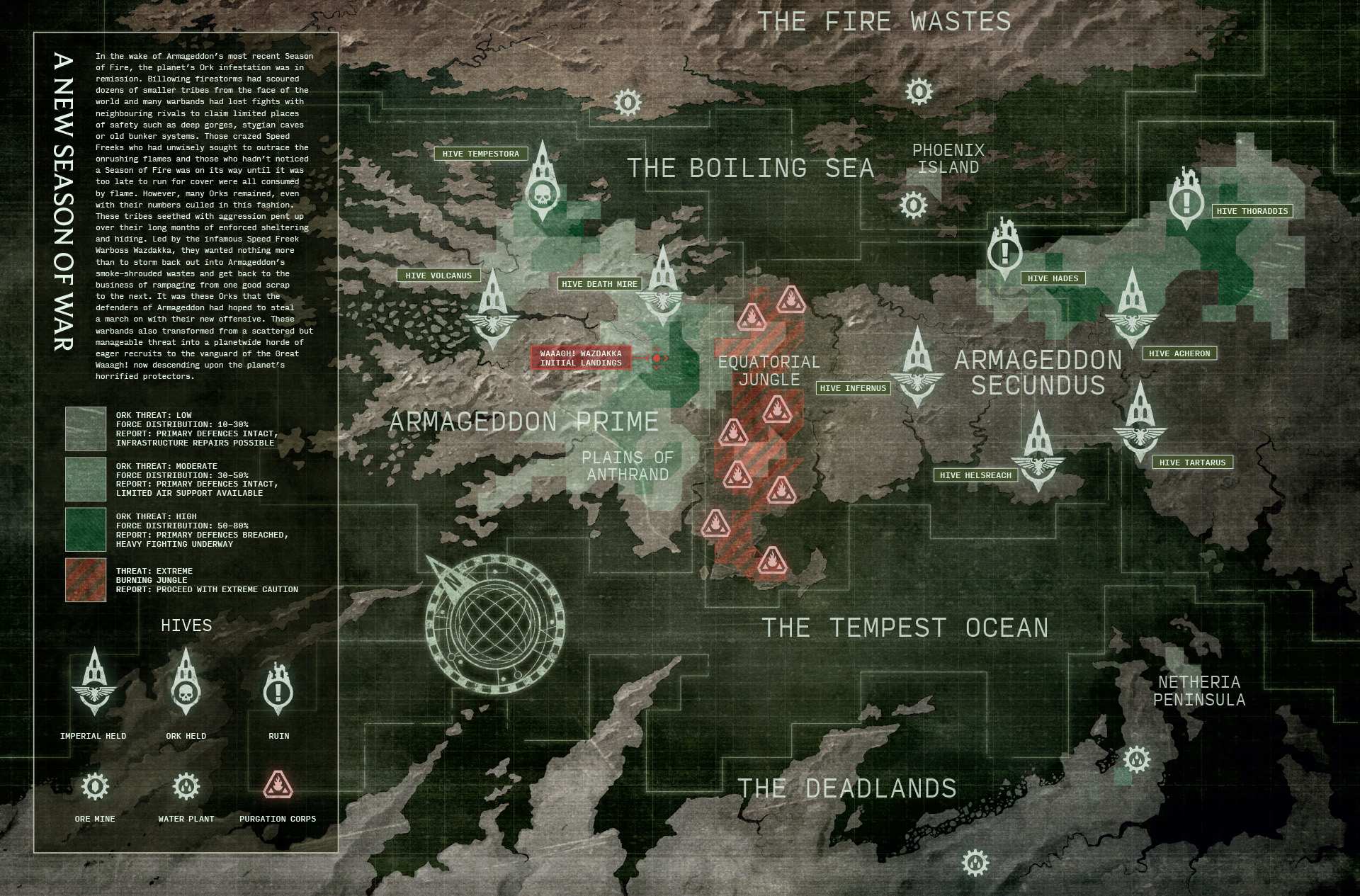
Armageddon’s main continent splits into two regions — Prime in the west, Secundus in the east — divided by a band of equatorial jungle you can see from orbit. The jungle wraps around the planet’s middle like a belt. Think of the continent as two fists connected at the wrists.
Armageddon Prime has three hive cities. Secundus had five.
The ash wastes between the hives in Prime are lethal without respirators — not “you’ll get sick” lethal, but “you will die in minutes” lethal. Centuries of industrial pollutants, radioactive waste, atmospheric residue from every factory that’s ever run on this planet. The Orks don’t care. The Astra Militarum needs full sealed gear just to cross the open ground between hives. That asymmetry is built into the geography, and no amount of Space Marine reinforcements changes it.
Hive Death Mire — third of the Prime cities — houses a planetary scanning array called the Eyes of the Emperor, which gives Imperial command early warning about Ork troop movements across a vast area of Prime. It’s also heavily defended by the Storm Lords and a specialist regiment called the Armageddon Ork Hunters. Death Mire is, by current standards, one of the hives that’s actually holding together.
The Gap
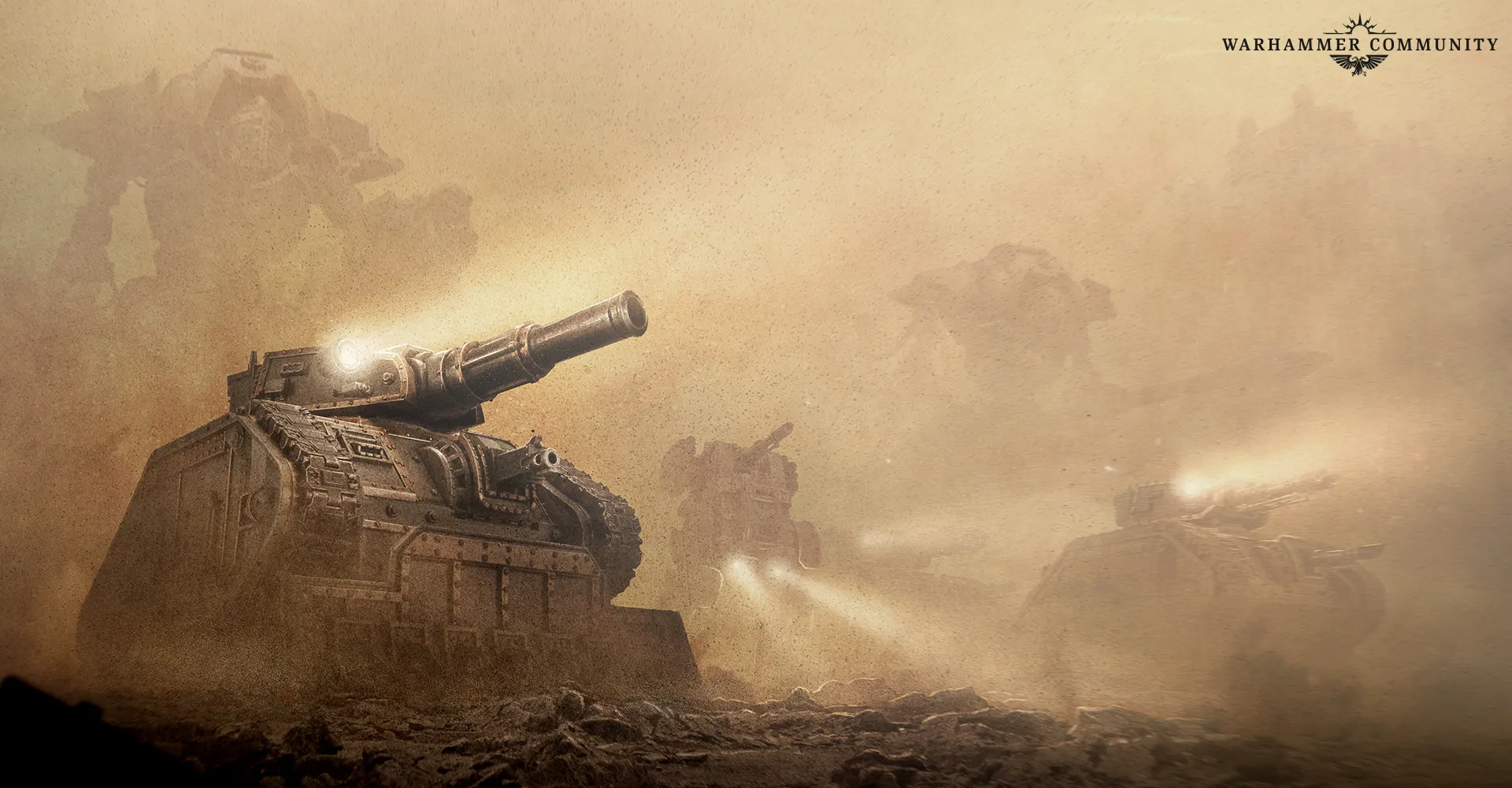
Hive Volcanus sits inside Armageddon’s largest mountain range, and the only pass through those mountains big enough for super-heavy vehicles is the Mannheim Gap. That’s the sole viable armoured corridor between Volcanus and the rest of the continent. And the Gap is, per GW’s article, “the final resting place of dozens of Titans and Gargants.”
Dozens.
I’m trying to picture that. Warhound Titans propped against each other like abandoned machinery. Ork Gargants with the heads knocked off, half-buried in the shale. Three different wars’ worth of god-machines rusting in a mountain pass. The Titan Legions have fought in the Gap during every war for Armageddon — the battles are in old White Dwarf campaign reports, in the Third War for Armageddon supplement from the early 2000s. That wreckage accumulated over decades of real publishing history, and GW has now simply acknowledged that it’s still there, slowly corroding, serving as terrain features and landmarks for whatever happens next.
I spent a while on the Lexicanum article for the Mannheim Gap once, this was a few years back when I was trying to decide whether to build an Armageddon Steel Legion tank company. I had about twelve half-assembled Chimeras in a case and a vague idea about a Third War theme. Never finished them. Still have the Chimeras. The point is, there’s a lot of documented history in that pass.
The Gap being the only viable route is also why Volcanus has been targeted every invasion. Control Volcanus, you control the eastern mouth of the pass. It’s why the hive is ringed by an “unfathomable graveyard of vehicle wrecks and battlefield debris” stretching all the way from the city walls to the Gap itself. That’s not rhetoric. That’s just what the approach to Volcanus looks like now.
The Three Seasons
This one I hadn’t seen laid out clearly before. Armageddon has three named seasons: the Season of Fire, the Season of Blood, and the Season of Shadow.
The Season of Fire is when Armageddon’s elliptical orbit brings it closest to Tisra. Surface temperatures hit 90°C. Tremors tear the ground open. The equatorial jungle becomes an oven with falling trees. The Ork tribes living in the jungle — and there are hundreds of disparate tribes in there — shelter under the canopy during Fire because they’re better suited to extreme heat than humans are.
The Season of Blood is when Angron and his horde showed up. That’s actually the label the lore is giving to the current period of daemonic incursion, which includes the World Eaters taking down Hive Thoraddis. Hive Thoraddis was one of the Secundus cities. It’s gone now.
The Season of Shadow gets one footnote in the WarCom article — it exists, tourists should be warned about it, no further details. I genuinely don’t know what it involves. Stellar event, orbital debris, Warp activity, something to do with the Great Rift. The article doesn’t say. Maybe Part 3 covers it. Maybe it’s meant to stay ambiguous. I keep going back and forth on whether the mystery is deliberate or whether someone on the lore team just thought “three seasons sounds better than two” and left the third undescribed.
Hades Hive
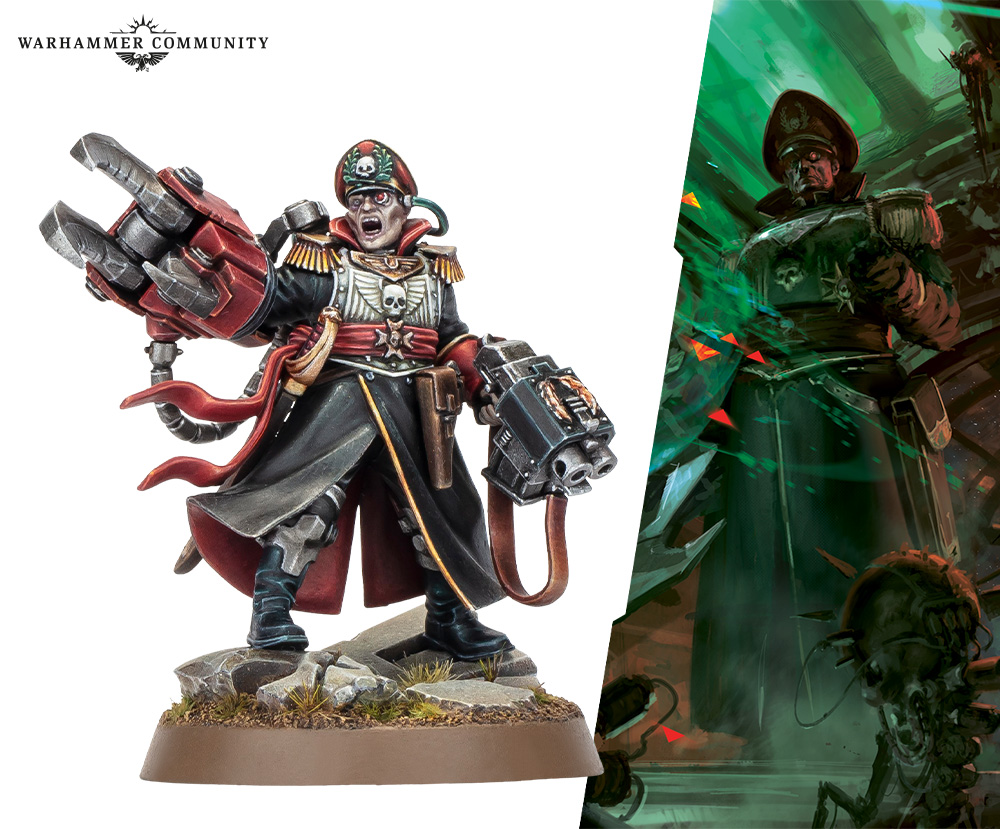
Commissar Yarrick made his name at Hades Hive. Lost his arm there, killed the warboss that took it, had the power klaw grafted on. Held the hive long enough that the entire Second War tipped. Ghazghkull became so personally invested in cracking Hades that he poured forces into it, and that obsession is what let the Imperials mount their counterattack everywhere else.
Hades Hive is rubble.
The Orks demolished it with an orbital rok barrage at the start of the Third War. There’s now a Rok Dropsite on the map where it used to be. Some shards broke off the roks during the barrage and hit the hive directly. The iconic battlefield — the one that made Yarrick, that shaped the conflict for a generation, that every Armageddon Steel Legion player since the 3rd Edition codex has had as this fixed geographic anchor — is a crater.
I knew this, technically. It’s been in the lore since the Third War. But Part 2’s framing of it, sitting alongside the current-state hives — here’s what’s standing, here’s what’s contested, here’s what’s been obliterated — made it land harder than a wiki footnote does. The place that made Yarrick who he is doesn’t exist anymore. The Third War started with the Orks deleting it.
Hive Thoraddis — Season of Blood. Hive Acheron — fell via traitorous governor, partially reclaimed. Hive Helsreach — gutted during the Third War, “lost most of its industrial workforce,” still below capacity. Hive Tempestora — Ork-occupied, Morpheon Line, Big Mek Glitztoof in charge. Of the eight named hive cities on Armageddon, one is rubble, one fell to Chaos, one is under Ork quarantine, and most of the rest are operating with reduced capacity. Hives Infernus and Death Mire seem to be in reasonable shape. Everything else is compromised.
And then Wazdakka Gutsmek lands.
The Jungle Plan
The equatorial jungle splitting Prime from Secundus has been a tactical problem since the Second War. Full of Ork tribes, too dense for effective armoured movement, Season of Fire makes it briefly impassable from outside while the Orks inside are fine. It’s an enormous slab of contested territory that neither side can effectively control.
The Imperial plan in Armageddon: The Return of Yarrick, per the WarCom article, is to march in from the edge and burn every tree. The whole jungle. Just incinerate the entire middle section of the continent and turn it into ash waste.
GW writes this up as “surely, a scheme with no drawbacks.” Hard sarcasm. It is obviously going to produce some kind of disaster. The drawbacks probably include: displacing hundreds of Ork tribes who then become somebody else’s problem, destroying whatever ecological function the jungle serves for Armageddon’s atmosphere, creating a massive ash waste in the exact territory you’d need to move armies across, and possibly starting fires that spread to infrastructure on both sides. It is also the most Armageddon thing imaginable — industrial-scale, exhausting, blunt, and probably effective in one narrow sense while creating three new problems.
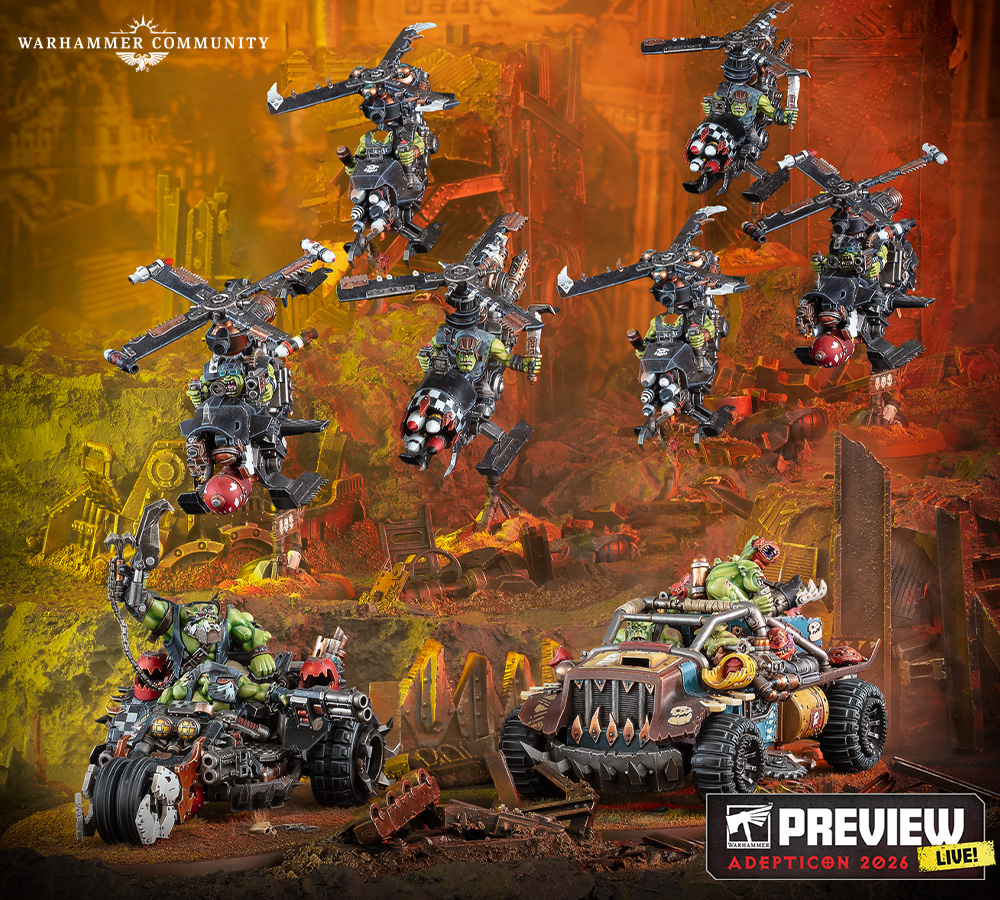
The Blood Angels are leading the Imperial coalition heading to Armageddon right now, alongside Salamanders, Space Wolves, Ultramarines, and a dozen other chapters. They’re coming to a planet where the defensive map is considerably smaller than it was after the Second War. More rubble, more Ork-held territory, more of the geography working against the defenders.
Part 3 of the lore series will presumably cover the current conflict as Wazdakka’s Speedwaaagh! makes landfall. There’s a lot of planet still to fight over — though less than there used to be.