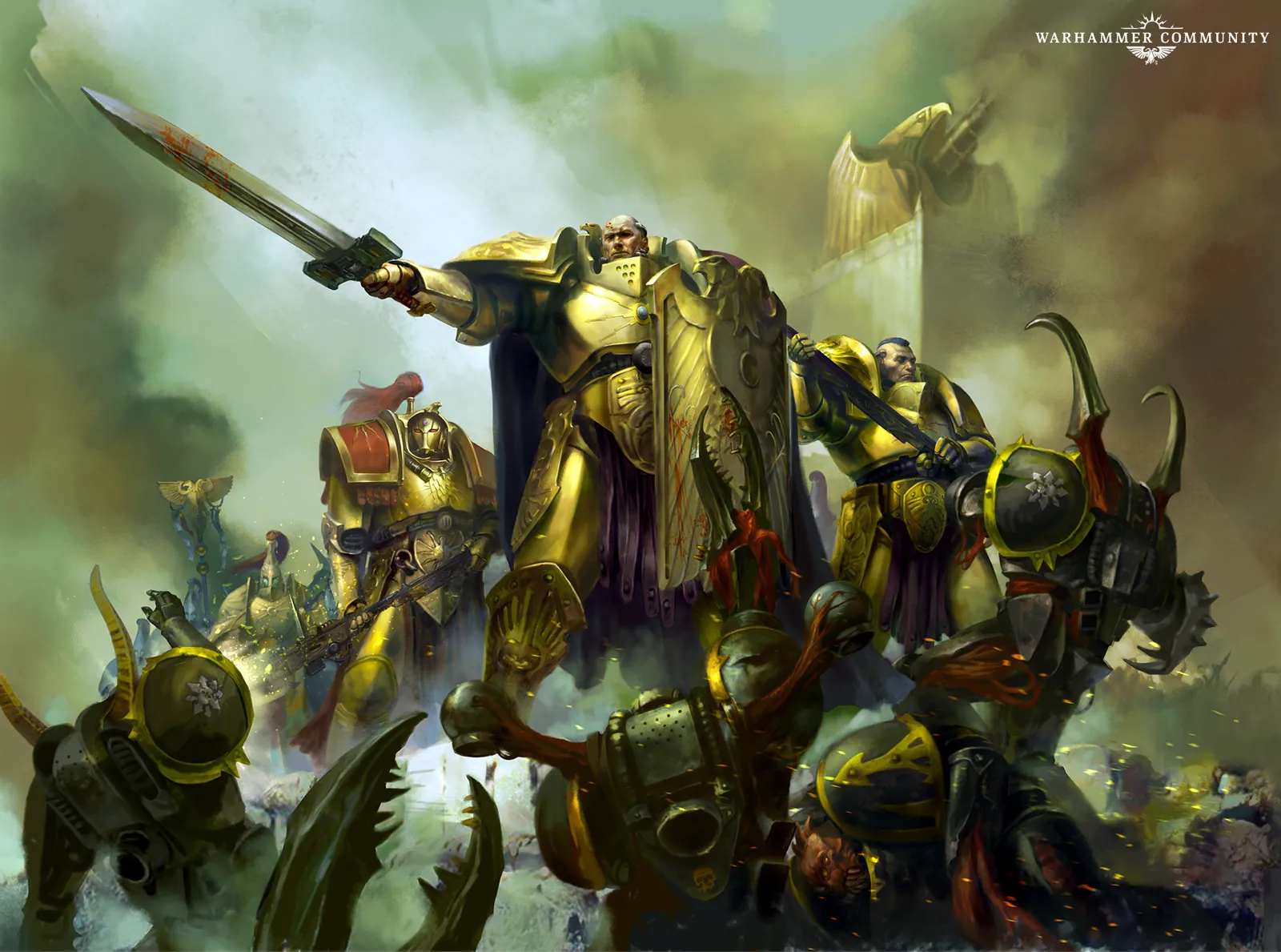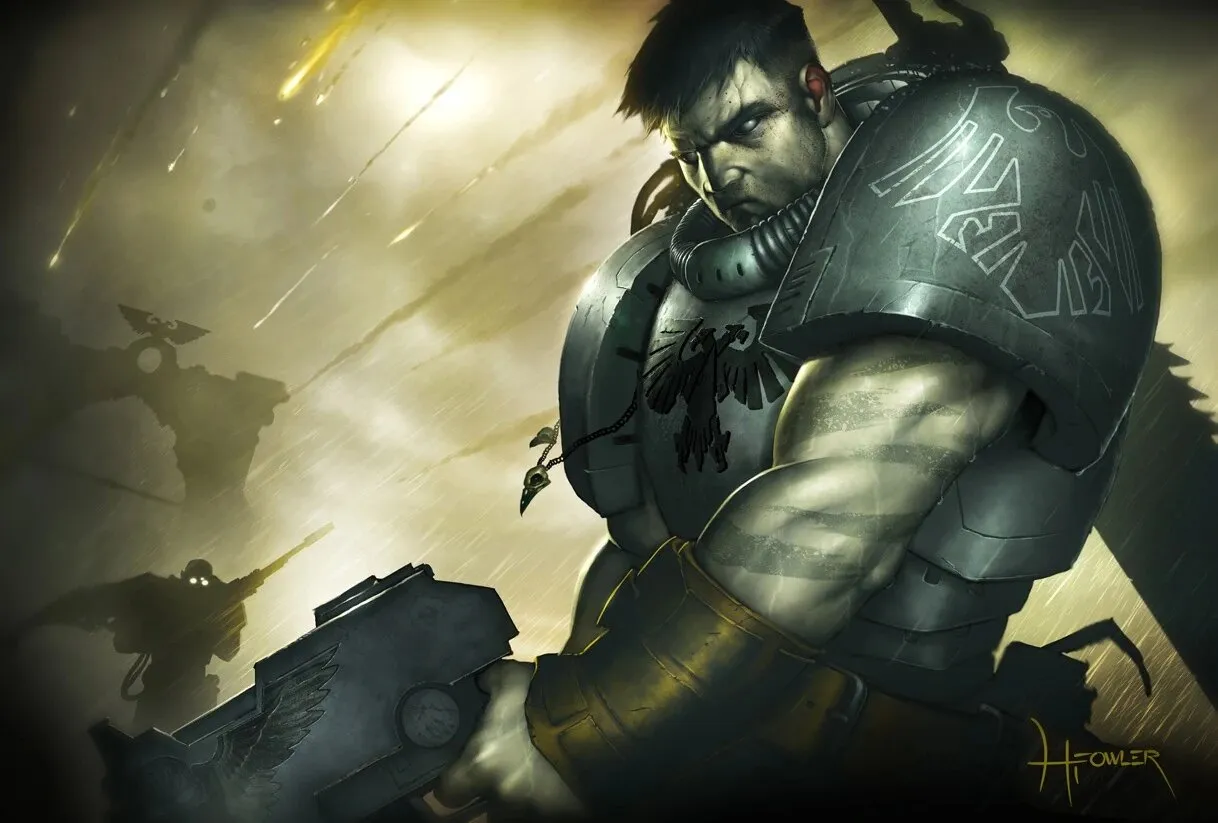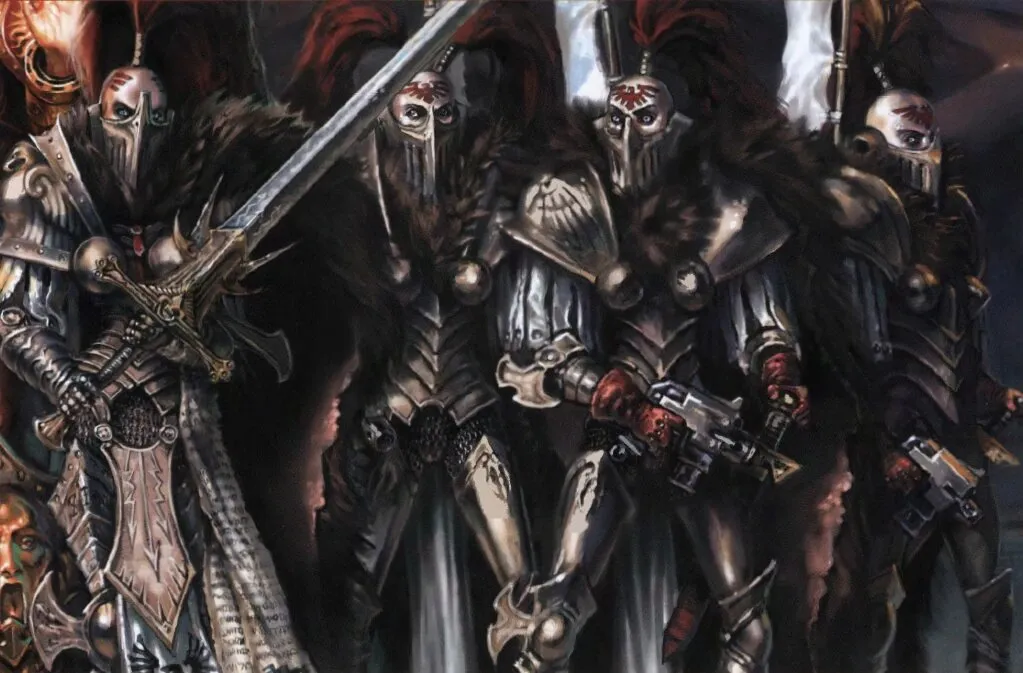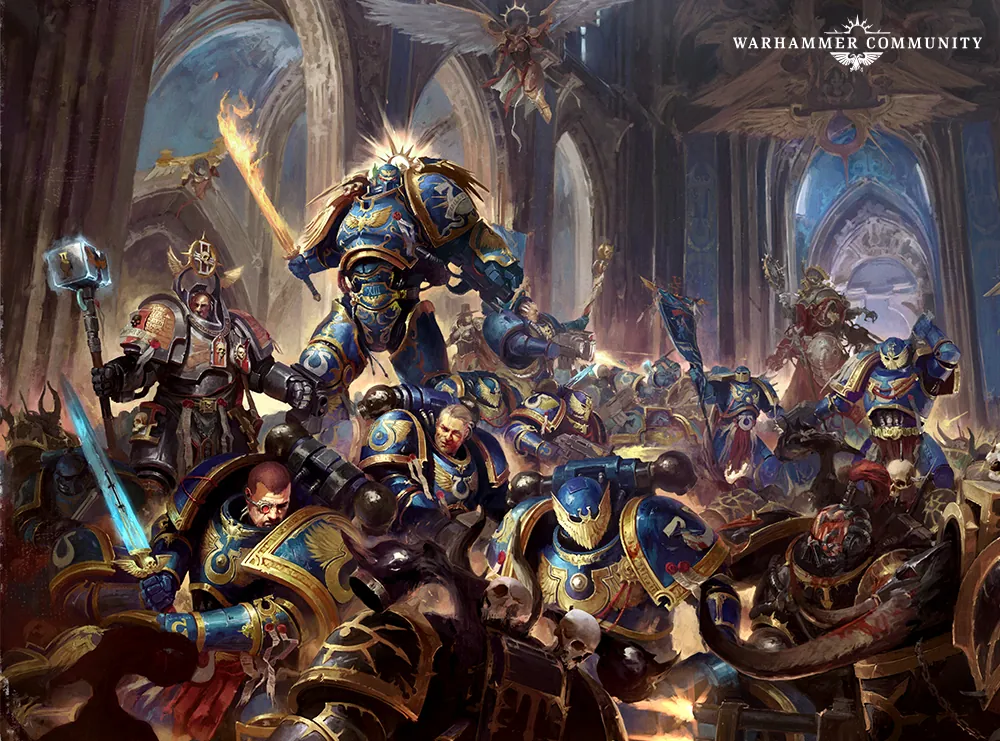
Six little cast badges on a green board. That’s the part of the Codex: Space Marines reveal I’ve spent the morning squinting at, because the Limited Edition ships with a magnetic front panel and six interchangeable Chapter icons, and Games Workshop gives you all six rather than making you pick one at checkout. Ultramarines. Raven Guard. Iron Hands. Imperial Fists. Salamanders. White Scars.
There are nine loyalist First Founding Chapters.
Games Workshop put the full spread up on Warhammer Community a few hours ago. Three versions of the book: a softback, a Special Edition hardback with gold foil and a wraparound cover showing a fortress monastery, and the Limited Edition with the magnet panel, a metal Crux Terminatus, six art prints and the Command Pack. Same 232 pages inside all three, same 85 datasheets, same 15 detachments. The differences are entirely cosmetic, which is the normal arrangement and I’ve no complaint about it.
What Six Emblems on a Codex: Space Marines Panel Actually Tell You
The three that didn’t make the panel are the Space Wolves, the Dark Angels and the Blood Angels. If you’ve been in this hobby more than a fortnight you already know what those three have in common, because it’s the same thing that’s been true since the Second Founding: they’re the ones who wouldn’t do what the Codex Astartes told them.
Guilliman wrote the thing in the wreckage after the Heresy. Break the Legions into thousand-marine Chapters, ten companies each, ten squads to a company, one fortress monastery, one gene-seed tithe of five percent to Mars so the Mechanicus can monitor the line and eventually found new Chapters off it. Index Astartes Apocrypha lays out the numbers in the driest possible terms, which is very much the house style for anything Guilliman touched. The idea was that no single man could ever again command enough Astartes to do what Horus did.
The mechanics are easy to skim past if you’ve only ever met Chapters as army lists. A Legion could run to tens of thousands of warriors; the Second Founding split each loyalist one into successors of a thousand apiece, and every Chapter since has owed the Adeptus Mechanicus a five percent gene-seed tithe so the line can be monitored and new Chapters grown off it. Index Astartes Apocrypha puts the cultivation time at roughly fifty-five years to produce a thousand viable sets of organs, and says only the Emperor can authorise a founding. I’ve written about the wider process of turning Legions into Chapters before.
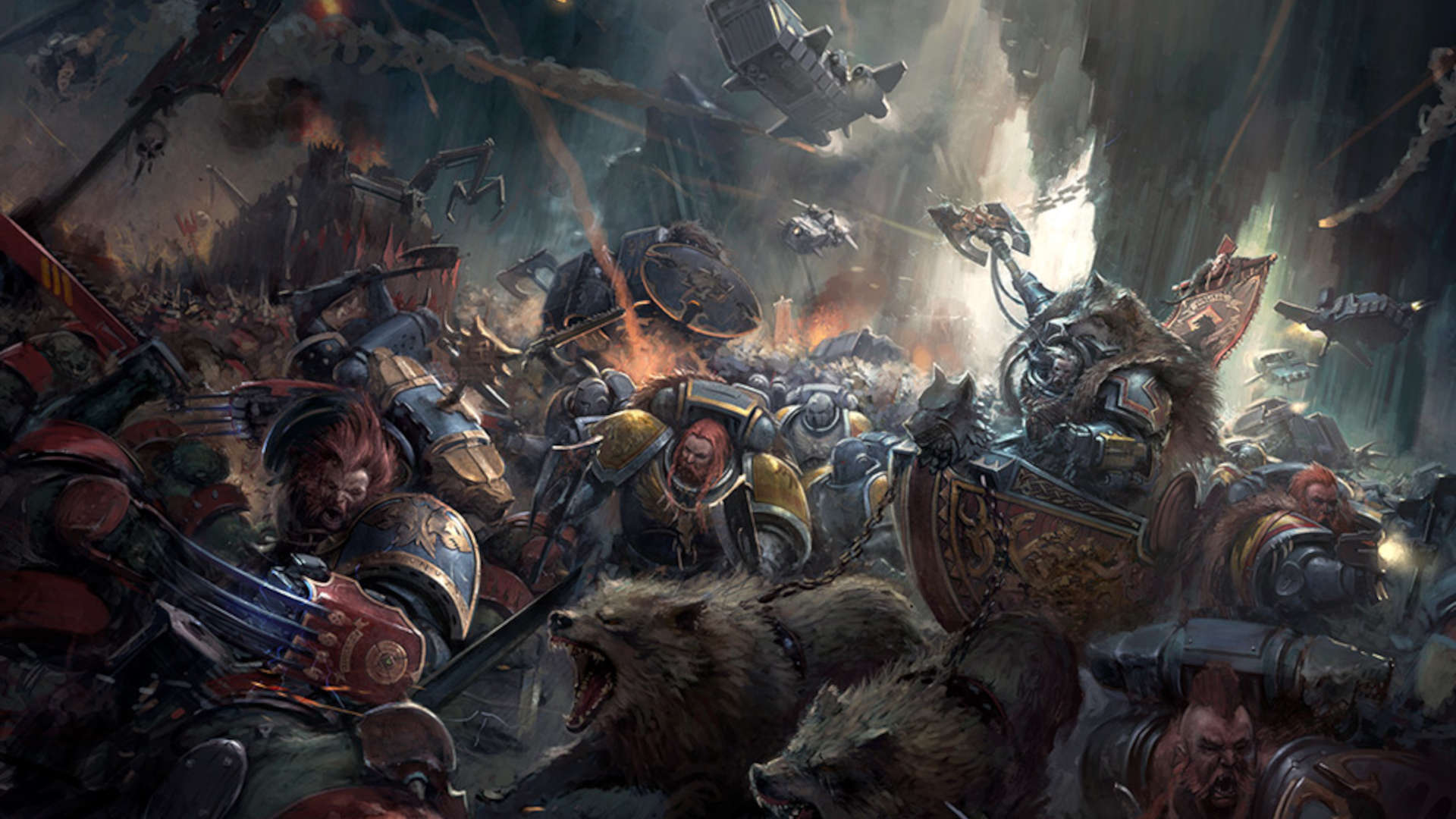
Leman Russ told him where to put it. White Dwarf #411 words it politely, that Russ “refused to divide his Legion or reorganise it on terms set by another,” and the Space Wolves have run twelve Great Companies under a Great Wolf ever since, each Wolf Lord with his own forges and ships and priests. WD #452 describes them as near-autonomous institutions whose warriors fill roles a Codex adept would recognise while mapping onto nothing in the actual book. I’ve seen the count given as thirteen Great Companies in Heresy-era material and twelve in everything modern, and I’ve never got a straight answer on whether that’s Legion attrition or the thirteenth being written out on purpose. The Sons of Fenris have a lot of that sort of loose thread.
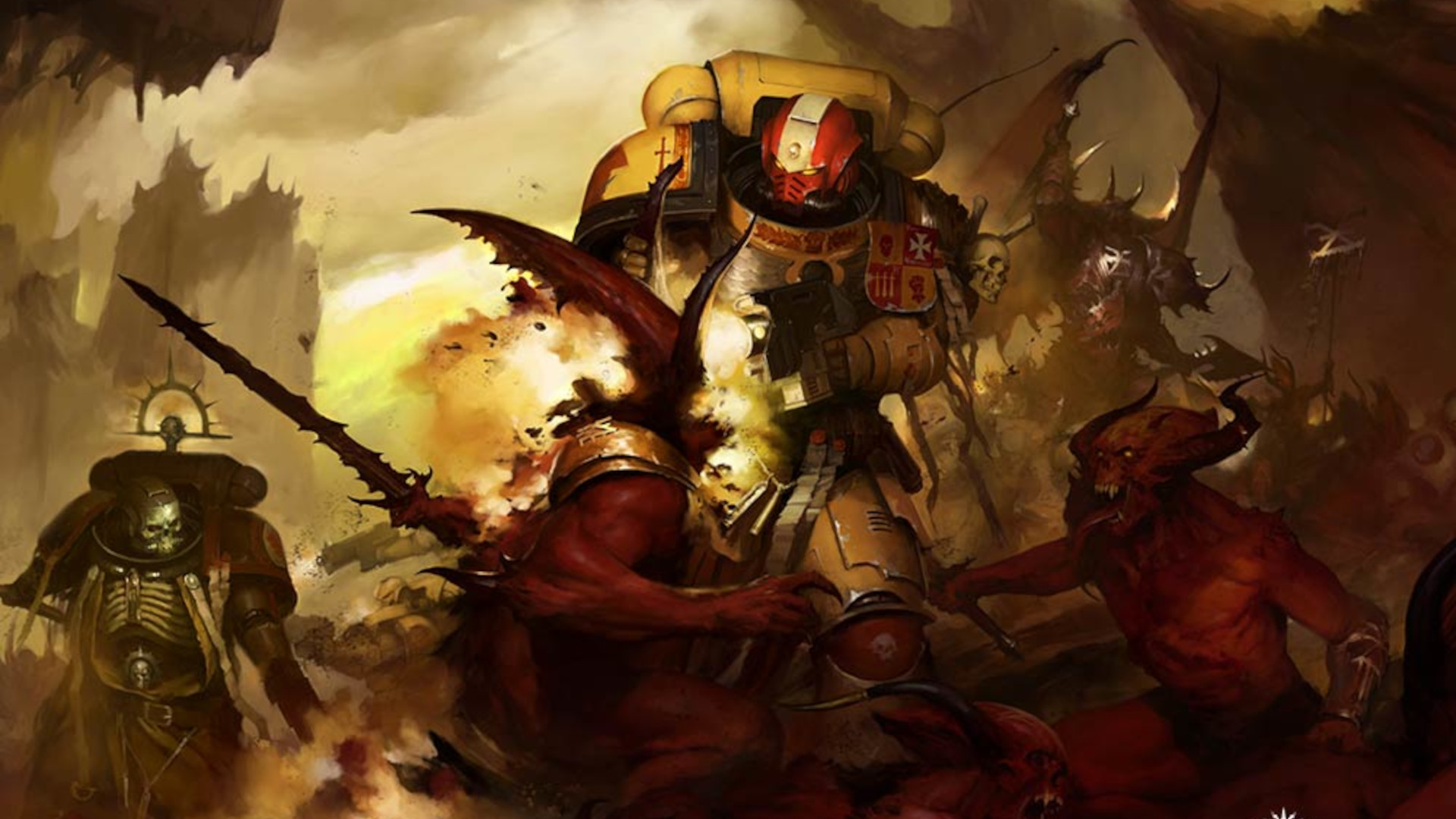
The Dark Angels are the interesting one, because Guilliman signed off on them. White Dwarf #446 is explicit that the Primarch himself approved the Unforgiven keeping the Deathwing and the Ravenwing as the 1st and 2nd companies, on the condition they went on serving the Emperor well. The rest of the Chapter is textbook. Third through fifth are Battle Companies, sixth through ninth Reserve, tenth holds the Scouts. Two companies out of ten run on a different pattern, and the Ravenwing’s standing task is finding the Fallen, which most of its riders aren’t told about.
Blood Angels never had a choice in the matter. The Flaw runs in the gene-seed, and a Chapter that has to maintain a Death Company for brothers taken by the Black Rage cannot organise itself the way a book written by a man with no such problem says it should. White Dwarf #330 traces it back to insanguination and the Red Grail, generations of replication errors creeping into blood drawn from Sanguinary Priests. The Death Company takes whoever the Rage takes, in whatever numbers it takes them, so its strength on any given day depends on how bad that week was.
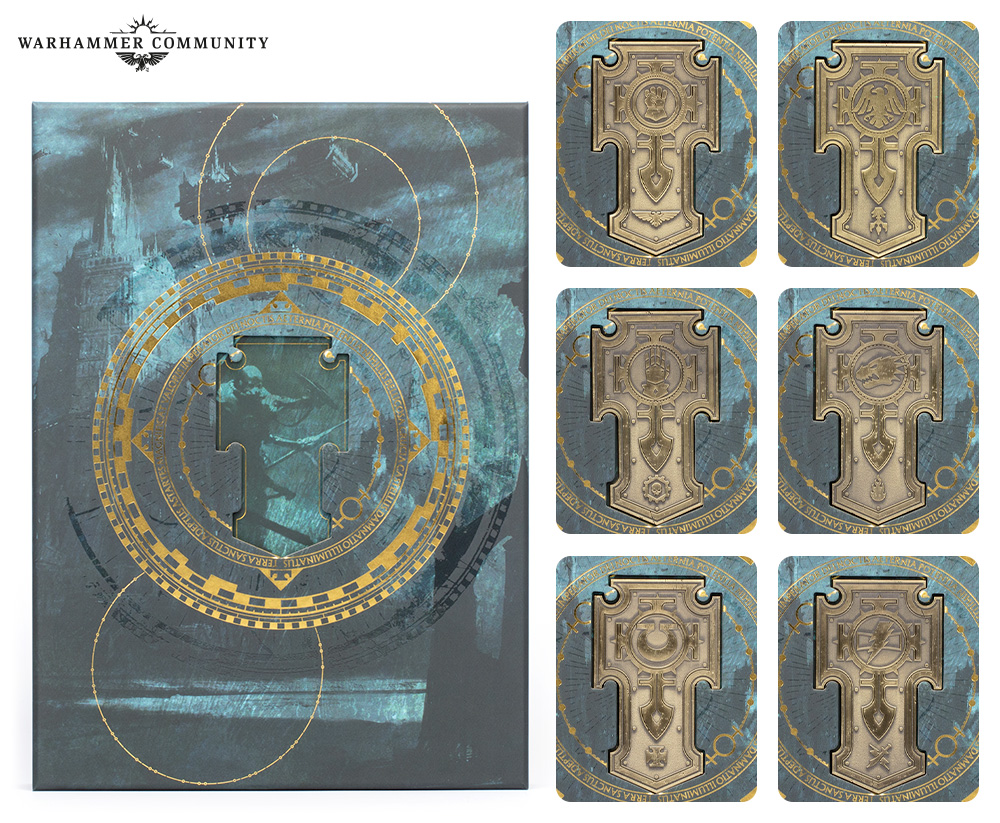
So the magnet set is the compliant list. Which sounds tidy until you look at it for another minute and notice the Iron Hands are sitting there in the top left with their clan companies and their Iron Council, running a Chapter that replaced its Chapter Master with a committee and never really got over Ferrus Manus. Guilliman drew up something else. And Index Astartes Apocrypha introduces the whole idea of variation from the Codex using the Ravenwing’s jetbike company as its worked example, so the book expected people to go their own way from the start. Compliance was always a spectrum and I’ve drawn a line through the middle of one to make a point, so take the line with a bit of salt.
I still think the six are the six.
The Yellow One Bothers Me
My Imperial Fists have been the army since 5th edition. About three thousand points painted, considerably more grey, and I have opinions about which yellow undercoat is least miserable that nobody has ever asked to hear.
And the Fists are on the panel. Which is funny, because Dorn’s Legion fought the Codex harder than anyone.
White Dwarf #438 puts it plainly in a piece about the Crimson Fists, that where many of the old Legionaries “railed against the changes wrought by the implementation of the Codex Astartes,” the Crimson Fists embraced them. That’s the polite version. The unpolite version is the one WD #302 gestures at, the battle the Chapter doesn’t discuss openly, fought after Horus fell and after the Legions came apart. Dorn walked into Perturabo’s trap on the Iron Cage with his honour up and his customary planning nowhere in sight, and the Imperial Fists held out in half-flooded trenches with combat knives until Guilliman turned up and pulled them out. Dorn accepted the Codex after that, and the Imperial Fists were broken into Chapters like everyone else.
So Dorn’s fist ends up cast in metal on a collector’s edition celebrating the book his Legion had to be argued into. I own an awful lot of yellow plastic and I still haven’t decided how I feel about that.
Pete and I lost most of a painting night to this once. Would have been 2019, and I made the mistake of saying the Space Wolves were the only First Founding Chapter that flatly refused the Codex. He came straight back with the Dark Angels, who kept their two odd companies and got the permission afterwards, which he reckoned amounted to the same thing. We went round on that for the better part of two hours while a squad of Aggressors sat undercoated in front of me and stayed that way. I looked it up later and he was closer to right than I was. I have never said so out loud.
Pete’s Salamanders are on there too, which he mentioned within about four minutes of the article going up. He’s been painting the same drake green since before my kid was born, he finishes armies while my pile of sprues gets taller, and he now owns a magnet with his Chapter badge on it that I will be hearing about at the garage table for the foreseeable future.
Nobody at GW Sat Down and Decided This
Right, so. The obvious objection. Six is just what fits on a panel. You can’t do nine, the tooling cost goes up, somebody in the studio picked the ones with the cleanest silhouettes and went home. Ravens and lightning bolts and gauntlets read well at forty millimetres. A wolf head probably does too, mind you, so that argument’s got a hole in it, but you take my point.
And there’s a duller explanation sitting right there. Those three have always had their own books, and they’re about to stop having them. GW’s Eddie Eccles told Wargamer back in August that the Blood Angels, Dark Angels, Space Wolves and Black Templars supplements are being retired in favour of a big digital update, rules landing in the app rather than in print. You don’t put a Chapter on the cover of the general codex when its rules live somewhere else. That’s a product decision, and it happens to land on the same six names.
There’s also a precedent that takes a fair bit of wind out of me. The 6th edition Codex: Space Marines shipped variant covers for those same six Chapters, with a seventh for Successors. Same six, thirteen years ago, back when nobody was making any point about the Second Founding. They needed six covers and those were the six with characters in the book, which is very likely all that’s happening here too.
All of that is probably true. The result still encodes the schism, whether a designer meant it or not. The panel lines up with the Second Founding split either way, and you could reconstruct most of that split from six badges and an afternoon of reading.
I went round my local store on Friday and the shelf where the old Chapter supplements used to sit had two copies of a Kill Team box on it instead. I’m reading tea leaves and I know it, but you notice these things when you’ve been buying books off the same three feet of shelving for fifteen years.
There’s a version of this where I’m annoyed. GW spent a decade telling us the divergent Chapters were the interesting ones, that the Space Wolves get to be Vikings and the Dark Angels get to be a conspiracy and the Blood Angels get to be doomed and beautiful, and then the celebratory object for the edition quietly hands the honours to the ones who filed their paperwork. Except the divergent Chapters are also the ones GW keeps giving separate treatment to, so they’re hardly being neglected…
The Limited Edition goes up for pre-order alongside the rest of the range, with the codex itself landing in October. If you want the panel you’re buying the expensive one, and I’d be lying if I said the sixteen units that just went to Legends hadn’t already put me in a mood about this release.
Fenris still runs twelve Great Companies, the Rock still keeps its Deathwing and Ravenwing apart from the rest, and Baal still musters a Death Company nobody can size a month in advance. None of it shipped a badge.