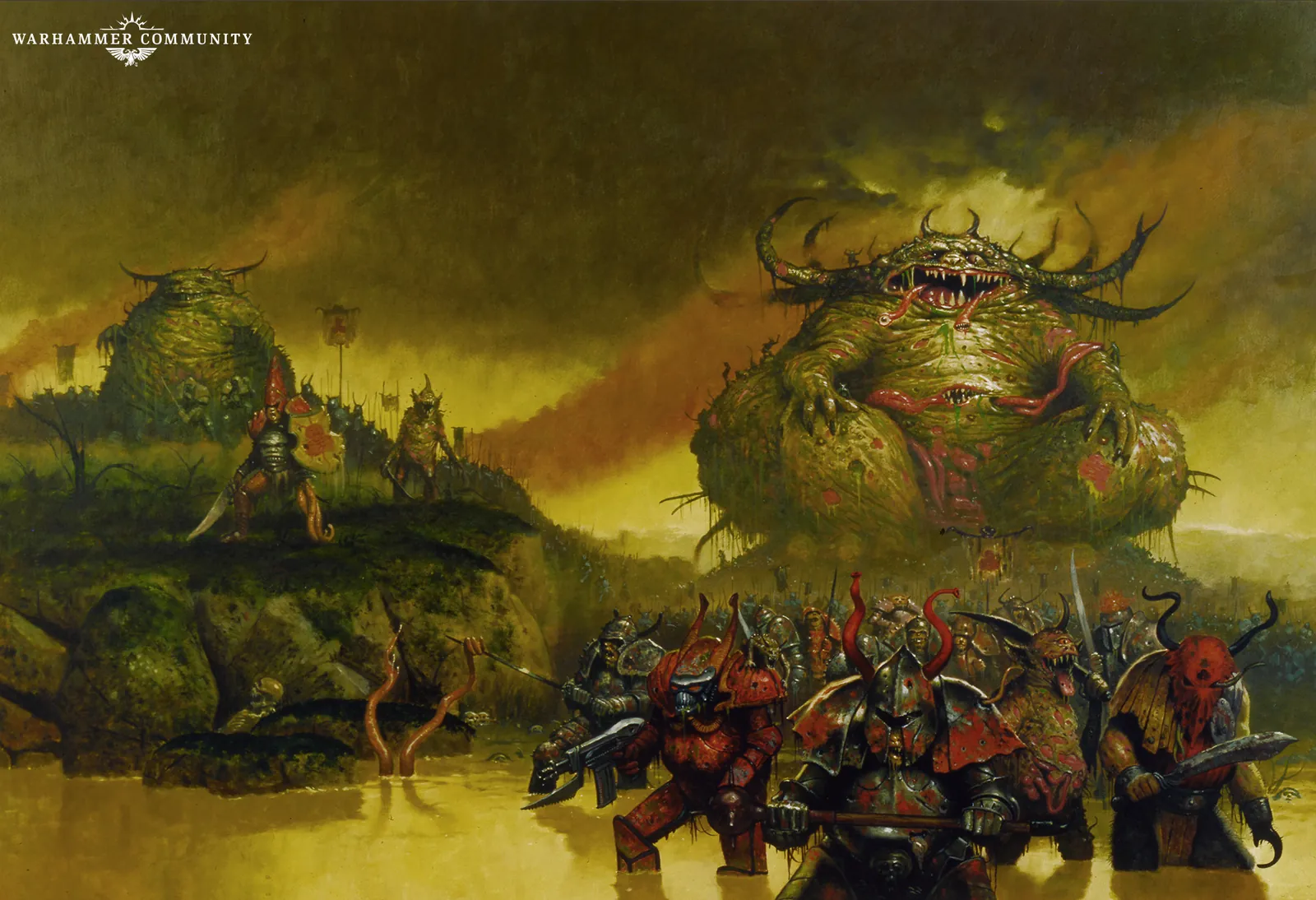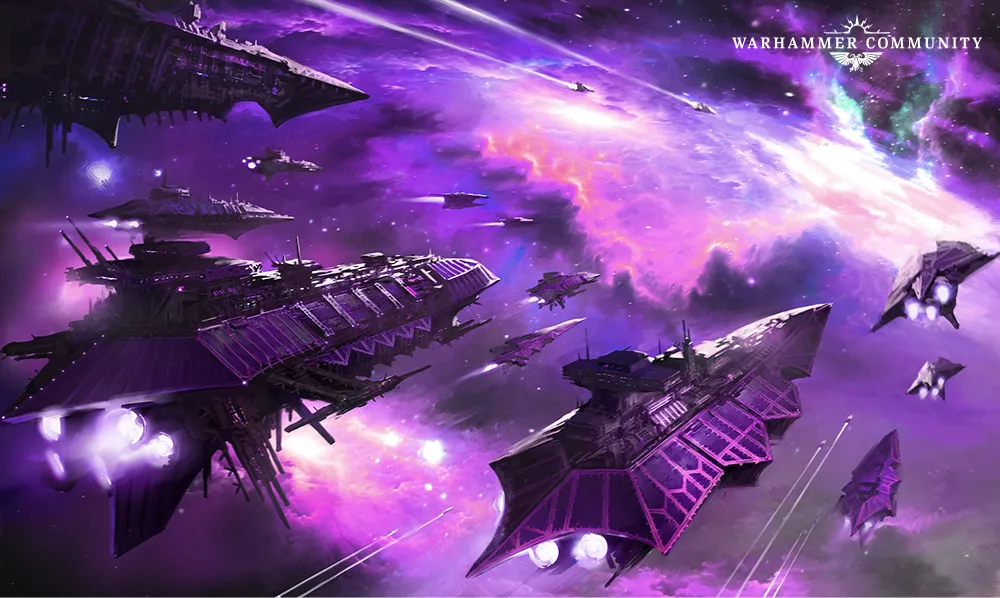
The Startide Nexus is a wormhole. The T’au punched it open during their Fourth Sphere Expansion when their experimental slipstream drives misfired and dumped half a colonisation fleet into a sub-realm that neither their physics nor their philosophy had any framework for. Years later, Shadowsun took the Fifth Sphere Expansion through the same wormhole on purpose, dragged the surviving Fourth Sphere fleet out of the Chalnath Expanse, and started building a second T’au foothold on the far side of the Cicatrix Maledictum. Then the Death Guard turned up.
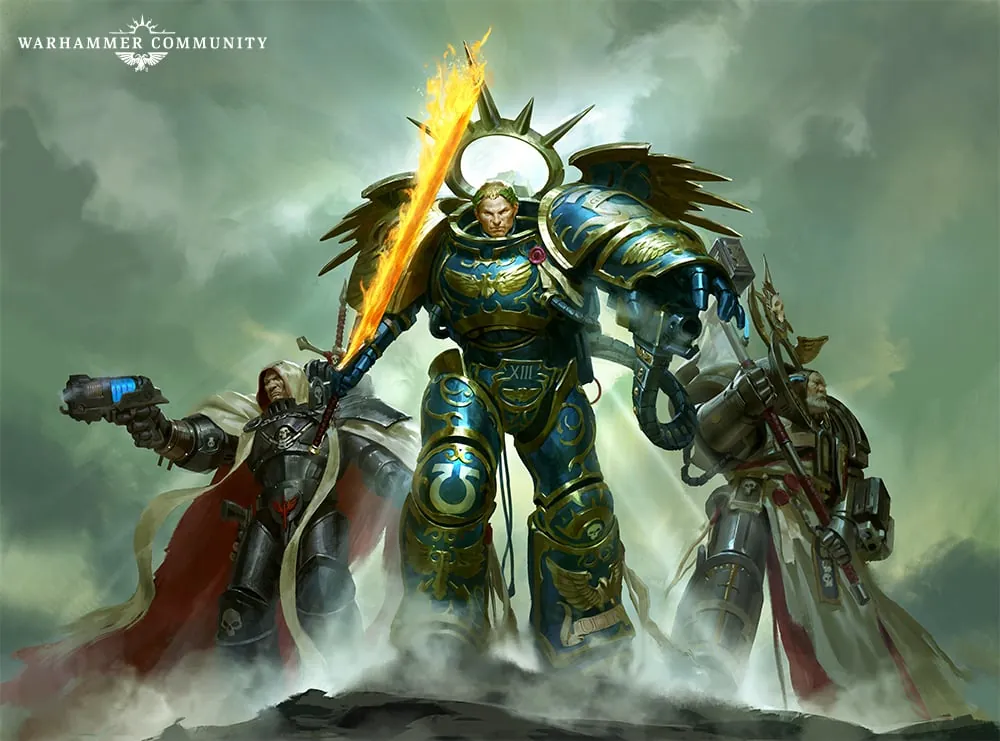
I want to talk about Guilliman.
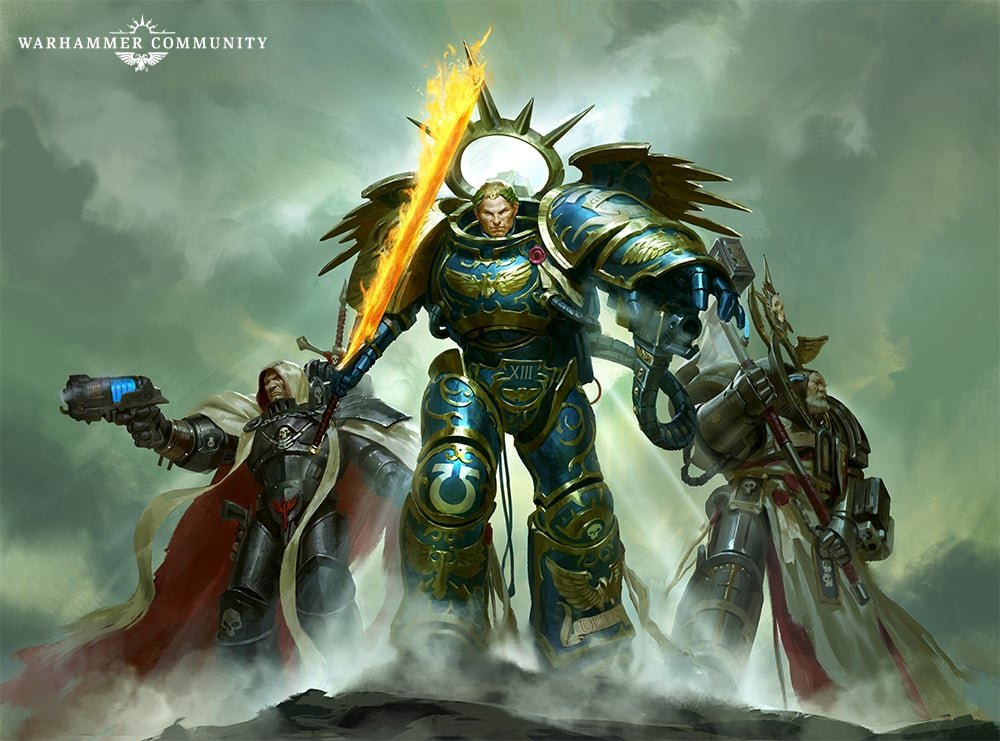
That’s the moment, more than any other, that crystallises the question. A T’au commander identifies Mortarion’s sons across the wreckage of an interstellar choke point and the response that actually arrives comes from Shadowsun, not from the only Primarch capable of fighting on a comparable scale. By the time of the Death Guard assault on the Startide Nexus, Roboute Guilliman has been awake for years. He has reorganised the Imperium, launched the largest crusade since the Great Crusade itself, sanctified a new generation of transhuman soldiery, fought daemons in the streets of Macragge, and personally led a fleet across the galaxy. There is no published Black Library novel where he addresses the T’au Empire. There is no codex passage where he gives an opinion on the Greater Good. There is no scene in any of the major edition launch books where the closest neighbour to Ultramar receives so much as a strategic memo from the Lord Commander of the Imperium.
The lore is still loud about a lot of things, and on this particular question it has been quiet for an unusually consistent length of time.
Where the T’au actually live
There’s a small, immovable problem that gets glossed over in most discussions of the Indomitus Crusade. The T’au are on the eastern fringe of the galaxy. Look at any Imperial map drawn after the Great Rift. The T’au Septs sit along the Damocles Gulf, which is in the lower-right corner of the galaxy if you orient the map the way GW’s books do. Macragge, Guilliman’s seat, is far further coreward and considerably to the galactic north. The Cicatrix Maledictum cuts the galaxy into two halves diagonally, and it puts the T’au in the same half as Cadia’s grave: Imperium Nihilus, the Dark Imperium.
The Indomitus Crusade was launched out of Sol. Its declared purpose was to reconquer Imperial worlds lost to Chaos in the immediate wake of the Great Rift, and its core operational area was Imperium Sanctus, the half of the galaxy where the Astronomican still functions. Fleet Primus pushed from Terra outward in steady, painfully short warp jumps. Battlegroup Kallides was sent south-west on a secret mission. Catachan was relieved. Rynn’s World was reinforced. Baal was rescued. There’s a long list of named worlds in the Indomitus Crusade fleet records, and none of them sit anywhere near the Damocles Gulf.
When Guilliman eventually pushes into Imperium Nihilus, he does so after years of consolidation in Sanctus, and his target is Fenris and the Space Wolves’ grim-faced cooperation against the Orks of Charadon. The arc of his crusade is northward and into Chaos territory. Even the most ambitious projection of where Fleet Primus eventually got to does not put it within striking distance of the T’au Septs. The math here is geographic. The T’au are in a bad neighbourhood for a Primarch to reach: on a side of the galaxy where short warp jumps are dangerous, where astropathic communication is broken, and where the Imperium has higher-priority bleeding to attend to in the same general direction.
What Black Library has actually written
Phil Kelly wrote a Dark Angels-vs-T’au novel called War of Secrets in 2017. It’s set in the Dark Imperium and treats the resurgent T’au as the immediate enemy of a small Imperial detachment, which is exactly the scale Black Library was prepared to commit to. I read it the year it came out, in a bath, in a flat I no longer live in, having ordered it because Kiran was running a Dark Angels list at our local store and I wanted to see what 8th edition was doing with them. The book is fine. It does what it sets out to do. It barely mentions Guilliman, and I had a low-grade grumpy feeling about that for about a week before forgetting about it for nearly a decade.
I went looking, after the most recent T’au codex dropped, for the Guilliman-T’au scene. Something. A line in a campaign book where one of his Logisticarum scribes sends a curt cease-and-desist to the Water caste. A single conversation with Cawl about whether the Mechanicus should be poaching Earth caste tech. Anything. The closest I found was a 2018 Reddit thread where someone asks the same question I’m asking, and the top comments are basically: yeah, no. Eight years of silence later, the question is still where it was. The Reddit thread itself is still up, and the comments under it are still mostly people guessing.
The Greater Good as a buffer state
The thing the T’au have actually been doing in Imperium Nihilus, while the Indomitus Crusade went about its business in Sanctus, is genuinely interesting. They captured the cardinal world Astorgius. They’ve been grinding through the hive world of Vorotheion. They’ve fought Genestealer Cults across Riatov and the Chalnath Expanse, autopsied human-Tyranid hybrids and concluded the same thing the Inquisition concluded ten thousand years earlier (kill them all). They held the Startide Nexus against the Death Guard. They’ve been absorbing Imperial worlds that were already lost: places where Imperial governors had collapsed, where the Astronomican was a memory, where Chaos cults and xeno-cultist uprisings had been ascendant since before the Great Rift cracked. From a strategic standpoint, the T’au Fifth Sphere Expansion is fighting enemies the Imperium itself cannot field a force against in this region, and the casualty math doesn’t entirely cut against Guilliman’s interests.
I keep going back and forth on whether this is genuinely lucky for the Imperium or just a convenient frame I’ve talked myself into. Maybe Guilliman would crush the Greater Good without breaking step if he could. Maybe he simply hasn’t gotten to it. The man is a logistics savant; he could be running the numbers and concluding that the Imperium spends more lives evicting the T’au from Vorotheion than it gains by re-establishing nominal sovereignty over a hive world that already mostly hates the Ecclesiarchy. Both readings are defensible, and I don’t think GW has decided which is canon.
The cynical reading is the one that survives the test, though. The T’au are killing Death Guard at Startide Nexus. Imperial commanders in Imperium Nihilus could not have killed those same Death Guard, because the Imperial commanders in Imperium Nihilus are mostly dead, scattered, or holding fortified worlds with the gates barred.
Why the silence costs Black Library nothing
There’s a very practical reason no novelist has put Guilliman in a room with a Water caste envoy, and it’s the same reason no novelist has put him in a room with a craftworld farseer or a Necron lord. The moment you write that scene, you have to commit. You have to decide whether Guilliman would entertain the conversation. You have to decide whether the Inquisition allows it to happen. You have to decide whether the result becomes treaty, ceasefire, or extermination. Each of those answers closes off two-thirds of the future story space for both factions, and you can’t put the answer back in the bottle once a Primarch has said it on the page.
The Imperium that Guilliman is trying to build, the one we see in the Sanctus reforms and the rebuilt Astra Militarum, runs on the older Imperial doctrine: xenos are extinction-eligible, full stop. Any Primarch-level diplomacy with the T’au would be considered tantamount to heresy by half of the Inquisition, and the Inquisition is one of the few bodies he genuinely cannot afford to alienate. He purged Terra to consolidate his crusade muster. He flogged a Navigator consul publicly. The political coalition that lets him exist as Lord Commander of the Imperium does not survive a public diplomatic gesture toward an Aun, and Guilliman knows the political coalition better than anyone.
So the memo isn’t written. The novel isn’t commissioned. The codex paragraph stays an empty page in the relevant chapter, and the gap is doing structural work for both factions.
The bit where I admit I don’t know what year it is
A complication. The in-universe timeline of the Era Indomitus is famously slippery. The codex calls it “M42, somewhere,” and depending on which book you read, the Indomitus Crusade has been running for five years, ten years, fifteen, or “indefinitely.” Which means the assertion “Guilliman has had time to address the T’au” is leaning on a chronology GW has deliberately blurred. The Mortarion situation is tied to Plague Wars timestamps that were established in the Dark Imperium novels; the T’au timeline is tied to Psychic Awakening’s The Greater Good and a handful of White Dwarf updates. Trying to align them gives you a window of somewhere between six and twenty years, and during that window Guilliman is also fighting Mortarion in Ultramar and reorganising the Imperial bureaucracy and crossing the Rubicon Primaris and going to the Pariah Nexus and so on.
So he’s busy. Granted. He’s also a Primarch with a literal warp-clear mandate to save Mankind, and you’d think the Greater Good’s slow annexation of Imperial cardinal worlds would clear at least one staff meeting on the Macragge’s Honour over the course of two decades. As far as published novels and codices go, it hasn’t cleared one yet.
What it looks like if you’re a T’au
From the Septs, the absence is presumably noted. The T’au know the Indomitus Crusade exists; the Water caste are not stupid and the Imperium’s astropathic chatter is loud even when it’s broken. They have built their entire Fifth Sphere Expansion strategy around the assumption that the Imperium’s main attention is somewhere else, and they have been right about that assumption for the entire run of post-Great-Rift lore. Shadowsun’s whole campaign is predicated on the Imperium being preoccupied. Take that preoccupation away and give Guilliman six months and a fleet and a desire, and the Fifth Sphere Expansion folds in a season. They know it. The Imperium knows it. The Imperium is choosing to act as if it does not, and the choice is consistent enough across two editions of lore that I don’t think it’s an accident.
The most interesting Guilliman scene I will probably never read is the one where someone brings the T’au file to him and he glances at it, asks how many Imperial regiments would be needed, and declines to act. Because the math is bad, the Inquisition is watching, and there are eleven worse things on his desk this week. Of all the reasons GW has for not writing that scene, the strongest one is that any honest answer would mean Guilliman tacitly accepting a foreign empire on Imperial soil, and that’s not the kind of decision Black Library has historically been willing to ascribe to a Primarch in print.
So he keeps fighting Mortarion. The T’au keep fighting Mortarion’s sons in a different theatre. The galaxy is large enough that this can be true at the same time without anyone in the room having to admit it out loud, which is what a galactic strategy looks like when nobody can afford to commit one to writing.