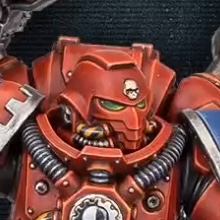
The Howling Griffons answered the call to the Badab War with no more than 250 Space Marines and a shortage of the aircraft and drop pods needed to get them into battle. They had just fought a costly campaign elsewhere. Returning home to rearm would have made military sense. Honour brought them to the Maelstrom instead.
That’s the decision at the heart of their account in Imperial Armour Volume 9: The Badab War — Part One. It gives this Chapter something more interesting than an impressive list of victories: a moment when its understanding of duty outran its ability to keep fighting.
Mancora keeps the wars supplied
The book’s “The Howling Griffons” section describes a Chapter proud of almost continuous campaigning. Supporting that appetite takes an unusually capable home base. Mancora’s extensive forges replace battlefield losses and sustain substantial stocks of rare equipment, including Mark VIII Errant armour and the Land Raider Prometheus.
The Chapter also holds recruitment rights on several worlds. Mancora itself remains divided among feudal city-states engaged in frequent warfare, maintaining the martial population from which the Griffons draw recruits. Their ability to wage distant wars rests on people and workshops doing the replenishing at home.
In “Organisation,” the same source describes committed generalists. They follow the Codex Astartes as an unrivalled military treatise, training their warriors across its disciplines rather than concentrating on a single kind of battle. Armoured assaults, planetary strikes and boarding actions all belong in their repertoire.
That makes the later shortage especially telling. These are well-supported Marines who understand the tools a campaign requires. Badab catches one contingent between wars, before the system supporting it has had time to restore what the previous fighting consumed.
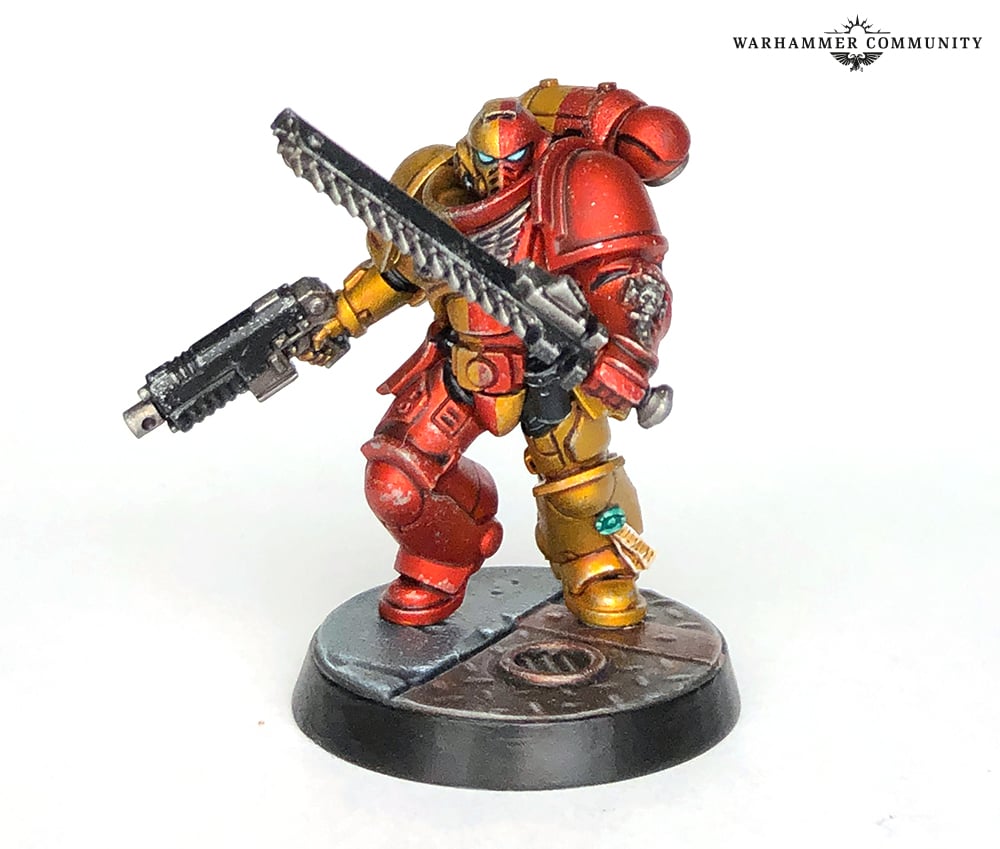 Tyler Mengel’s Howling Griffon, from his Warhammer Community painting guide; a modern hobby example of the Chapter’s colours.
The dead leave obligations behind
The Chapter history gives honour a particularly bitter inheritance. At Arios Point in 220.M38, Periclitor and his allies ambushed the Chapter Master’s battle-barge as it returned to Mancora for a founding anniversary. Survivors were driven onto Arios Quintus, surrounded and killed in a last stand.
The losses included Chapter Master Orlando Furioso, much of the First Company, the Eighth Company and the ancient battle-barge. His desecrated body was later recovered from a Thunderhawk drifting in orbit.
According to the same account, every new battle-brother swears to avenge those who fell at Arios whenever able. The Chapter’s determination to destroy Periclitor survived his eventual elevation to daemonhood. A recruit inherits a grievance older than his own life, along with the equipment and traditions needed to pursue it.
That history helps explain the weight the book gives honour. It doesn’t establish Arios as the cause of every subsequent decision. It shows a Chapter that turns the obligations of its dead into duties for future generations.
A garrison in the Executioners’ path
“Badab War Disposition” brings the contingent into the war in mid-906.M41. Its Marines came from the remnants of the Fourth Battle Company, elements of the Sixth and Tenth, and several Terminator squads. They had suffered heavily during a lengthy sweep through the Caradryad Sector.
Thunderhawks and drop pods were particularly depleted. The account explicitly says honour prevented them from ignoring the summons before returning to Mancora to rearm. Loyalist commanders accommodated that condition: they assigned garrison and convoy duties, with the largest deployment occupying Khymara’s airless moons.
Those stations mattered. Defence platforms and listening posts on the Maelstrom’s edge were to become a staging point for an eventual assault on the Badab Sector. Holding them was useful work for a force short of assault transports.
It also placed the Griffons directly in the path of the Executioners, who were entering the war on the secessionist side to fulfil their own blood oath to Huron.
That collision is the cruelest part of the episode. Both Chapters arrived with obligations they felt bound to honour. Those obligations put them on opposite sides of the same defensive positions.
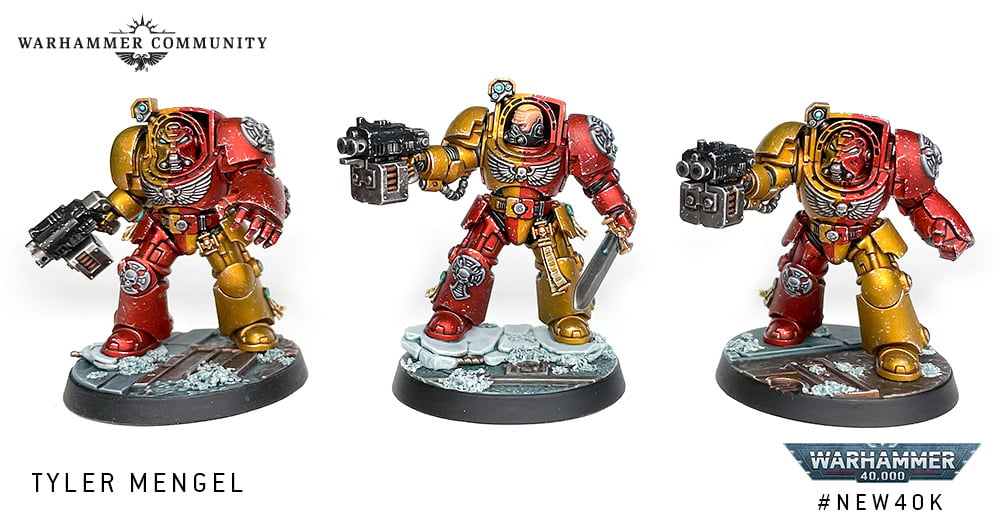 Terminators painted by Tyler Mengel, featured in Warhammer Community’s Leviathan showcase; these are modern miniatures, rather than a depiction of Khymara.
Staying until somebody says enough
The Executioners’ surprise assault shattered the garrisons. Imperial Armour records more than 70% casualties among the Howling Griffons garrison, the destruction of the strike cruiser Augeias, and the death of their revered Chaplain Dreadnought Titus. These were losses to the deployed force; the Chapter still had its other warriors and its home on Mancora.
The Executioners destroyed the stations and withdrew once their military objectives were achieved. The account observes that they could have pressed on and annihilated the survivors. Novamarines reinforcements then helped stabilise the loyalist position.
Even after Khymara, the remaining Griffons continued serving until formally relieved in 909.M41. They finally returned to Mancora aboard commandeered warp-capable vessels, carrying their dead home.
I find that departure more revealing than another triumphant last stand. Their resourcefulness and endurance kept a damaged force useful, but duty also kept it committed after appalling losses. They stayed until formally relieved, even though the journey home was already so badly overdue.
Mancora’s forges and recruiting worlds explain how the Howling Griffons can sustain their reputation. Khymara shows the pressure that reputation places on the warriors between one campaign and the next. They could return home when relieved. Until then, they still had a war to fight.
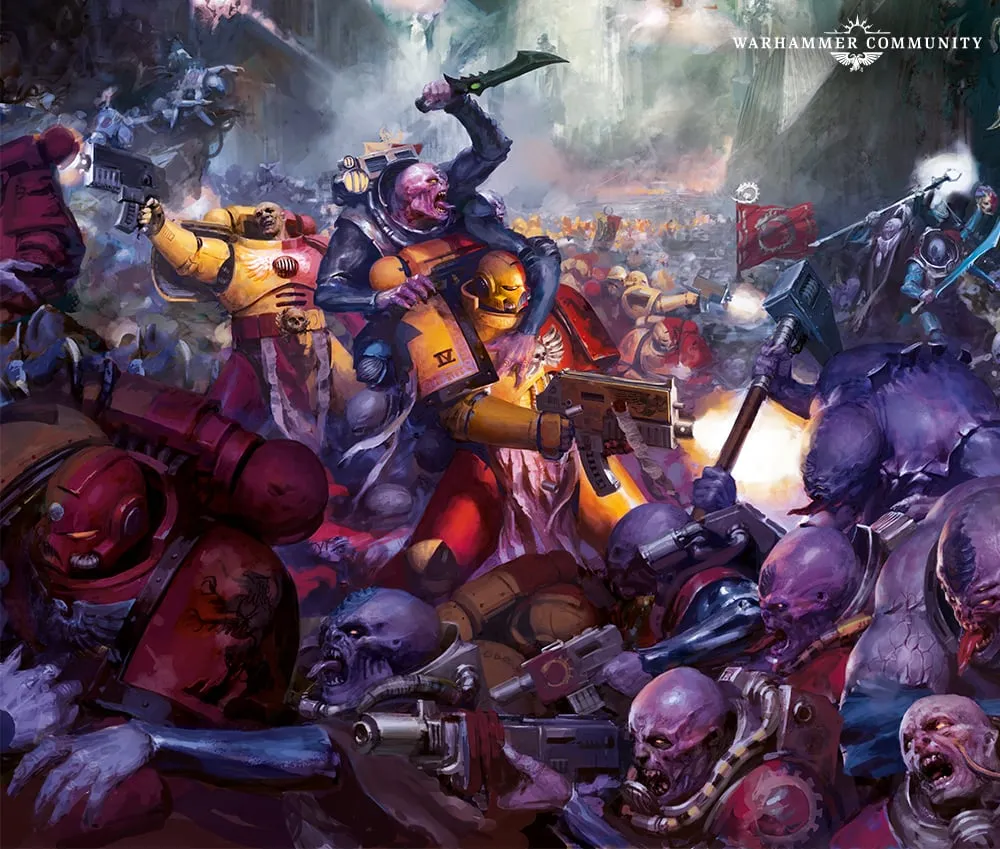
Lore source: Imperial Armour Volume 9: The Badab War — Part One, “The Howling Griffons,” “Organisation” and “Badab War Disposition.” This spotlight follows that historical account. Header artwork: Games Workshop / Warhammer Community, depicting Howling Griffons fighting Genestealer Cultists, rather than the battle at Khymara. Miniature photographs: Tyler Mengel / Warhammer Community.