“Iron Within, Iron Without”
The Iron Warriors have a litany. From iron cometh strength. From strength cometh will. From will cometh faith. From faith cometh honour. From honour cometh iron. Say it out loud. It doesn’t invoke a god. It doesn’t bargain with a patron power or beg for daemonic favour. It loops back to iron, the thing the Iron Warriors already have, the thing they built for themselves. Most Chaos Marines start the day with something that reads like a prayer. The Iron Warriors’ version is an equation in five terms.
Ten thousand years after the Horus Heresy, the IVth Legion is still running that equation. Still organised into Grand Battalions. Still led by Warsmiths with Strategos councils and Tyranthikos Terminator companies. Still executing sieges the way Perturabo wrote them up in the Tactica Imperium before he ever heard of Horus.
This is the traitor legion that kept its officer corps.
Grand Battalions and the officer corps nobody talks about
When the Iron Warriors went renegade, they took their military structure with them. The Heresy-era Legion was organised into Grand Battalions, each roughly a thousand warriors strong, functioning like a Loyalist Chapter. Above the Grand Battalions was Perturabo. Below them were Grand Companies. Each Grand Battalion had its own supply train, artillery complement, armour reserves, and Ordo Reductor support. Severely depleted battalions were folded into stronger ones so that no formation dropped below operational strength.
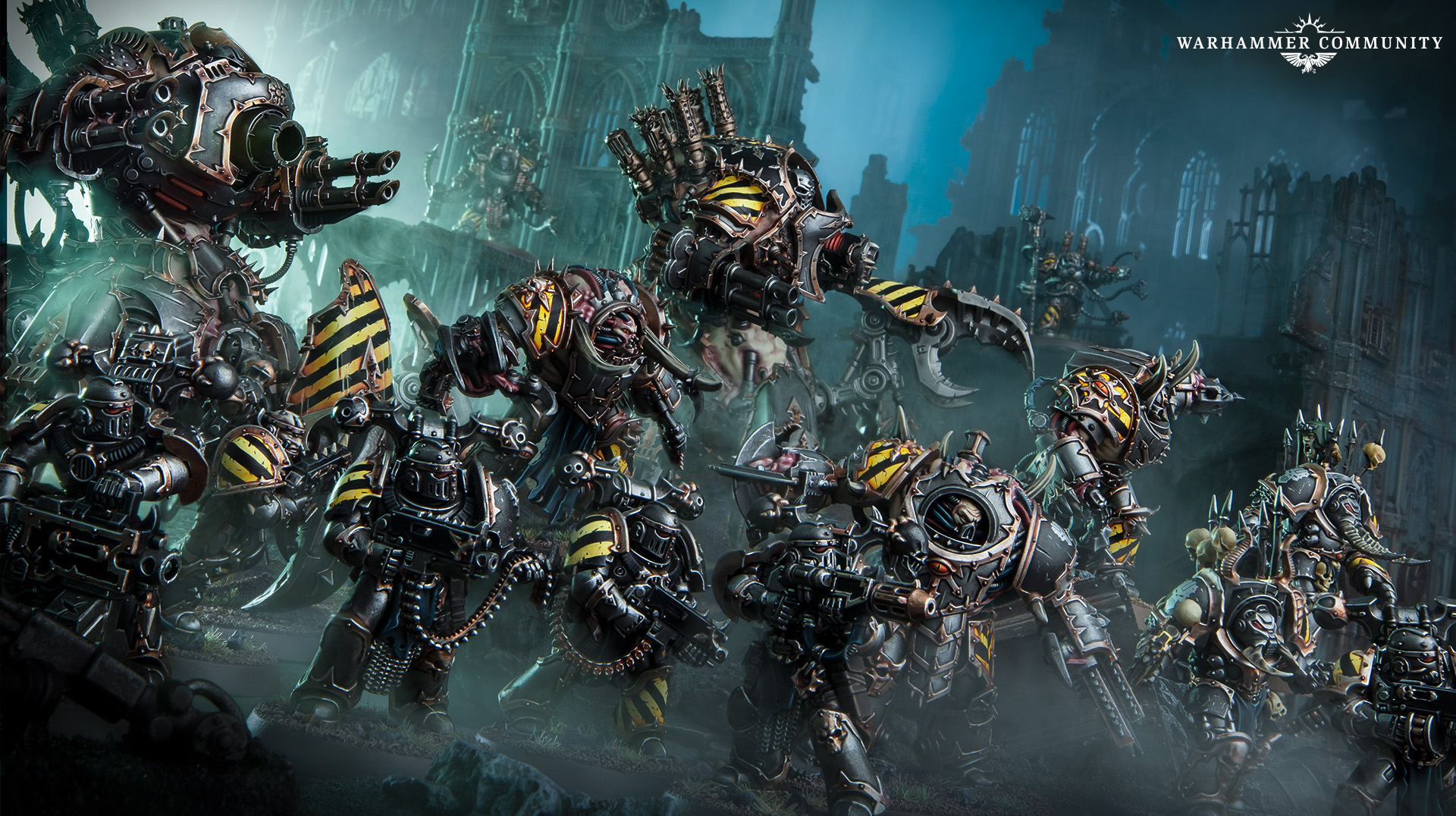
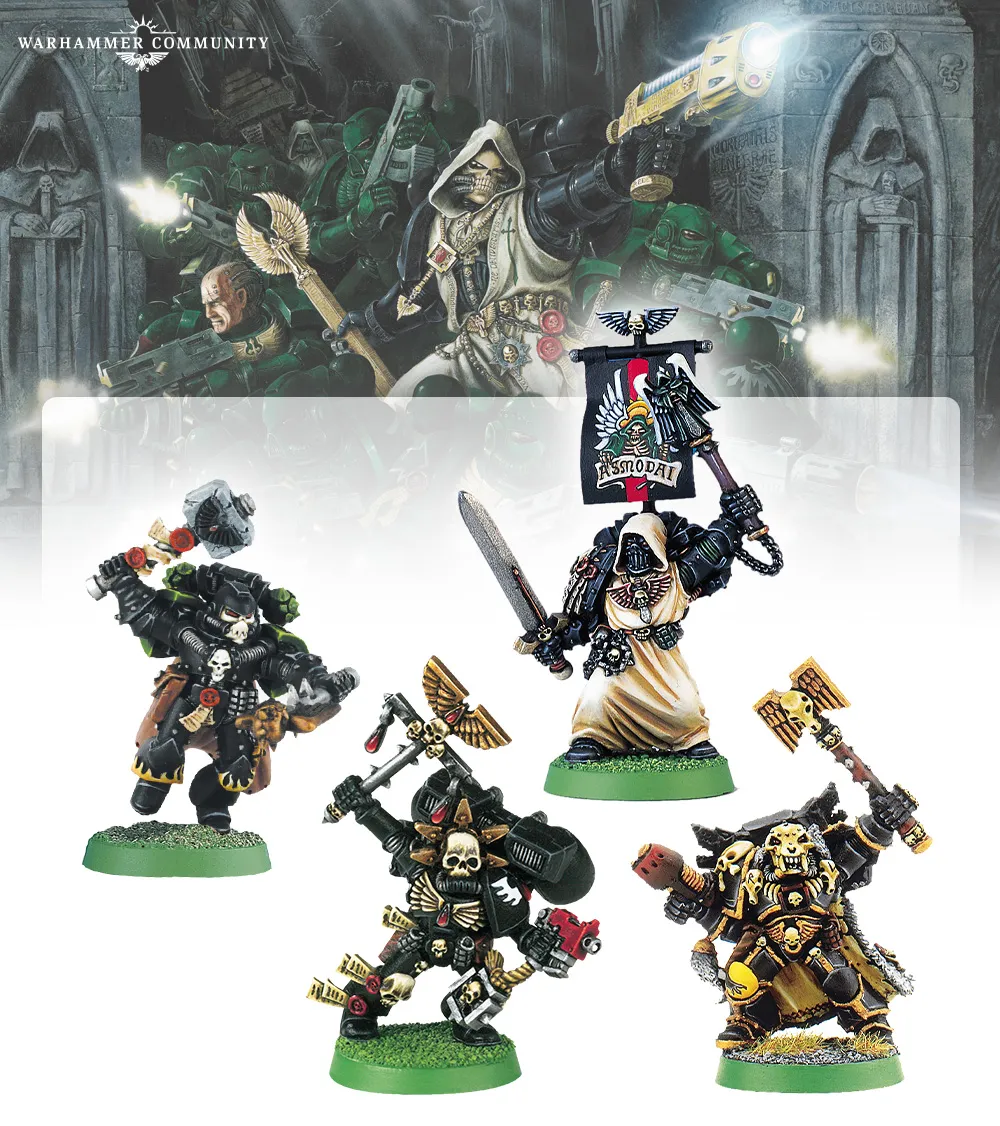
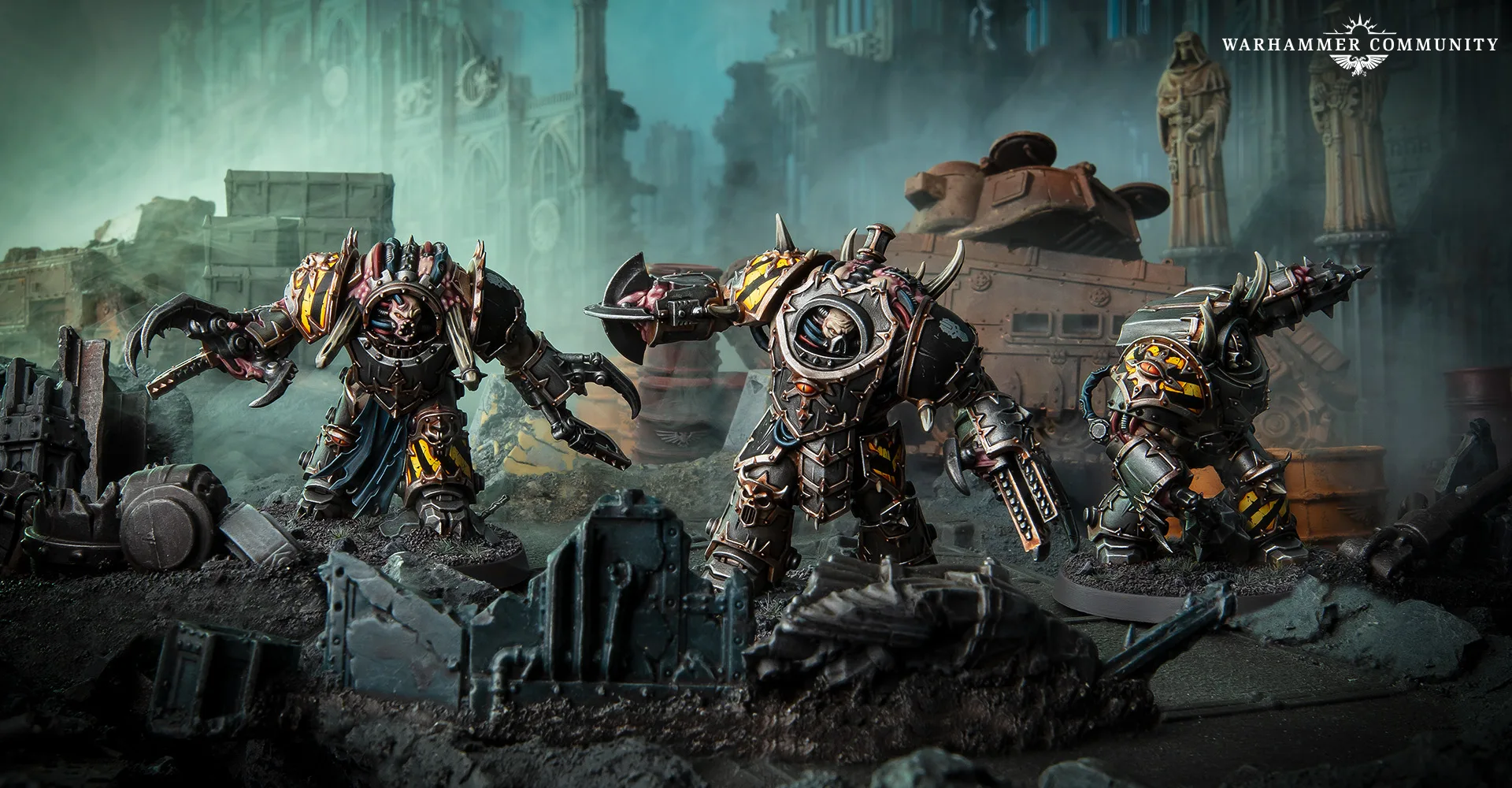
The Iron Warriors took this into the Eye of Terror and never really dismantled it. Ten thousand years in the Warp have thinned the Legion out, warped its individual warriors, and scattered Warsmiths across a hundred warbands. The template is still recognisable. A modern Iron Warriors warband still has a Warsmith in unambiguous command authority, a Strategos council of specialised advisors, an elite Terminator assault company called the Tyranthikos, middle officers (Kentarchos) running Line Companies and armoured divisions, junior officers (Lochagos) running squads, a Warpsmith division handling daemon engines, and an attached Dark Mechanicum cohort doing siege engineering. The Iron Warriors took their organisation chart into the Eye of Terror and have been running it since.
This arrangement is rare among the Traitor Legions. Most of them dissolved into warband structures after the Heresy, rebuilt around god-worship or charismatic leaders. The Grand Battalion framework in Iron Warriors warbands in M41 has remained intact.
Hydra Cordatus, or what a professional traitor campaign looks like
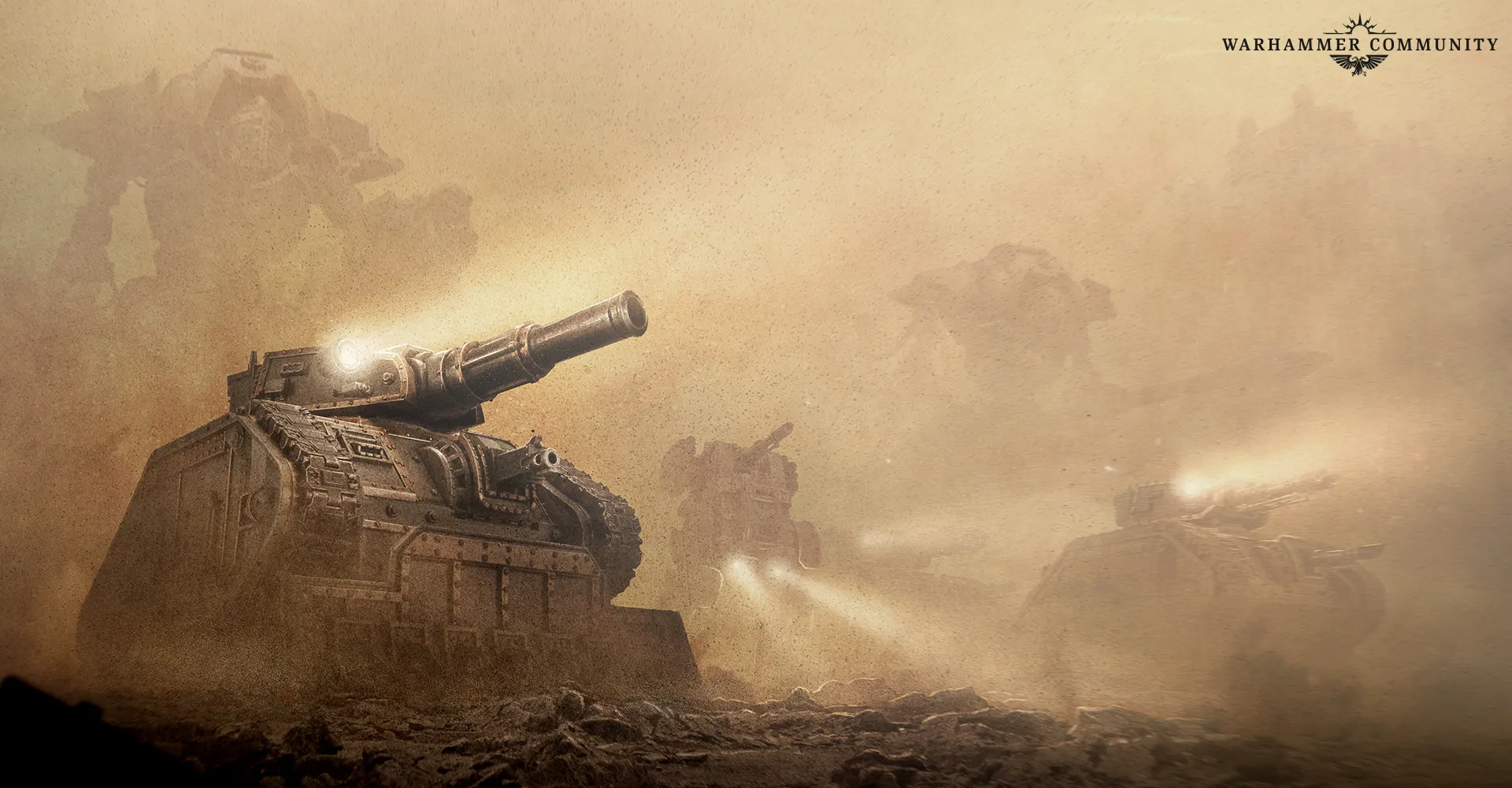
The best case study for how the Iron Warriors fight is Hydra Cordatus, a Loyalist-held world they spent three solar months besieging during the Horus Heresy. An Imperial Fists garrison held the Cadmean Citadel, an ancient fortress sited in difficult geography. The Iron Warriors wanted the citadel, but more than that they wanted to prove to the Imperial Fists that they could take any citadel, any time, with full respect to the engineering constraints.
They opened with a saturation bombardment that boiled the rivers, turned the fertile deltas into dust, and stripped the valley down to bedrock. They left the citadel itself untouched. The Imperial Fists inside the walls apparently could not believe the bombardment had been that precise, which is exactly the reaction the Iron Warriors were after.
Then they spent three months digging trenches, running siege batteries, and methodically reducing the fortress’s defences. When the walls finally broke, Perturabo led the final assault himself, killing thirty Imperial Fists Legionaries in a few minutes of close combat. Fifty-two Astartes defenders and thirteen thousand civilian refugees were killed to the last person. The Iron Warriors then left. The planet behind them was a desert.
This is what professional traitor warfare looks like. A specific target, a specific methodology, and a planned extraction once the objective was met. The supply train was already moving before the bombardment finished.
Why the structure survived ten thousand years
Perturabo is the answer. All of it. He’s the only Primarch who took a grudge into the Eye of Terror and turned it into a daily operational standard. The Iron Warriors went renegade because Perturabo was angry. The Legion’s structure has survived because Perturabo’s anger has survived.
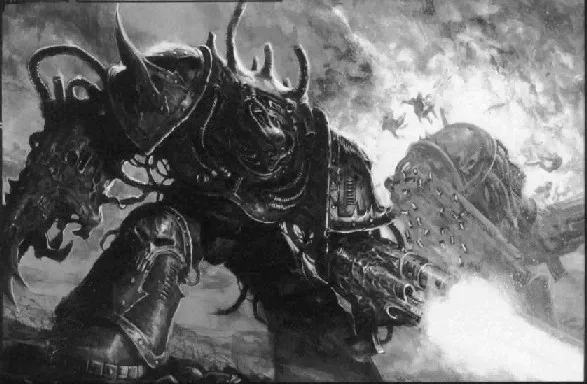
Their allegiance is Chaos Undivided. No single god has rewired them, because Perturabo wouldn’t allow it, and because operating as a military doesn’t leave room for the kind of devotional self-mutilation that rewires your coordination systems. When an Iron Warrior mutates, he cuts the mutation off and bolts a bionic over the stump. Cutting off a mutation and bolting on a bionic is treated as standard medical hygiene in Iron Warriors doctrine.
Sit with it for a minute. This is a traitor legion (daemon primarch, renegade from the Emperor, ten thousand years in the Warp) that runs on forms in triplicate. Siege reports, ammunition logs, attrition rates. There is paperwork. Warsmiths probably complain about paperwork. It’s the equivalent of the IT department that outlasted three different owning companies by sheer stubbornness.
Reading Storm of Iron too young
I came to the Iron Warriors through Storm of Iron. Graham McNeill’s 2002 novel, the one that follows Warsmith Honsou laying siege to an Imperial citadel on Hydra Cordatus. I picked up the Horus Heresy reprint paperback in about 2016 or 2017, a couple of years after I got into 40K, assuming from the cover that it was going to be a desperate-defenders book. Imperial Fists holding off a Chaos siege, Helm’s Deep with bolters.
It isn’t. The Iron Warriors are the viewpoint characters. You spend most of the book inside Honsou’s command bunker, reading siege reports, watching him manage attrition rates on his Grand Company, arguing with his Archmagos about tunnel collapse risks. There are daemons. There are mutations. There are cultists. The rhythm of the book is a project-manager’s rhythm. Honsou has a deliverable (take the citadel) and a timeline (before the Imperial relief fleet arrives) and he organises his subordinates around it.
I closed the book genuinely unnerved. Kiran had recommended it, which annoyed me because he’s usually wrong about Chaos books. He wasn’t wrong about this one. I kept thinking about Honsou’s supply logistics afterwards in a way I hadn’t really thought about for any other Traitor Legion, and started a small Iron Warriors Kill Team a few months later that’s still sitting in its sprue because I went back to Thousand Sons. That part is on-brand for me.
The strategic problem they present
Here’s the reason Guilliman pays the Iron Warriors more attention than he pays the World Eaters. You can predict World Eaters. They’ll arrive where the Warp currents dump them, they’ll charge the closest enemy formation, and they’ll keep charging until Angron gets bored. You can plan around World Eaters. The Iron Warriors are harder to plan around, because they do their own planning on parallel timelines.
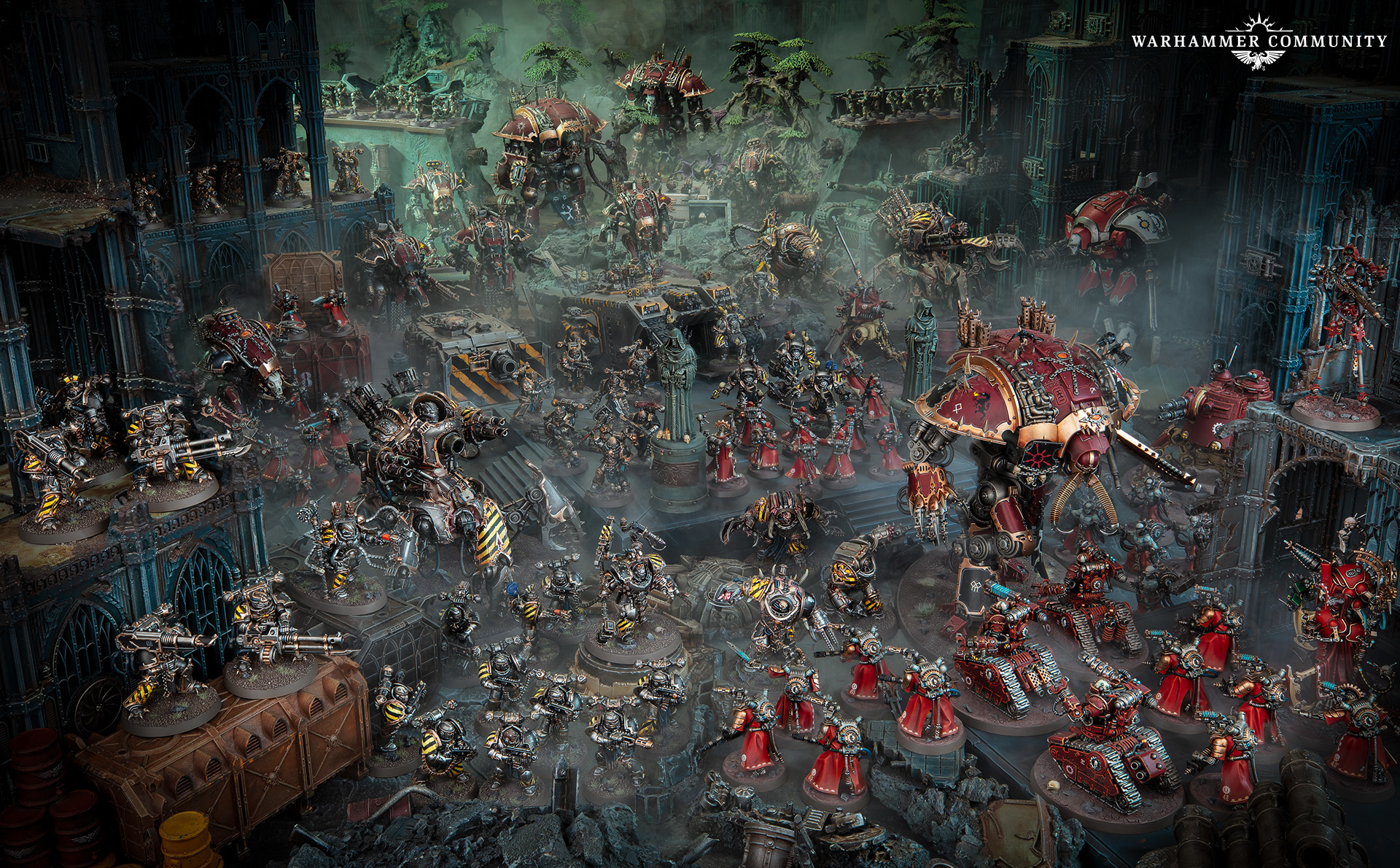
A Grand Battalion on a campaign world behaves like a functioning military formation. It does reconnaissance. It stockpiles supplies. It fortifies positions before an assault. It conducts precision bombardments to achieve specific effects rather than general destruction. It coordinates with Dark Mechanicum assets for siege engineering. When it loses a battle, it withdraws in order. When a Warsmith is killed, a new Warsmith is promoted from the Strategos, and the campaign continues under the same operational plan.
In the Ashes of the Imperium era, with the Reign of Iron rolling outward from the Eye of Terror, this matters practically. An Iron Warriors task force at Agripinaa is not going to behave like the usual Chaos invasion. It will set up perimeter. It will cut off supply routes. It will reduce defences over weeks or months of coordinated pressure. It will do to Loyalist forge worlds what Perturabo did to Hydra Cordatus: saturate, besiege, breach, strip, and move on.
This is also why Kravek Morne, the new named Warsmith model, matters more than most of GW’s recent character releases. Kravek Morne isn’t a one-off. He’s a promotion within a military hierarchy that’s been running continuously since the Great Crusade.
The closet industrialists of the Eye of Terror
Medrengard is the Iron Warriors’ daemon world home, and it’s worth saying what it actually looks like. It’s an industrial hellscape of forges, foundries, slave pits, and artillery proving grounds. Furnaces running day and night. Regiments of slave labour dragging raw materials into grinding factory complexes. The lights never go out on Medrengard because something is always being manufactured there.
That’s the Iron Warriors’ contribution to the Eye of Terror. A factory complex built on suffering, producing munitions, armoured vehicles, and siege engines for distribution to Chaos warbands across the galaxy. The Iron Warriors sell their outputs. They get paid in raw materials, prisoners, and gene-seed. They have been running this operation since shortly after the Heresy, using the same administrative apparatus the Legion had under the Emperor.
Iron Warriors task forces are the only Chaos presence in the galaxy that still budgets its campaigns. The siege passages Perturabo wrote for the Tactica Imperium are still in use on the Phalanx. Guilliman’s officers are taught from them. Ten thousand years later, Imperial officer cadets learn siege engineering from passages Perturabo wrote under the Emperor’s banner.