
The Imperium of Man cannot break the Navis Nobilite.
The Navigator Houses predate the Imperium. They were already an organised aristocracy on Terra before the Emperor came up out of the Unification Wars. They have monopoly control over Warp travel because every long-haul ship needs a Navigator and Navigators only come from one set of families. The Inquisition’s authority over Imperial citizens stops at the door of a Navigator palace; only the Ordo Malleus has formal jurisdiction, and even they tread carefully. The Adeptus Mechanicus is bound to provide medical and technological services to the Houses by ancient oath. The High Lords of Terra include a Paternoval Envoy by long-standing seat. The wealth of the largest Houses isn’t easy to quantify, because it’s hidden inside everyone else’s wealth; they own pieces of merchant fleets, forge worlds, knight houses, Rogue Trader dynasties.
Roughly every five hundred years the most senior of them dies. While his successors fight each other to the death over the seat, the rest of the galaxy’s interstellar economy pauses for the duration.
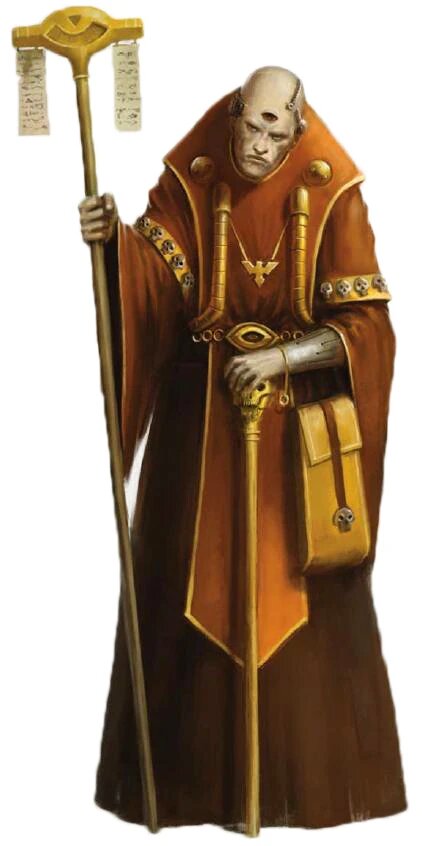
The taxonomy other Houses use to talk about each other
Magisterial Houses are the old aristocracy. Lineages back to the Unification Wars, main palace still in the Navigator’s Quarter on Terra, gene-pool kept tight by careful arranged marriages and gene-scrying before each match. House Belisarius (the Space Wolves’ Navigators) is Magisterial. So is Balevolio, who navigated Macharius’s flagship throughout his crusade. So is Ortellius, currently quietly running out of viable gene-stock and hoping nobody important finds out before they can do something about it.
Nomadic Houses sold off the Terran palace generations ago and live entirely on their own ship-cities. They tend to be the best Navigators in the galaxy because they spend more time looking into the Warp than anyone else. Most of them develop a kind of voidship pidgin that takes outsiders a while to follow.
Shrouded Houses are fallen Magisterials that lost everything in some old scandal and now cling to the edges of Imperial space. The cruder Houses call them “beggar Houses.” They’re often surprisingly capable Navigators, because the Warp Eye gets used a lot when nobody’s hiring you for the easy runs.
Renegade Houses are the ones that got cast out, declared outlaw by the Paternova, hunted by the Inquisition, or both. House Nostromo, House Tarquinius, House Typhon. Some are extinct. Most of the rest live somewhere in the Koronus Expanse or other frontier zones beyond the Astronomican’s reliable reach.
What the Paternova actually does
The Paternova is the genetic centre of the Navis Nobilite. Every active Navigator is, in some sense, downstream of him or her, and the Paternova’s psychic mutation amplifies the Warp Sense of every other Navigator alive. When the Paternova dies, the connection cuts. Suddenly every Warp jump in the Imperium is harder. Some Houses lose their ability to navigate at all for the duration of the interregnum. This is why the succession is so violent. The Imperium’s interstellar economy literally cannot afford for the title to be vacant for long.
The Heirs Apparent — the most powerful Navigators of the Great Houses, identified before the previous Paternova’s death and held in reserve — undergo physical metamorphosis the moment the seat empties. Their psychic gift grows. Their bodies adapt to vacuum and toxin. Their natural aggression goes up by design. They are channelled into the Palace of the Navigators on Terra and they fight until one is left.
Whichever House the new Paternova came from gets a windfall. Their cousins back home suddenly have stronger Warp Sense than any other Navigator alive. Their House becomes the staff of the Palace, the bodyguard, the inner ring. The previous Paternova’s House loses the same advantage they had a generation ago. Imperial genetic science cannot explain why this transfer happens.
So every Heir Apparent is a House’s bid for two centuries of dominance, and every Magisterial House quietly knows who their candidate is. Most Heirs Apparent die of old age before they ever get to compete; the previous Paternova outlasts them.
Trade wars and Warp Eye duels
The bulk of inter-House conflict happens through trade wars: prolonged campaigns of contract sabotage, financial pressure, and occasional assassination. House Dakkar started a trade war with House Malaspina during the Angevin Crusade over shipping rights in the Calixis Sector and it escalated into open assassinations on both sides. Saint Drusus’s intervention and the Paternova declaring both Houses outcast was what stopped the entire region from collapsing into a Navigator-on-Navigator war. Malaspina was eventually allowed back. Dakkar wasn’t, and they’re still operating from somewhere in the dark beyond the Mandragora Sector. Nobody in the Calixis Sector knows their current numbers.
When trade wars escalate into personal grievance, the Houses sometimes fall back on the Navigator duel. This is exactly as 40K as it sounds. Two Navigators bow, uncover their third eye, and stare at each other directly through the Warp. Whoever can endure the gaze of the other, wins. Sometimes it’s solar seconds. Sometimes it’s hours. The duels were standardised by House Typhon during the Elutrian Confederacy heresy and the tradition outlived Typhon’s destruction; the Houses of the Calixis Sector still settle disputes this way.
I tried to imagine running a Navigator duel as a tabletop scenario once and couldn’t get it to work. The drama is interior; there’s nothing to actually push around with a finger.
House Belisarius and the only piece of this most players have heard of
House Belisarius is the easiest House to talk about because they’re tied to the Space Wolves and that’s the one piece of Navigator lore most 40K players know. Belisarius navigates exclusively for the Space Wolves’ Chapter fleet. In return, the Wolves provide the Wolfblade, a small detachment of Astartes who serve as the personal honour guard of the Celestarch (Belisarius’s term for their Novator). The Wolfblade have their own Black Library novel and a recurring presence in the older background books. They are, as far as I know, the only example of a Space Marine Chapter being formally bound in service to a non-Astartes noble House. As far as I can tell from the older sourcebooks, Belisarius isn’t even the largest of the Magisterial Houses.
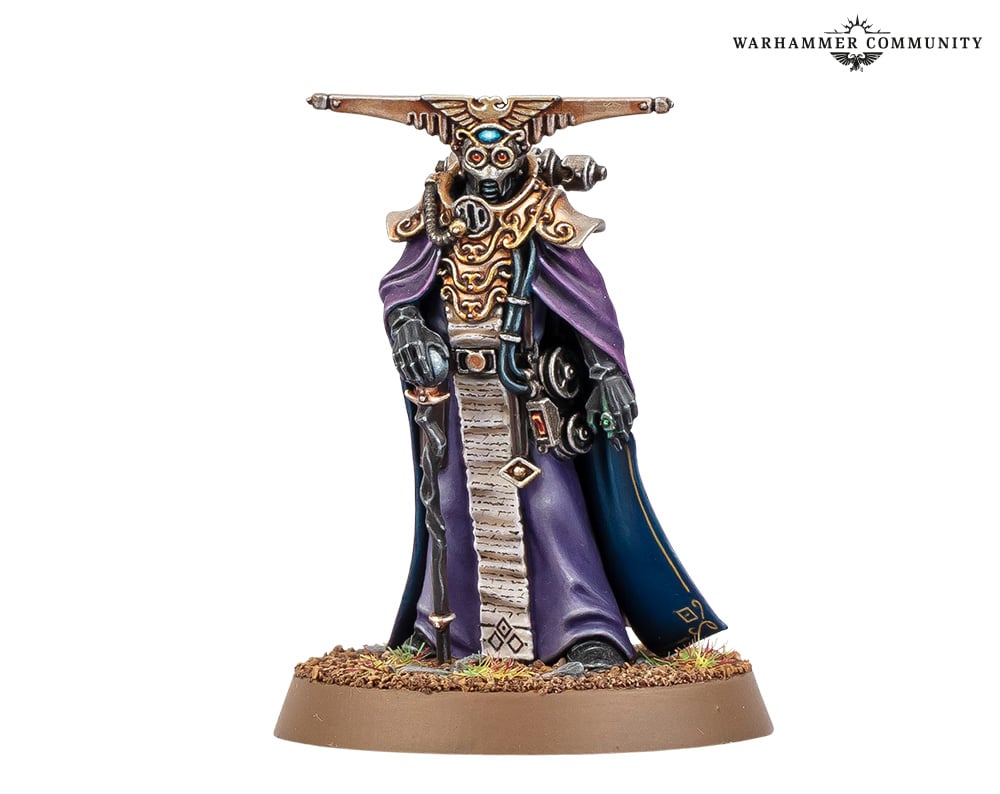
Belisarius is also feuding with House Ferraci. Has been for centuries. Nobody outside the Navis Nobilite seems to know what started it. Most inter-House feuds work this way; the trigger is internal House record and stays there.
The reason Navigators stuck in my head as a kid was an old Rogue Trader RPG hardback my mate Pete picked up from a car-boot sale around 2014. There was a full-colour plate of a Navigator in dress robes with the Warp Eye covered by a band of velvet, and a footnote claiming the eye was always covered in public because looking on it could kill. Pete read that out loud on the drive home and we spent the rest of the trip arguing about whether the kill effect was real or just propaganda the Houses leaned into. I still don’t know the answer. I think the books are deliberately ambiguous about it. The black-orb eye of an old Navigator can definitely kill, that’s stated. Whether a normal Navigator’s gaze can kill an unprotected human is one of those 40K trivia points where the source you find is the answer you get…
What attacking one of these Houses actually requires
Periodically in 40K novels someone gets the bright idea of going after a Navigator House and it’s always a disaster. The House has its own private army, bodyguards numbering in the thousands for the larger ones, sometimes augmented humans, sometimes mercenary regiments hired effectively in perpetuity. The House has enough wealth to buy off a Planetary Defence Force. The House has direct comms with every other House through the Novator Cortex, so any move against one is known to all the rest within minutes. The House’s lineage is shielded by the Paternova’s authority, and any aggressor risks the Inquisition treating the assault as a Chaos plot rather than internal Imperial business. The Inquisition might still go in if the case is serious; Renegade Houses get hunted to extinction. But the bar is very, very high, and the case has to be airtight before the rest of the Navis Nobilite stops backing the targeted House out of solidarity.
In the older Rogue Trader RPG books, attacking a Magisterial House was treated as roughly equivalent to attacking a Forge World. Both required the High Lords’ direct backing before any organisation in the galaxy was going to seriously try.
House Zegenda and the worst case in the canon
I said the Imperium can’t break the Navigator Houses. That’s not strictly true. The Renegade Houses are evidence the Imperium can if it really has to. The rule is more like “won’t, because the cost is unacceptable most of the time.” House Zegenda is the most concrete example in the canon of what that cost actually looks like.
Zegenda was one of the oldest Houses. The Emperor of Mankind personally gifted them, in their entirety, to Mortarion’s Death Guard during the Great Crusade. They were sworn by oath and gene-binding to follow the XIV Legion wherever they went, in perpetuity. When First Captain Calas Typhon — future Typhus the Traveller — wanted to deliver his Primarch to Nurgle, he needed the Zegenda Navigators dead, because alive they would have navigated the Death Guard fleet out of the Warp storm he was steering them into. So he killed them. Every Zegenda Navigator on the Death Guard fleet was executed aboard the ships they were guiding, just before the Siege of Terra. After that the Death Guard didn’t need Navigators because Nurgle was guiding them directly. The House was extinct.
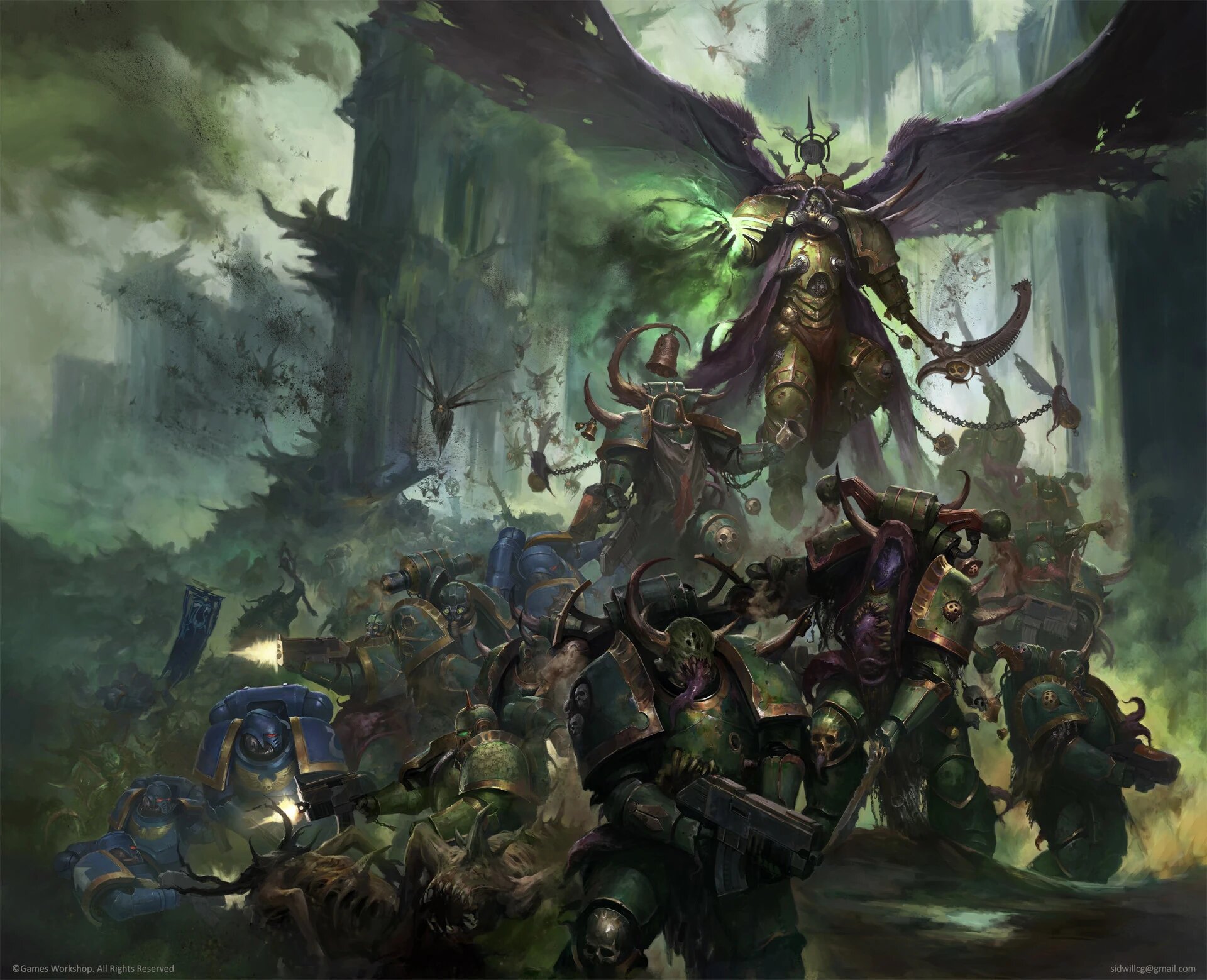
That’s one of the bleakest pieces of incidental Heresy lore I’ve come across. An entire genetic dynasty wiped out as a tactical move to cover one captain’s betrayal, and almost nobody mentions Zegenda again in the canon. They were a House the Emperor personally gave to one of his sons. They’d been bonded to the XIV Legion for centuries. Then they were killed before the Siege of Terra began, and the canon barely brings them up since.
Right, yeah. Old families. Mutant nobles. Fight to the death for the top job. Run trade wars over shipping contracts. Inquisition can’t really touch them. Get gifted to Primarchs sometimes, get murdered by them other times. That’s the shape of it.
Why the Imperium tolerates all of this
Because they have to. There is no alternative source of Navigators. The Mechanicus has tried to clone them, manufacture them, replicate the gene through artificial means. The gene is too unstable, too entangled with mutation, too dependent on the Paternova’s amplifying psychic field to work outside a careful breeding programme run by the Houses themselves. The Imperium’s entire interstellar logistics rests on a small intermarried mutant aristocracy that the Imperium classifies as mutants and would otherwise hunt.
It’s a strange political situation when you sit with it. Mutants are killed on sight across most of the Imperium. The Ecclesiarchy preaches that the human form is sacrosanct, the Inquisition runs purges over recessive genetic defects, every hive city has bounties on visible mutation. And then a Navigator’s barge lands at a port and the same officials bow as the Navigator passes, third eye covered by velvet behind the cloth. Without that mutation, no Imperial ship reaches another star system.
The Navis Nobilite is one of the older corners of 40K background and one of the weirder. It survives almost intact from late-80s Rogue Trader through to the current Black Library output. Most factions get reinvented every edition. The Houses just sit there, on Terra, in their palaces, with their gene-scryers and their balance-sheets. They’ve been there longer than the Imperium has.