The Night Lords went to Dirkden looking for people worth kidnapping. The hivesprawl was crawling with criminals, its unfinished towers gave their Raptors somewhere to hang bodies, and the gangs put up enough resistance to make a few of their members look promising. In Vigilus Ablaze, the section Forces of the Night Lords describes the raiders collecting slaves and picking out potential recruits while they worked through the district.
Then the local Genestealer Cult came out of the walls.
I love this particular campaign account. It gets wonderfully specific about the cultists shooting Raptors off their perches and driving industrial vehicles into the Night Lords’ transports. The VIII Legion had arrived to frighten an Imperial population into submission, and now its Marines were fighting back-to-back against things emerging from smugglers’ hiding places. Eventually they abandoned the continent with whatever spoils they could carry.
It’s a useful place to start with the Night Lords, because the warband still needed those slaves, those recruits, and something it could present to Abaddon as a successful campaign. Curze had been dead for millennia by then. His sons were keeping themselves going through raids like this one, with the same methods and recruitment habits that had already ruined his Legion during his lifetime.
The Night Haunter Left Them a Way of Fighting
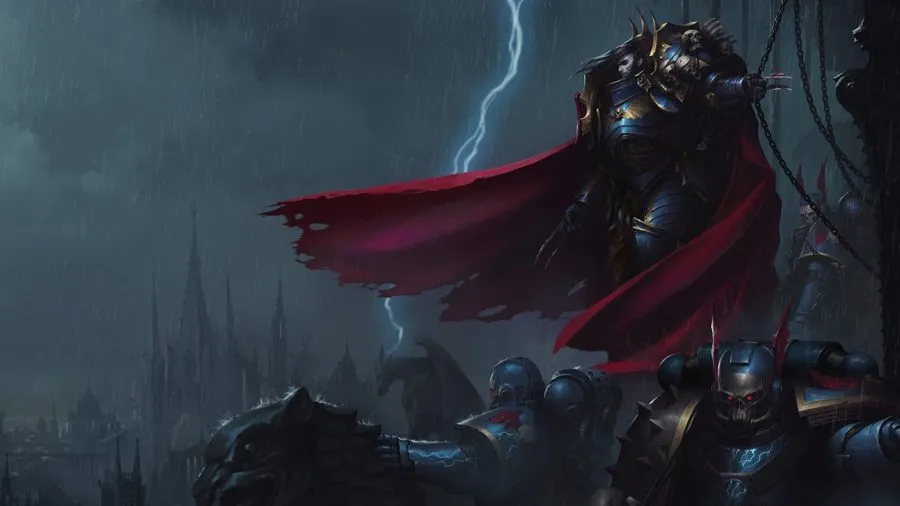
The Night Lords are the VIII Legion of Space Marines, led during the Great Crusade by Konrad Curze. Their primarch’s rule on Nostramo established the pattern: make punishment so spectacular that everyone who sees it becomes afraid to disobey. When the Emperor gave him a Legion, Curze took that approach into the wider galaxy. I’ve already gone into Curze’s deterioration and his decision to welcome an assassin, so I’ll spare you another tour of his childhood.
The section The Night Lords in Codex Supplement: Traitor Legions describes a force that pays particular attention to destroying communications, making public examples of opponents, and wearing down resistance through repeated small attacks. It specifically credits them with the patience to accumulate a hundred minor victories. That’s a fairly substantial military skill to preserve after your chain of command falls apart. Someone in the warband still knows how to isolate a settlement, choose the first victims, and keep neighbouring settlements guessing about where the next attack will land.
There’s a horrible practical economy to it. A frightened defender makes mistakes. An isolated governor starts thinking about surrender before reinforcements can arrive. The supplement says governors have capitulated to the Night Lords and still been killed, which leaves the raiders with a problem for their next campaign: eventually word ought to get around. I don’t actually know how widely that reputation travels between Imperial worlds. The communication networks they’re attacking are also the networks that would carry the warning.
Curze gave his warriors plenty of reasons to resent the Imperium, and an elaborate justification for their own cruelty. He also left behind a set of techniques that individual captains could use with the forces they had. You can see the attraction for a depleted warband. Pick a vulnerable target, interfere with its ability to call for help, and arrange the fight before committing your expensive, difficult-to-replace Marines.
His death removed the figure who could give the Legion an overarching direction. White Dwarf #440’s Death of a Primarch recounts M’Shen finding him unresisting, accepting his murder as proof of the Emperor’s hypocrisy. The Traitor Legions account follows his assassination with the collapse of the Night Lords as an organised threat and their retreat towards the Eye of Terror. The smaller forces that continued raiding carried their experience with them.
And the victims were still available. The Imperium kept producing isolated settlements and desperate people long after the Night Haunter’s death.
Recruitment in Somebody Else’s Underhive
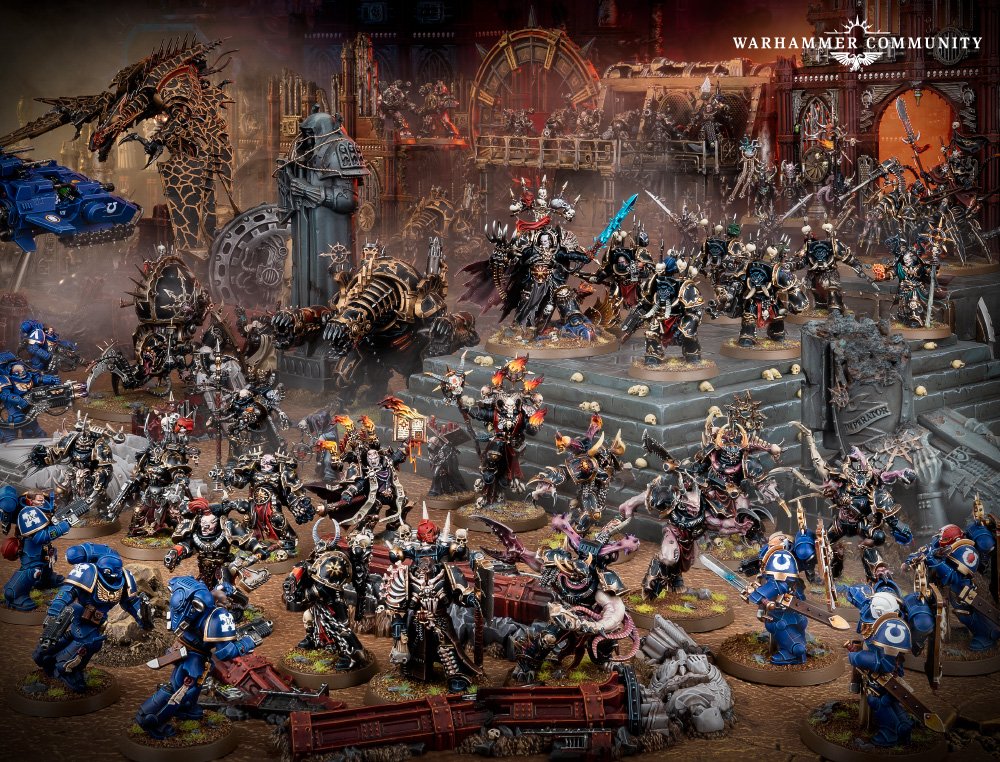
Dirkden is what happens when that approach becomes an ongoing business. According to Vigilus Ablaze, the Night Lords deliberately assessed the gangs and criminal leaders they encountered. Those who resisted effectively could be spared for recruitment. The warband was looking at an enemy population and deciding which pieces of it might be useful aboard its ships.
That detail does a lot of work. The old Legion’s association with criminal recruits survives through a repeatable practice. A captain can go into a hive, find violent candidates, and try to replenish his force without ever having seen Nostramo. Whatever pride he takes in the Legion’s history, the next generation is being selected by the warriors who happen to control the raid. The captain and his surviving officers get to choose which candidates leave with them.
The campaign also makes the delay explicit. After the Night Lords lose Dirkden, their new recruits are still a long way from becoming Space Marines. They’ve suffered serious losses, taken disappointingly little loot, and acquired candidates who can’t fill the gaps in their squads yet. That passage is one of my favourite bits of the book because it makes recruitment feel awkward and expensive. The raiders have added mouths and future obligations at the same moment their military strength has fallen.
I’ve been guilty of reading the casualty totals in campaign books as scenery. A company gets mauled, the next page has a lovely army photograph, and I carry on. Here the text actually stays with the consequences. The warband’s commanders have to choose their next fight with damaged resources, and their boss is expecting a result. It’s an unpleasantly recognisable situation if you’ve ever had to report a failed job while someone else is already spending the money they thought it would earn.
The Genestealer Cult makes those consequences worse. In the book’s account, the hybrids are numerous, well armed with industrial equipment, and able to withdraw into a population they’ve infiltrated over generations. They attack from concealed spaces and keep returning. The cult’s long preparation for its uprising gives it a depth of local support that a visiting raiding force has to fight through street by street. The Night Lords have to keep clearing positions while the cult uses its routes through the district.
After leaving Dirkden, the Night Lords switch to attacks on the Dark Angels’ 4th Company around Hyperia. Vigilus Ablaze describes small kill teams striking from alleys, killing one or two Marines, withdrawing, and repeating the process elsewhere. Their attacks achieve a string of limited victories until the Ravenwing kills Varrus Hekatos, the Chaos Lord coordinating them.
So the surviving force can change its behaviour when it has to. Its coordination depends on a commander who can pick and manage those attacks, and his death gives the Dark Angels their opening. I’d use that precarious relationship between a commander and his depleted force as the starting point for a warband. These warriors can operate together, even under pressure, with a very local and vulnerable command structure.
The Gods Have Plenty of Ways In
The Night Lords’ contempt for religious devotion is part of their appeal. As someone who likes Thousand Sons, I’m probably obliged to find their sneering at sorcerers irritating. Mostly I enjoy how much room it leaves for arguments within a Chaos army. The Traitor Legions supplement describes Night Lords fighting for material rewards and the pleasure of violence, regarding the zealotry of other warriors with scorn.
The later campaign books show Night Lords forces employing sorcerers and fighting alongside daemon engines.
Psychic Awakening: Faith and Fury gets quite direct about this in Death Hunt. Night Lords sorcerers abduct astropaths and exploit their suffering to generate psychic signals that lure stranded Imperial vessels into ambushes. Captured Navigators are kept alive through warp magic and used to obscure the position of the raiders’ ship, the Nightmare of Celyx. This operation requires people who can carry out sorcery and comrades willing to build their campaign around it.
The same account puts daemon engines in the ambush sites. Heldrakes attack dropships in space, and Warp Talons breach the hulls of loyalist cruisers. The force described in that campaign has a substantial investment in the supernatural. Anyone modelling a Night Lords army has published precedent for including those creatures, with all the ugly implications for the people who have to maintain an alliance with them.
I think the variation helps explain the Legion’s longevity. Separate warlords can make their own accommodations with the powers around them. A captain who values his independence can still need a sorcerer’s services, and the sorcerer has something valuable to bargain with. Over time, the decisions made by particular commanders will shape particular warbands. There’s room for contempt, dependence, ambition and personal devotion within that process, sometimes aboard the same vessel.
Their involvement with Abaddon’s wider war works on a similarly practical level in the Vigilus account. The defeated Night Lords are worried about returning to him empty-handed. Whatever their feelings about the Warmaster, they’ve entered a campaign with expectations attached. In that campaign, the officers have to worry about what they’ll tell Abaddon when they return.
A Rescue Signal as Bait
The Death Hunt campaign is worth lingering on for the military work involved. The Night Lords turn an asteroid field into a network of ambushes, using psychic lures to steer ships towards prepared positions. Those positions contain mines, traps and waiting attackers. The hidden Nightmare of Celyx keeps broadcasting while the White Scars try to untangle the false signals.
A stranded Imperial crew is already frightened. It needs a route, a friendly vessel, any indication that somebody knows where it is. My reading of the Night Lords’ scheme is that it exploits the crew’s need to act on whatever information remains available. They can manufacture a reason for the target to enter the killing ground. The cruelty involved in producing the signal also serves a specific operational purpose, which makes the campaign particularly nasty to read.
There’s a lot of organisation hiding inside that premise. Someone has to identify suitable sites and prepare them. Different units have to defend them. The fleet has to preserve its own communications while confusing everybody else’s. A dispersed Legion can still contain a force capable of coordinating all that. Faith and Fury names Yharas Kine among the commanders enjoying the challenge of fighting the loyalist Vanguard Marines.
The White Scars adapt. The account describes them staging retreats and sacrificing damaged ships to tempt pursuing Night Lords into counter-ambushes. It also gives their reconnaissance troops work to do: Incursors analyse the killing grounds, while Infiltrators clear darkened ships. Once the defenders start exploiting the raiders’ appetite for a seemingly easy kill, the campaign becomes a prolonged contest over who can persuade whom to move into danger.
Their mistakes give an opponent something to work with during a campaign. A warband capable of preparing an intricate trap can get carried away when it thinks prey is escaping. You can build an entire small campaign around that sort of encounter, with boarding actions spilling out of a fleet engagement and survivors trying to reach a functioning distress beacon.
The Nemesis Claw Fits in One Case
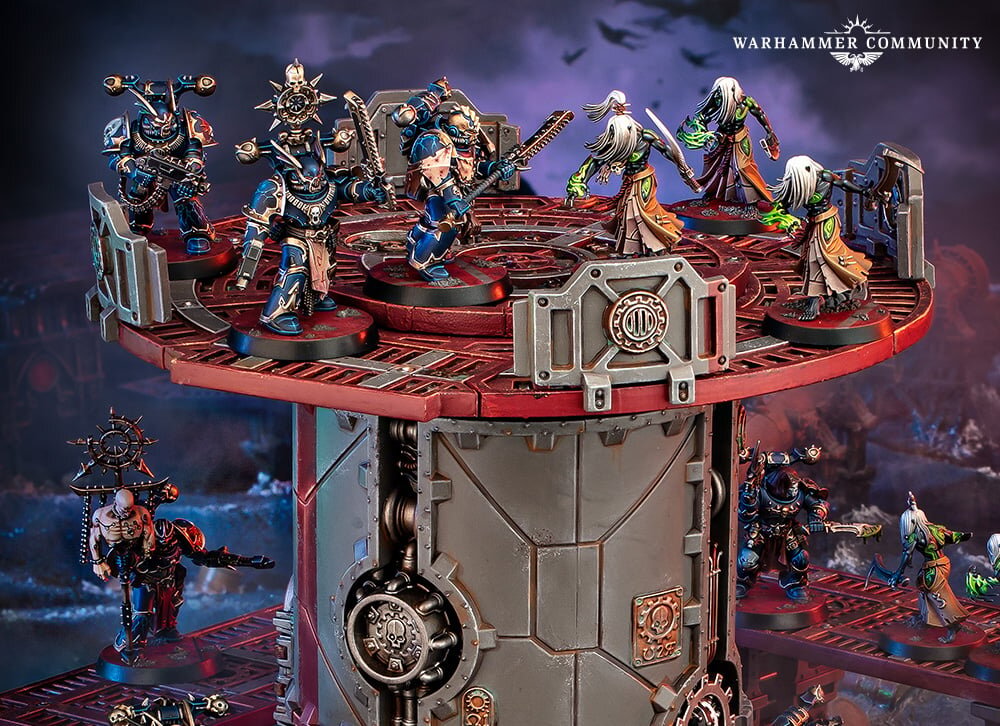
For a smaller view of the Legion, the Nemesis Claw is a lovely collection of awful little murderers. Warhammer Community’s introduction to the kill team describes operatives so vicious that their own warlords hesitate to trust them. Commanders can unleash a team against important targets and let it pursue the mission through its own appetite for cruelty. The preview leaves the team considerable freedom over how it reaches those targets.
The follow-up on the individual operatives gives that appetite some equipment. The Screecher uses a Vox Noctis to incapacitate enemies with sound. The Fearmonger carries Terrorchem toxins and can lace hidden explosives with them. A Visionary inherits a fragment of Curze’s prescience, giving the team access to a particularly unreliable family asset. The VIII Legion’s habits are recognisable at this scale, down to its willingness to make a battlefield dangerous before the opponent reaches it.
The Ventrilokar is the one that sticks with me. In the preview’s description, his totem incorporates a murdered Space Marine whose corrupted omophagea can reproduce the voices of people whose flesh it consumes. Having a familiar voice come over the vox would be a dreadful complication during the sort of boarding action Faith and Fury describes. I’d want the scenario to give the defender some way of checking the message, though. Give the defender a suspicious message, a working vox station, and enough time to decide whether to send someone to check it.
If I were building a Night Lords force, I’d start there: one team, a ship it operates from, and a commander with a particular reason to keep these people employed. Work out what the last raid cost them and what they’re trying to acquire on the next one. The Dirkden recruits would make an especially awkward ongoing problem for a warband that had already promised its transport space to somebody else.