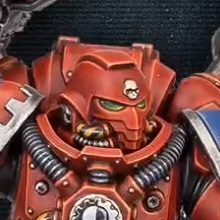
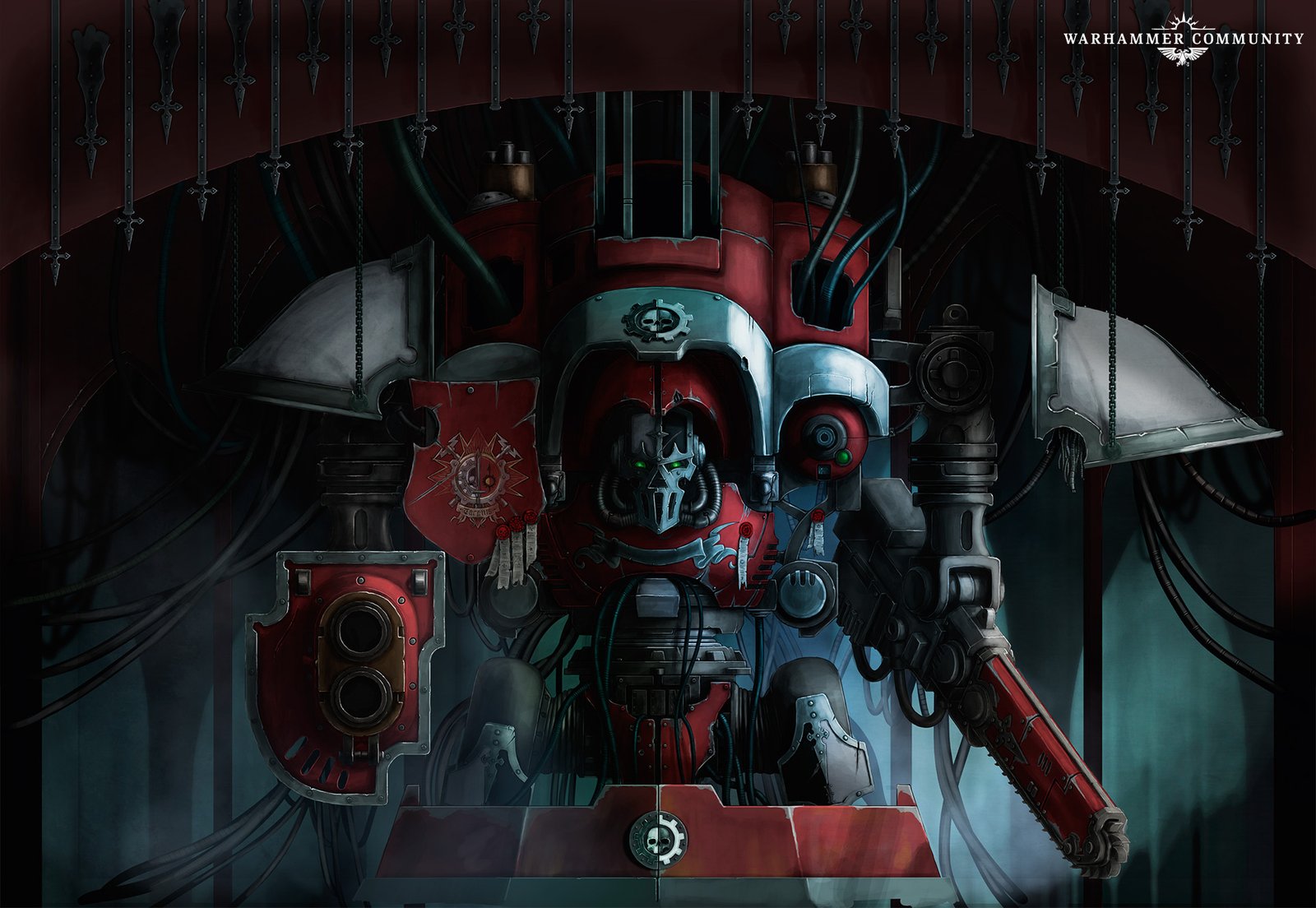
The chair comes out of the robot. That’s the detail I keep getting stuck on while looking at Throne Questoris. In The Imperial Knight Companion, the pilots’ Thrones Mechanicum sit in a chamber high above their waiting war machines. When the household goes to war, the nobles strap in upstairs and their chairs descend through transit shafts into the open carapaces below. There’s grav-cushioning, magrails, warning lights. Each Throne travels down to the Vault Transcendent, where the Knight suits are waiting with their carapaces open.
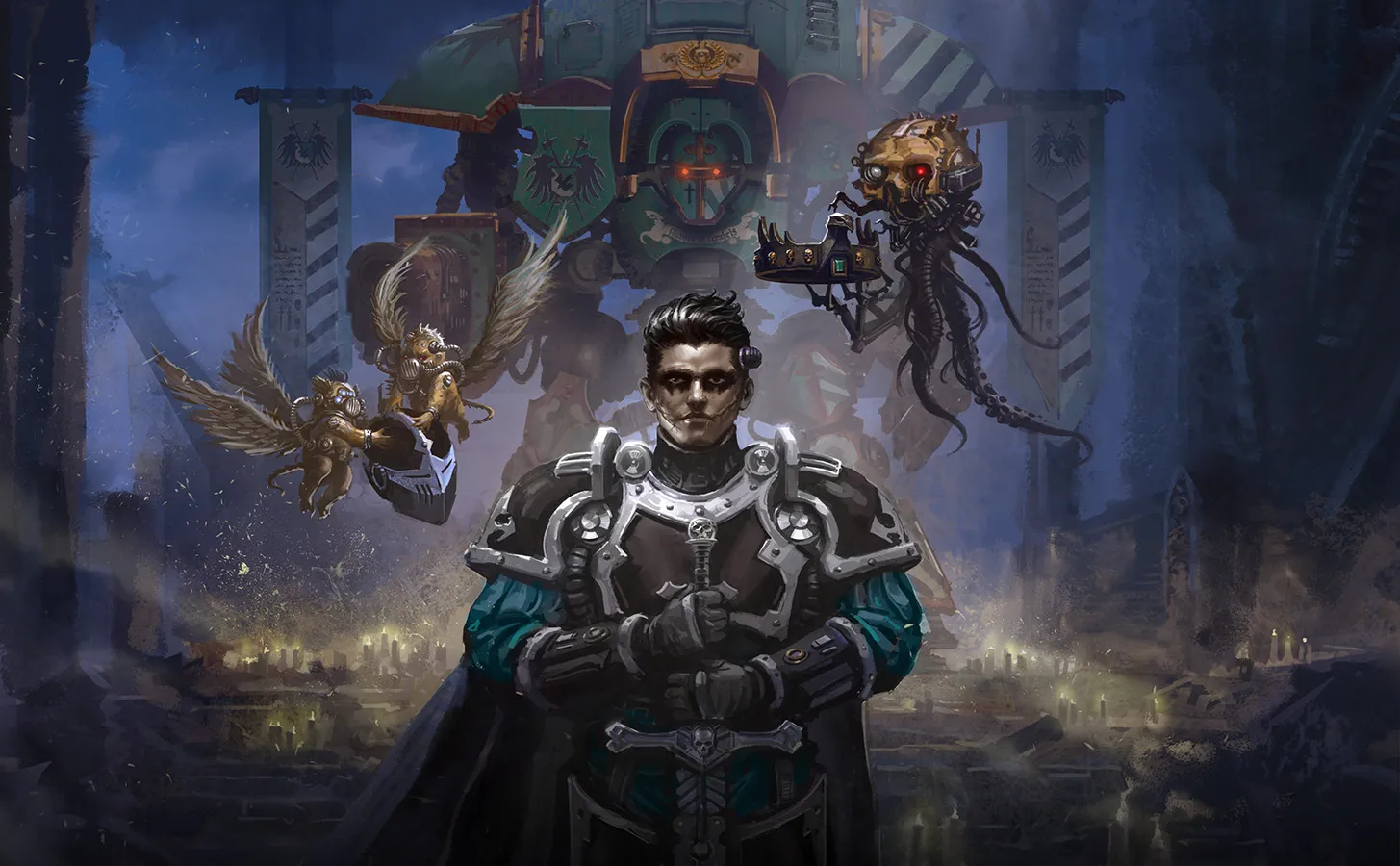
Victoria Hayward’s newly announced novel follows Asrien Balateur, a knightly scion approaching an inherited throne while mysterious snowstorms consume the land and Knights disappear among ruined castles. GW mentions squabbling barons, a royal court, forgotten debts, and something called the Winter Knight. Pre-orders are coming soon; the announcement gives no date. I’ve only got that announcement to work from, and it doesn’t identify the Winter Knight.
The inheritance is what caught me. An Imperial Knight household can pass down a machine that actively helps form the next ruler’s personality, alongside the titles and obligations that ruler is expected to uphold. I want to read a succession story where the heir has to negotiate all of that while the family starts losing the machines its authority depends on. The preview leaves Asrien close to claiming their birthright, with the weather already turning.
Before Asrien sits down in Throne Questoris
The Imperial Knight Companion’s section The Becoming describes the preparation for a new pilot in uncomfortable detail. Household medicaes and Sacristans implant neural sockets, make surgical alterations, and administer stimulants. The operations use very little anaesthesia because enduring the procedures is part of the test. This happens inside the household’s Sanctuary, the enormous structure where its Knights are maintained and its prospective pilots are prepared.
Then the candidates enter the Chamber of Echoes. Each sits in a Throne Mechanicum belonging to their house. The Sacristans make the connections, put out the torches, and leave. The candidates spend the night encountering the mental traces of previous pilots through hallucinations and traumatic fugue states. According to The Becoming, one aspirant in ten fails to survive the ordeal, through neural damage or the destruction of their sanity.
I find the family participation in this horribly plausible. They’ve raised a child for this position, had the appropriate operations performed, probably spent years correcting their posture at dinner. Now everyone waits upstairs while the child meets the accumulated personalities of the people whose portraits hang in the house. That last domestic scene is my imagining, obviously, but the book supplies the dark room and the risk of a dead candidate in the morning. How many candidates would Asrien’s family have sent into that room already?
The surviving pilot leaves a new mental imprint on the Throne. The process also changes the pilot. The Becoming says their dominant characteristics become more pronounced, while the Throne’s programming and ancestral echoes reinforce duty, fealty, and noble obligation. A stubborn candidate can emerge even more stubborn. The same passage describes Knights developing their own temperaments through the accumulation of those imprints, including aggression, skittishness, and a tendency towards sombre behaviour.
There’s a lovely difficulty for a writer in that exchange. Which traits did the heir bring into the room? How much of their conduct afterwards comes from surviving a terrifying experience, and how much from the machinery doing precisely what it was built to do? An ancestor’s bad judgement could arrive with the emotional force of family loyalty. I’d be very interested in a scene where an heir has to explain a decision to a living relative while privately wondering who first wanted to make it.
The Companion gives the new pilot considerable strength, too. Surviving requires them to assert their own personality within the Throne’s neural space. They’re capable of influencing the machine as the relationship develops. I keep drifting towards a reading where the poor heir barely has a say, and the actual passage keeps dragging me back: somebody has to win that first night. Perhaps I want the chair to be more oppressive than the text allows. There’s room for a genuinely wilful person to come out of it and cause the rest of the household problems.
The family had the machinery first
In The Long March, the same source traces Knight worlds back to colonisation fleets during the Age of Technology. Colonists took Standard Template Constructs with them, including the means to produce the walkers that would become Knights. The suits protected settlements against hostile conditions and dangerous inhabitants. Their integration software already had effects on pilots’ minds, reinforcing ideas of honour and fealty over years of use.
That account has the pilots gradually establishing themselves as a hereditary ruling class. They became protectors, took on titles, and handed ordinary work over to their subjects. The accompanying mind-altering technology was operating while the social hierarchy developed. I can imagine quite a few emergency arrangements becoming permanent once the families responsible discovered they liked them. The Companion doesn’t give us a design meeting where an engineer explains the intended political outcome, and I don’t know how much of the resulting society its makers would have recognised.
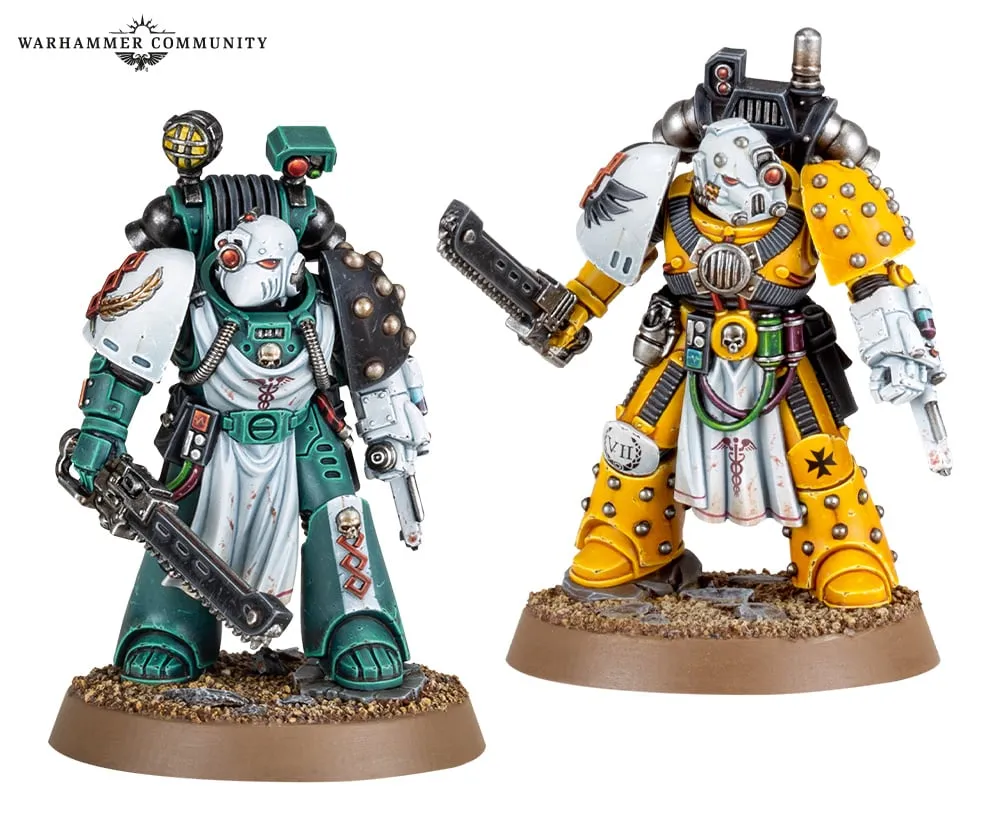
I spent an evening in 2014 trying to freehand a little heraldic fist on an Imperial Fists sergeant’s tilting plate. Averland Sunset underneath, a black shape on top, then a yellow correction that made it wider. Pete asked whether it was a kettle. I said it needed outlining and spent another forty minutes outlining the kettle. That sergeant kept the plate because removing it would’ve meant admitting the evening was gone, and I was already annoyed enough about painting yellow over black.
Knight heraldry gets me in exactly that weak spot. I like the ridiculous little shields. I like the names and the idea that somebody has carefully recorded who fought where. Looking at the cover of Throne Questoris, I immediately want to know who owns the banners behind the figure in the foreground. The family crest is usually the part that gets my attention before I’ve asked anything about the people working the estate.
The Companion’s Knights and the Imperium does spend time on those people. Its Knight worlds have mines, huge greenhouses, livestock, and surviving industrial machinery maintained with whatever technology remains available. Artisans and guild workers keep the production going, often living their entire lives close to where they were born. The castles sit within that productive landscape, protecting stores and retaining the capacity to shelter military garrisons when war comes.
So, the weather. Snow comes down. Crops start having trouble. Someone’s got to get supplies between the settlements, and somebody’s Knight has vanished on the road. You can hear the barons arguing already. Whose road? Who was supposed to keep it open? Hang on, where’s the other Knight? I’m inventing the conversation, but I’d happily spend a chapter with the person trying to get an answer out of that meeting.
Hayward’s announcement offers a world being swallowed by snowstorms, which could put all sorts of pressure on the economy described in that older source. Those possible economic consequences are my speculation; the announcement doesn’t describe greenhouses or supply disputes. The part I hope gets some space is how the royal court’s decisions reach people outside it, particularly the workers expected to keep the mines and farms running in that weather.
A missing Knight leaves a vacancy at court
White Dwarf #410’s Imperial Knight Houses describes a hierarchy of High Kings, Barons, and knightly vassals. Advancement within those closed households tends to depend on a vacancy, usually created by a death. It also mentions political intrigue as a possible cause. There’s considerable pressure sitting underneath all the elaborate formal language and ceremonial behaviour that Imperial visitors struggle to follow.
A missing Knight gives a succession story several unresolved questions at once. The household might have lost a military asset and an experienced pilot. A title could need filling. The relatives will want to know whether the machine can be recovered, and which prospective successor could bond with its Throne. These are my inferences from the household structure. GW hasn’t told us which Knights disappear or what happened to their pilots.
The wider obligations can be awkwardly specific. In Knights and the Imperium, the Companion describes Mechanicus-aligned households receiving demands for a quota of war machines when their patron forge world musters. House Ironhelm becomes a cautionary example after losing Knights in an honour duel shortly before a muster, leaving it unable to provide the required force. The book also describes rivals engineering precisely that sort of embarrassment by encouraging another household to waste its strength.
I love how petty that is. Somebody manages to turn a formal duel into a supply problem, and then there’s an Adeptus Mechanicus representative expecting the agreed number of functioning walkers. The loss carries military and political consequences even if everyone involved thinks the duel was conducted impeccably. I’d have liked the Companion to give Ironhelm a few more pages; the example arrives during its explanation of household obligations and moves on almost immediately.
Its account of debts to other Imperial forces is just as useful. A household rescued by an outside army can consider itself obliged to repay that aid, with rival houses competing to demonstrate their gratitude through increasingly substantial deployments. A commander receiving those reinforcements might have very little understanding of the argument that produced them. From the court’s perspective, though, the size of the force sent away could become a matter of honour, and the homeworld has to manage with what’s left.
The new novel’s preview explicitly mentions forgotten debts. I can’t tell whether Hayward means obligations of that sort, a supernatural bargain, or something specific to the planet’s history. I’ve seen enough speculation turn into assumed background to be wary of supplying an answer myself. For now, GW’s description leaves the nature of the debts open, along with the cause of the snowstorms.
The empty Throne upstairs
There’s a passage in The Dome and the Vault that I keep going back to. The imprinted Thrones belonging to living nobles wait in the Communion Dome when they’re out of use, surrounded by art commemorating household heroes. The book describes the empty chairs as carrying the sense that their occupants have only just stepped away. When battle comes, those same chairs travel down into the waiting machines.
Having the throne move separately gives the inheritance a physical object people can argue over, maintain, hide, or recover. It also makes the ancestral voices easier for me to picture. Our discussion of machine spirits gets tangled in several different sorts of consciousness; the Knight material specifically gives this interface the retained mental impressions of previous human pilots. The Companion describes each dead pilot becoming another presence within it.
The comparison with a Titan princeps helps explain why Knights make good subjects for this particular kind of fiction. The Becoming describes a direct neural bond through which a noble operates the suit with extraordinary fluidity. The person passing through the family trial is also the person who’ll take that machine into combat. Their relatives have a strong interest in both stages, and plenty of opportunities to interfere while the heir’s still walking around the castle.
I’d like a little time with Asrien before the bonding, if the book’s chronology allows it. Enough to get a feel for a bad habit, a private resentment, some tiny preference that the court considers beneath notice. Then I’d want to see whether it survives the accession. Hayward might begin with all of that already behind them; the announcement only places Asrien near their inherited throne. I’ll be looking for the first extract when GW dates the pre-order.