So you want to know what Warhammer 40,000 is about. Maybe someone mentioned it. Maybe you saw a YouTube video. Maybe you played Space Marine 2 and thought “okay, what’s the deal with the giant armored guys and why is everything on fire?” Fair question.
The short answer: Warhammer 40K is a tabletop miniatures wargame created by Games Workshop, set in the 41st millennium, in a galaxy where everything has gone horribly wrong for humanity. It’s also a universe with hundreds of novels, dozens of video games, and one of the most obsessively detailed fictional settings ever created. People have been building, painting, and playing with these little plastic soldiers since 1987, and the lore has been growing ever since.
The longer answer takes a bit more explaining.
The Setting in One Paragraph
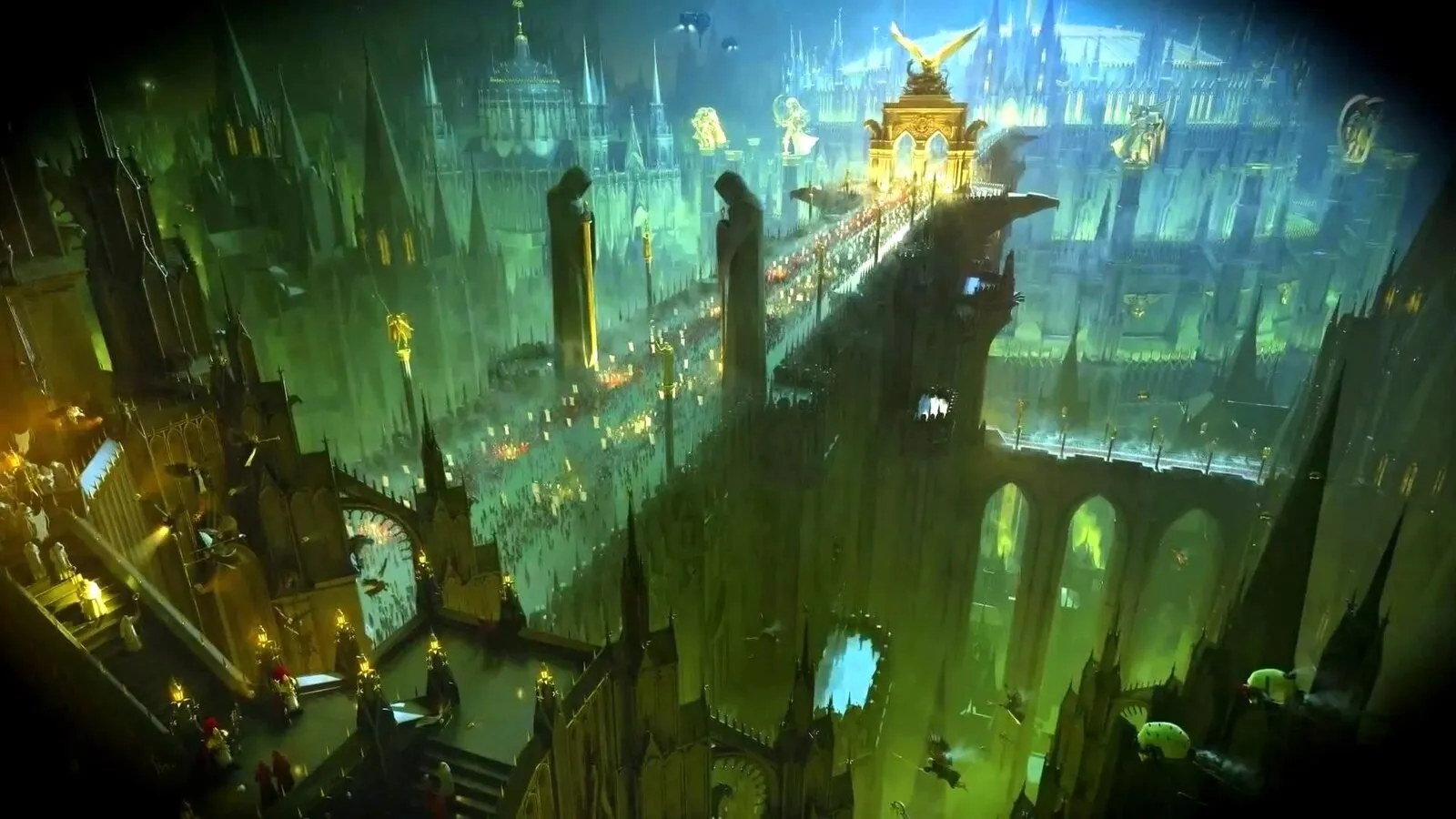
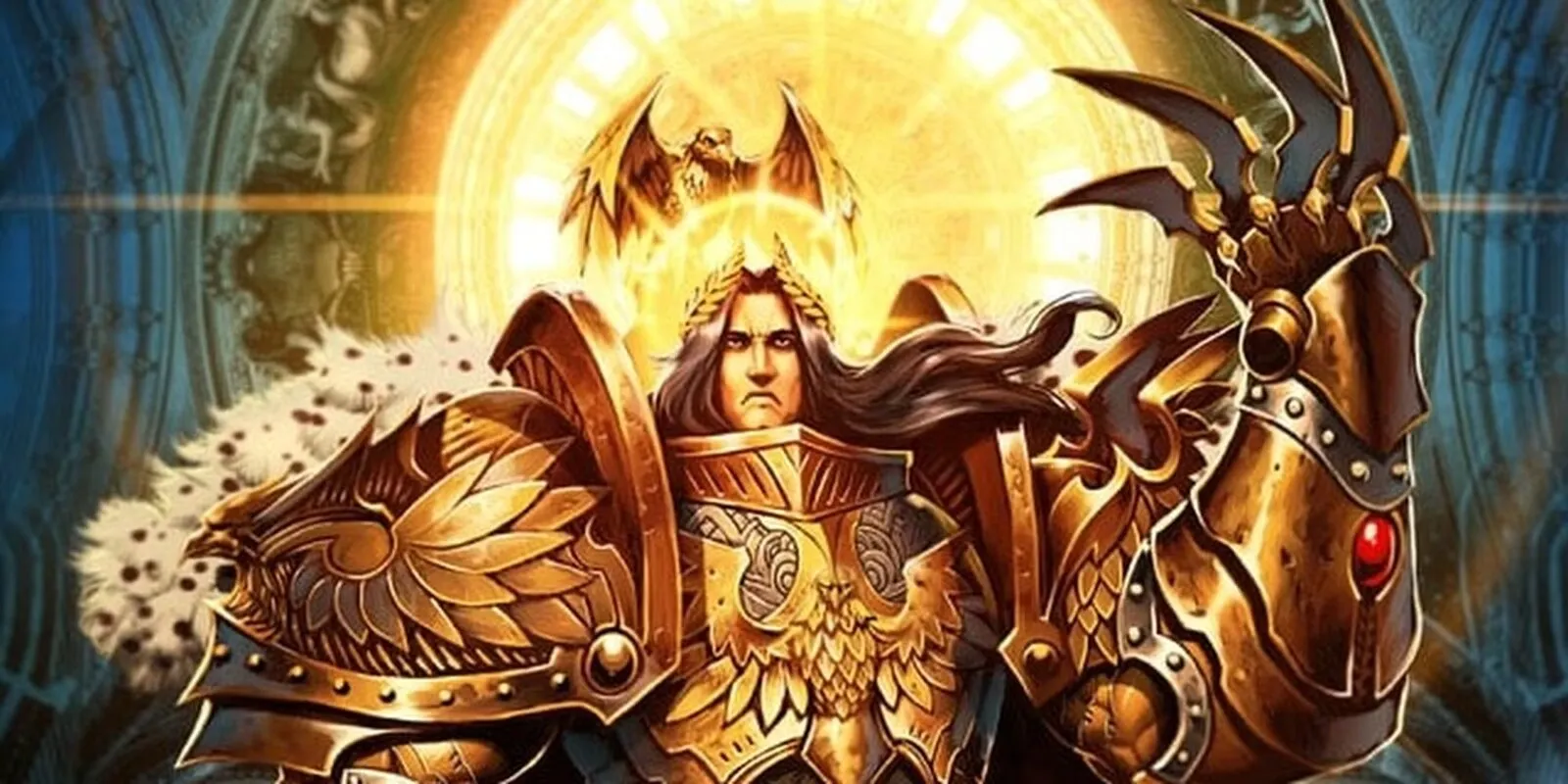
It’s the year 40,000-ish. Humanity has colonized the galaxy but is ruled by a fascist theocracy called the Imperium of Man, which worships a nearly dead god-figure called the Emperor who sits on a life-support machine called the Golden Throne. Technology has regressed to the point where people pray to their machines instead of understanding them. A parallel dimension called the Warp is full of evil gods who want to corrupt everything. And on top of all that, there are aliens trying to eat everyone (Tyranids), robot skeletons waking up after 60 million years (Necrons), football-hooligan fungi (Orks), dying space elves (Aeldari), and various other factions all fighting each other constantly.
The tagline is “In the grim darkness of the far future, there is only war.” They’re not kidding.
Why It Works
I think what hooks people about 40K isn’t actually the darkness. It’s the scale. This is a setting where individual soldiers are expendable, entire planets get destroyed as a tactical decision, and the wars have been going on for ten thousand years with no end in sight. Everything is cranked up to an absurd degree, and the setting commits to that absurdity with complete seriousness.
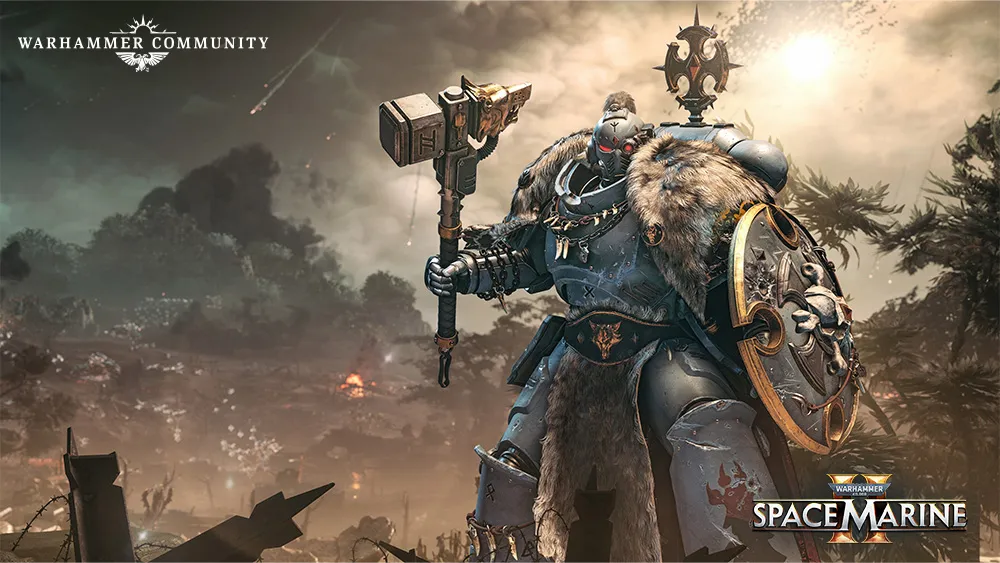
A Space Marine isn’t just a tough soldier. He’s a genetically modified super-warrior with nineteen extra organs, centuries of combat experience, and armor that responds to his thoughts. An Imperial Guard regiment isn’t a few thousand troops. It’s millions of conscripts thrown at problems that lasguns can’t really solve. A war isn’t a conflict between two nations. It’s a galactic apocalypse involving trillions of combatants across thousands of worlds.
40K takes every sci-fi concept and turns it up to eleven. And then it adds a religious layer, a horror layer, and a surprisingly deep philosophical layer about whether civilization can survive when the systems designed to protect it become the things destroying it.
There’s also a sense of humor in the setting that new fans sometimes miss. 40K is deadly serious about its universe, but it’s also aware of how absurd everything is. Ork technology that works through collective belief. A bureaucracy so vast it loses planets in the paperwork. Space Marines who are basically demigod monks with rocket-propelled grenade launchers. The setting plays it straight, but there’s a wink in there if you know where to look. British science fiction has always had that quality, and 40K is very British at its core.
The Major Factions
You don’t need to know all of these to get started, but here’s a quick tour:
The Imperium of Man is humanity’s empire. It spans a million worlds and is held together by faith, bureaucracy, and the Emperor’s psychic beacon. It’s the “good guys” in the loosest possible sense: they’re xenophobic, authoritarian, and run on human sacrifice, but they’re also the only thing standing between humanity and extinction. The Imperium includes Space Marines (super-soldiers), the Astra Militarum (regular army), the Adeptus Mechanicus (tech-priests who worship machines), and many more.
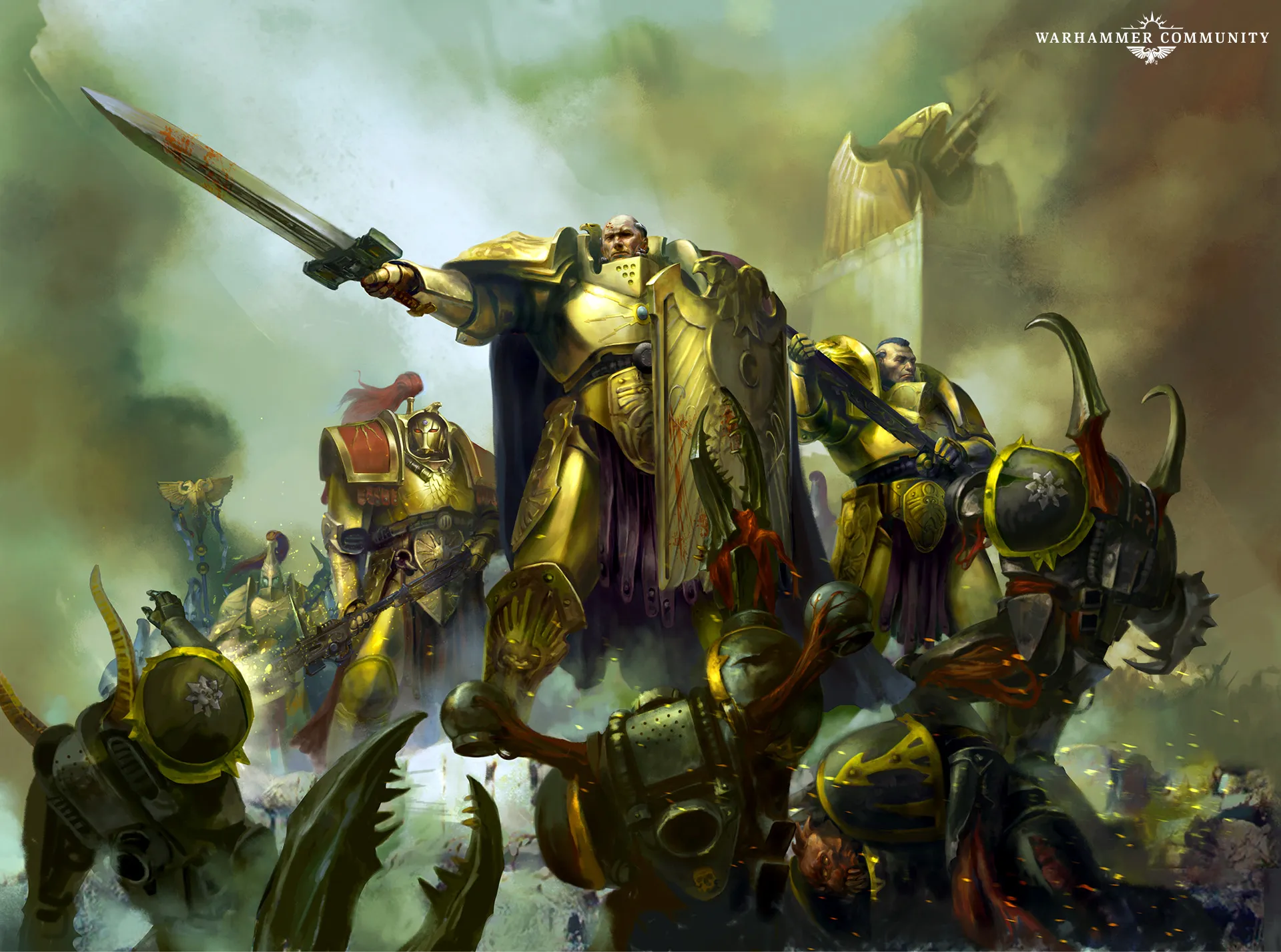
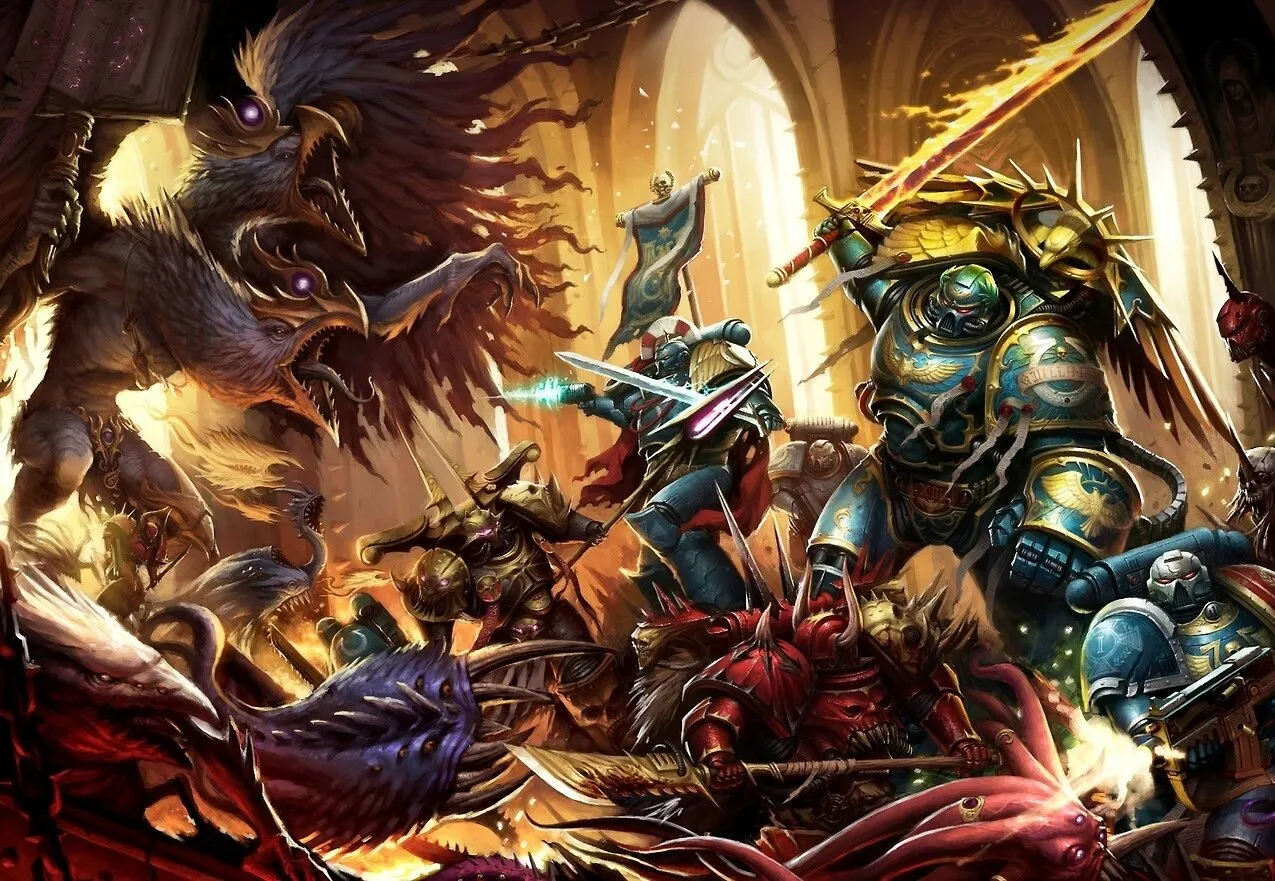
Chaos is the Imperium’s oldest enemy. The four Chaos Gods live in the Warp and constantly try to corrupt and destroy the material universe. They command daemon armies and have turned half the Emperor’s original Space Marine Legions to their cause. The Horus Heresy, a galaxy-spanning civil war 10,000 years ago, was Chaos’s biggest play, and it nearly worked.
The Orks are a fungal species that lives for fighting. They’re simultaneously the comic relief and one of the most dangerous threats in the galaxy, because there are so many of them and they genuinely enjoy war more than anything else. Their technology works because they collectively believe it should (this is canon and it’s fantastic).
The Tyranids are extragalactic bioforms that consume all organic matter on a planet and use it to make more Tyranids. They’re the Alien/Zerg archetype taken to a galactic scale.
The Necrons are ancient machines who used to be a living species called the Necrontyr. They traded their souls for immortality, regretted it immediately, and went to sleep for 60 million years. Now they’re waking up, and they want their galaxy back.
The Aeldari (Eldar) are a dying alien civilization with powerful psychic abilities. They caused the birth of one of the Chaos Gods (Slaanesh) through sheer excess, and now they’re trying to avoid extinction while their souls are literally being eaten by the god they created.
There are more factions, but these are the big ones.
The Hobby
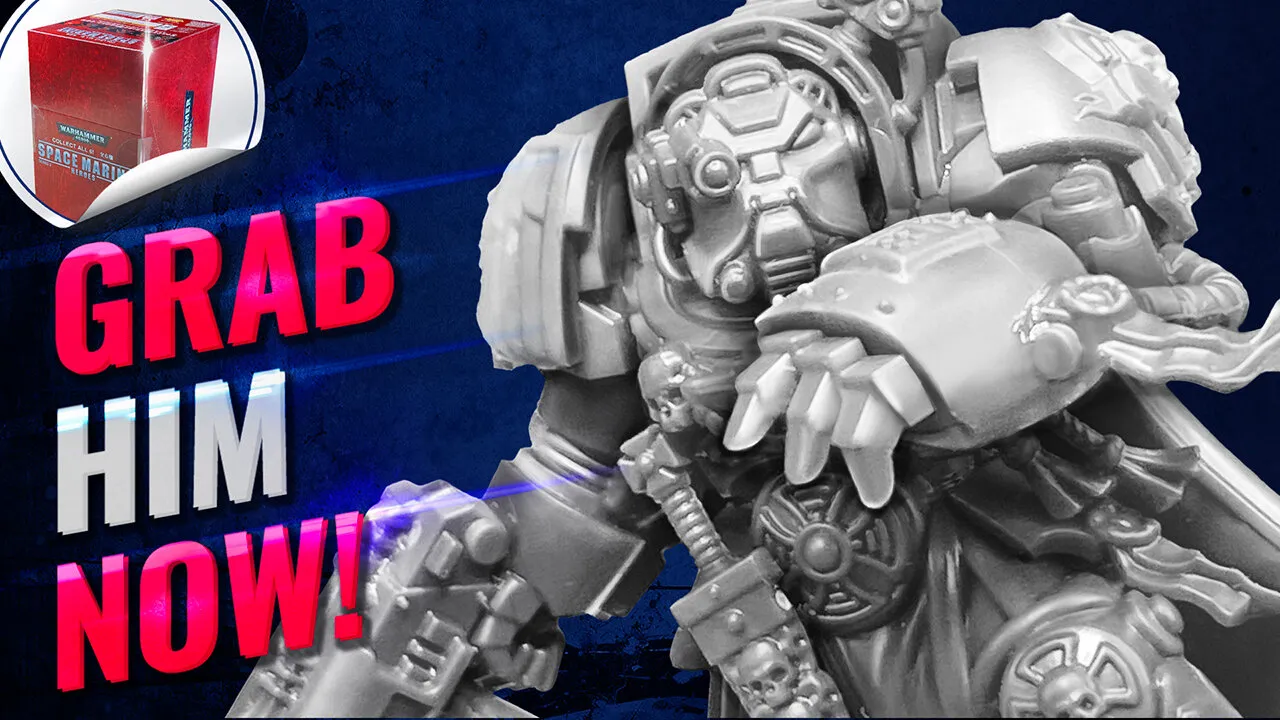
40K is three hobbies in a trenchcoat. Building models (assembling plastic miniatures from sprues). Painting models (which ranges from “slap some paint on it” to competition-level artistry). And playing the game (a tabletop wargame with dice, tape measures, and rules that take a few games to learn).
You don’t have to do all three. Some people build and paint and never play. Some people play with unpainted models (controversial in some circles). Some people just read the books and never touch a miniature. The community is big enough to accommodate all approaches.
The building side is more involved than you might expect. Modern GW kits are multipart plastic, meaning you clip pieces off a frame (called a sprue), clean up the connection points, and glue them together. Some kits are easy push-fit models that snap together. Others have dozens of tiny pieces and optional weapon loadouts that let you customize your squad. I find the building process weirdly meditative. Put on a podcast, grab your clippers and plastic glue, and spend an evening assembling five guys. It’s satisfying in a way that’s hard to explain until you’ve done it.
Painting is where people either fall in love with the hobby or bounce off it. Here’s the thing: you don’t need to be good. You need to be willing to try. A fully painted army on the table looks infinitely better than grey plastic, even if the paint job is basic. Start with a base coat, a wash (a thin ink that flows into the recesses and creates shadows), and maybe a drybrush highlight. Three steps. That alone gets you a table-ready miniature. You can always go back and add detail later as your skills improve.
A typical game of 40K plays out on a 44x60 inch table covered in terrain. You and your opponent each bring an army built to an agreed points value (2,000 points is the standard for a full game). You take turns moving your units, shooting, and fighting in close combat, with dice determining whether your attacks hit and wound. Games use mission cards or scenario objectives, so it’s not just about killing everything. You’re scoring points for holding objectives, completing tactical actions, and denying your opponent’s plans. A full 2,000-point game takes about two and a half to three hours once both players know the rules. Smaller games at 1,000 points are a great way to learn and can be done in about 90 minutes.
The community around 40K is genuinely one of its strengths. Your local game store probably has a regular 40K night where people play casual games, help newcomers with rules, and show off their latest paint jobs. Online, the community runs from lore discussion forums to competitive tournament scenes to painting groups where people share work in progress photos and get feedback. YouTube channels like Luetin09 and Majorkill cover lore. Painting tutorials from people like Duncan Rhodes and Squidmar will teach you techniques faster than you’d believe. Reddit’s r/Warhammer40k and r/minipainting are great for seeing what other hobbyists are doing and getting advice.
If you’re starting from zero, I’d suggest visiting a Games Workshop store. They’ll give you a free miniature and show you how to paint it. It’s the best on-ramp. Alternatively, pick up a Combat Patrol box for whatever faction looks coolest to you, grab some paints, and start building. You’ll need plastic glue (not super glue, for plastic kits), a pair of clippers, a hobby knife, and a starter paint set. GW sells a starter paint and tools box that covers the basics. Don’t worry about getting it perfect. Nobody’s first miniature is good, and that’s fine.
The Community
I want to spend a moment on the community because it’s genuinely one of the best parts of the hobby and the thing that keeps people around long after the initial excitement of building their first model fades. Warhammer 40K has one of the most passionate and welcoming fan communities in gaming, and I say that as someone who’s been in it for years and has seen both the best and worst of it.
The local game store scene is where most people find their footing. Almost every city of any size has at least one store that runs regular 40K nights, painting sessions, and beginner events. Walking into one of those for the first time can be intimidating, especially when you see veterans with beautifully painted armies and encyclopedic rules knowledge, but in my experience the vast majority of players are thrilled to help newcomers. They’ll explain rules, lend you models for a demo game, and tell you more about their army’s lore than you ever asked for. The hobby attracts a certain kind of obsessive enthusiasm that translates into generosity when someone new shows up and wants to learn. Tournaments exist for the competitive crowd, but casual play is where most people spend their time, and the social aspect of sitting across a table from someone, rolling dice, and telling a story together is something that screens can’t replicate. There’s also an enormous creative community around kitbashing (modifying models with parts from multiple kits), 3D printing custom terrain and accessories, and creating narrative campaigns that run for months with evolving storylines. Some of the most impressive creative work I’ve seen in any hobby comes from the 40K community, and most of it is shared freely on forums and social media for anyone to draw inspiration from.
Where to Go from Here
If the lore is what interests you, start with our Warhammer 40K timeline for the big picture, then dive into whatever faction caught your eye. If it’s the Horus Heresy, our Heresy overview is a good starting point. For novels, Dan Abnett’s Horus Rising is the classic first book, and his Gaunt’s Ghosts series is excellent for the Imperial Guard perspective.
One piece of advice for newcomers: don’t try to learn everything at once. 40K has nearly four decades of accumulated lore, rules editions, retcons, and community in-jokes. Nobody knows all of it. Pick a faction, learn about them, and let your knowledge expand naturally from there. You’ll start following threads that interest you, whether that’s the political intrigue of the Imperium or the horrifying biology of the Tyranids or the tragic history of the Aeldari. The rabbit holes are deep and there are hundreds of them.
The cost question comes up a lot, and I’ll be honest: this is not a cheap hobby. A 2,000-point army will run you several hundred dollars in models, plus paints and supplies. But you don’t build an army all at once. You buy a box, build it, paint it, play some small games, and add more over time. Spread over months or years, it’s comparable to most hobbies. Less than golf, more than reading. And unlike most purchases, a well-painted army holds its value. People sell painted armies for good money on the secondary market if they decide to move on.
Welcome to the grim darkness of the far future. It’s a terrible place to live but a fantastic place to spend your hobby time.