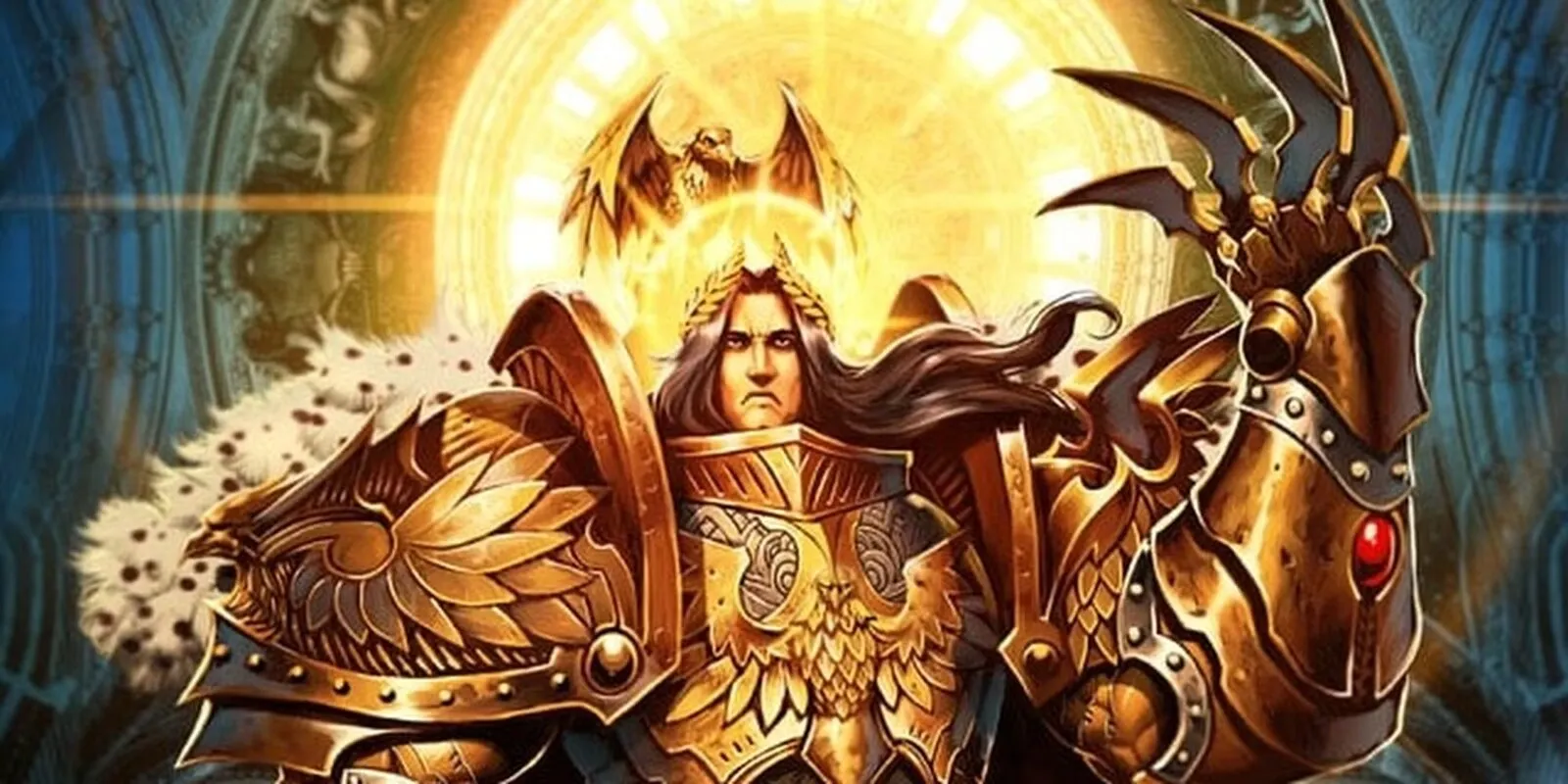
“Any world that exhibited particularly dangerous Warp activity was simply blown to pieces from orbit and forgotten, on the strict orders of the Emperor.”
That’s it. That’s the entire pre-Heresy Imperial policy on Warp cults, straight out of this week’s Pages from the Black Books, Warhammer Community’s ongoing dig through the old Horus Heresy sourcebooks. One sentence. No inquiry, no theologians sent to study what these cults actually believed or where they’d sprung from, no attempt to understand the thing at all. Find it, glass it, log it as resolved. I’ve read a lot of Imperial doctrine over the years. This one might be my favourite, in a grim sort of way.
It worked, more or less, for most of the Great Crusade. Warp cults turned up here and there on the fringes, isolated flare-ups on backwater worlds, and the Emperor’s fleets scrubbed them off the map without a second thought, “barely worth recording as part of a larger campaign.” Then the Heresy broke out and it turned out the actual cult problem hadn’t been scattered at all. It had been growing inside one Legion for years before anyone outside it noticed.
Lorgar’s very patient revenge
Lorgar’s fall usually gets told in one beat: the Emperor humiliates him at Khur for wasting Crusade time on monument-building and mass conversion instead of conquest, Lorgar has his crisis of faith, Lorgar finds Chaos, roll credits. What that version skips is everything that happened in between. According to the old fluff, Lorgar spent years afterward still preaching the Imperial Cult in public, while quietly setting up “secret covens” on every world the Word Bearers controlled or conquered, seeding cult followings that had nothing to do with the Emperor at all, on worlds he was nominally there to civilise in the Emperor’s name.
I don’t think that patience gets enough credit. Angron got provoked into treachery over what reads like a single furious conversation. Mortarion got worn down across a handful of campaigns by his oldest friend. Lorgar spent something close to a decade of Crusade-time, nearly as long as I’ve been in this hobby, building a second religion in parallel with his actual job, on every world his Legion touched, and nobody caught it, because nobody was looking for a Legion to betray the Crusade by being extremely good at running two congregations at once.
Erebus gets a lot of the credit in most retellings, the ex-Chaplain turned Dark Apostle who did the actual scheming that put Kor Phaeron’s fleet over Calth. And sure, he’s the one who gets to gloat about it in the old Visions of Heresy text, “ecstatic” that his secret planning had finally paid off. But Erebus is running an operation Lorgar built the infrastructure for over years of patient, boring administrative cult-seeding. The Edge of Ruin entry in this same Black Books series showed Horus running his own long con with something as unglamorous as a duty roster. Lorgar had been running the religious version of that same trick for years before Erebus ever got to take the credit.
None of it was hidden as carefully as I’d assumed, either, once you go back and read the older material. Word Bearers doctrine called for conquered worlds to raise monuments and cathedrals, built by forced labour, with sacrificial screaming mixed into the same air as the chanting congregations. A fair amount of that had apparently been going on under the cover of “zealous Imperial Cult observance” for years, which is either the most audacious bit of institutional camouflage in the Imperium’s history or proof that nobody on the wider Crusade was paying much attention to a Legion everybody already found a bit embarrassing.
Calth was the bill coming due
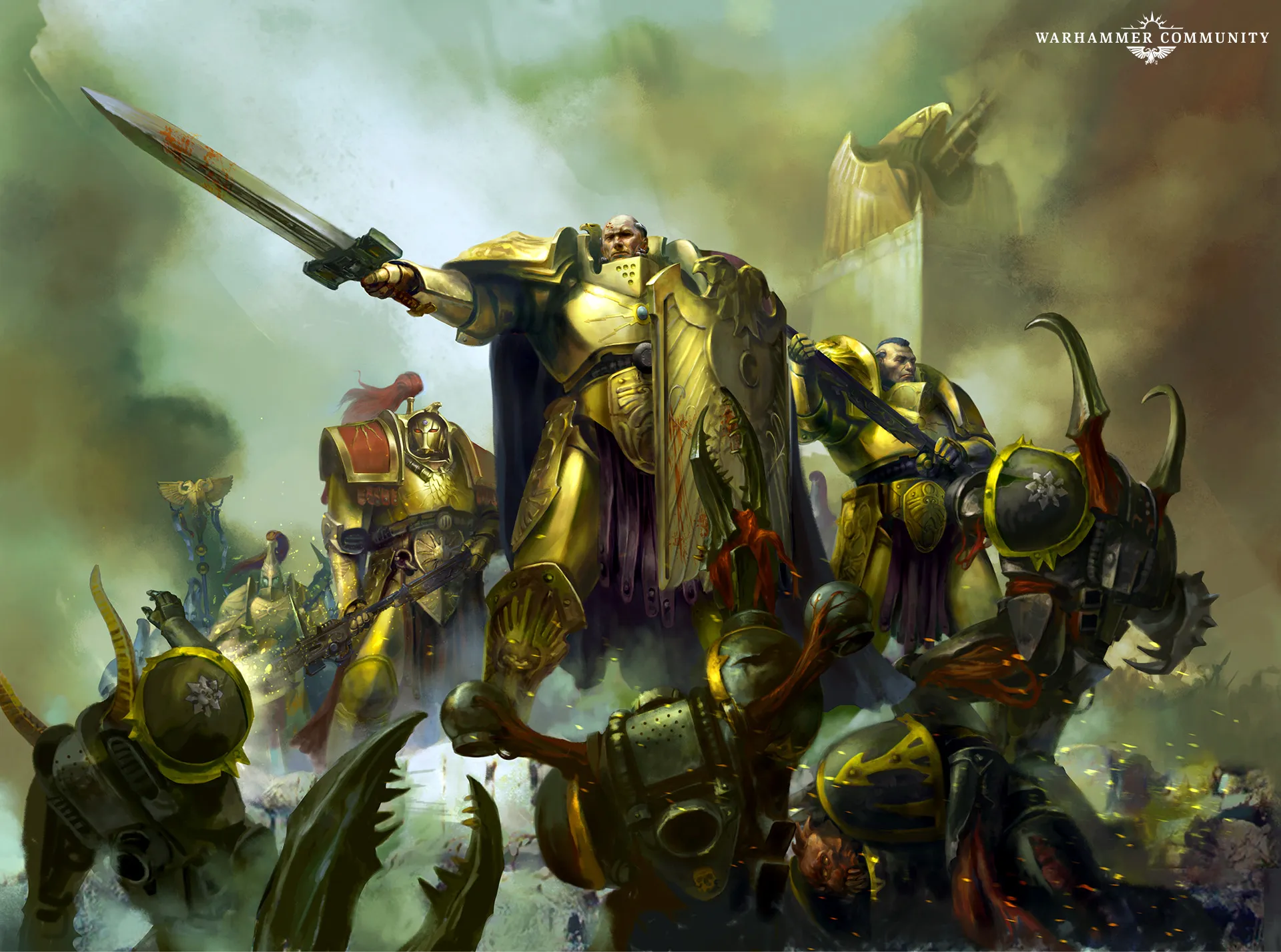
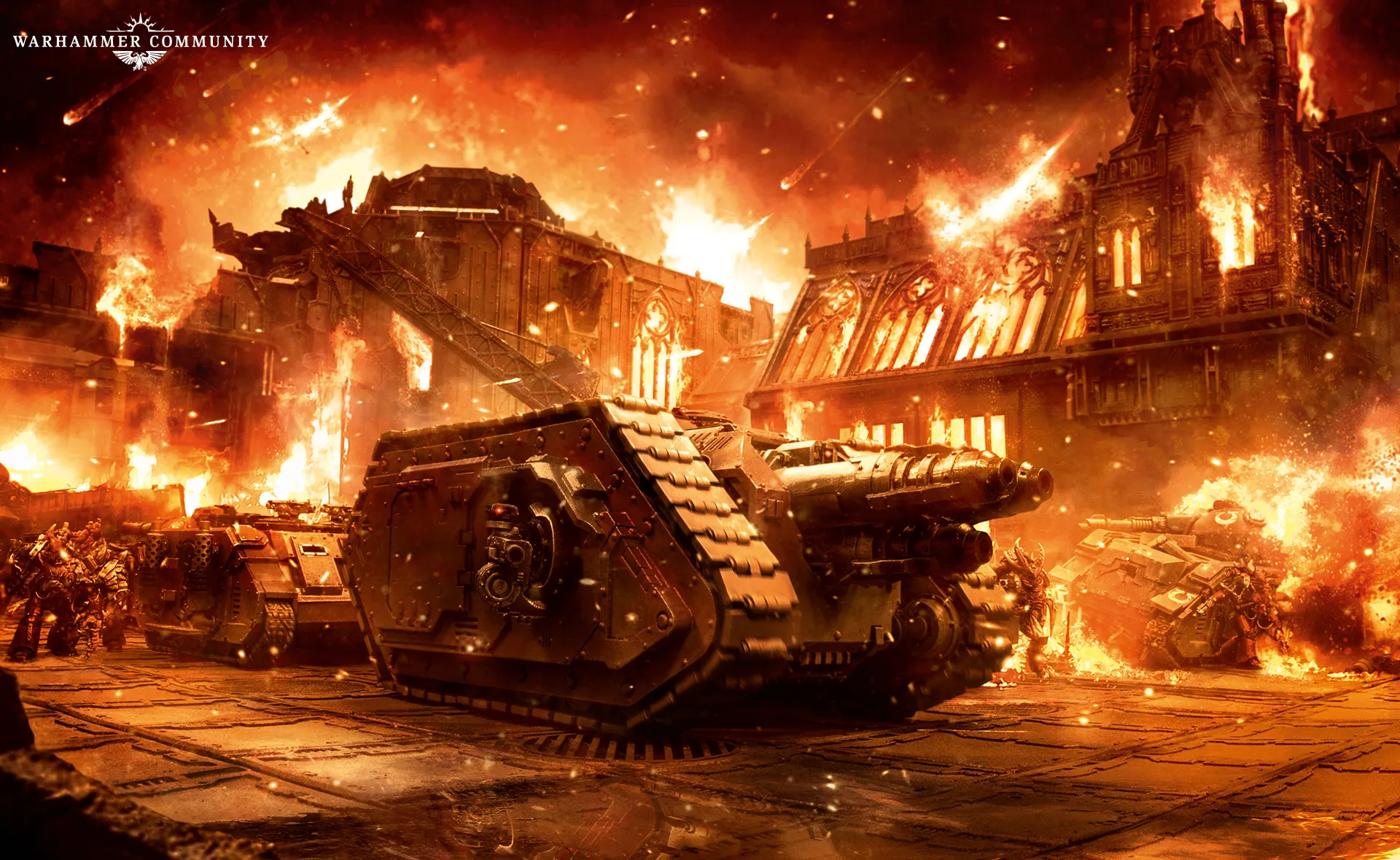
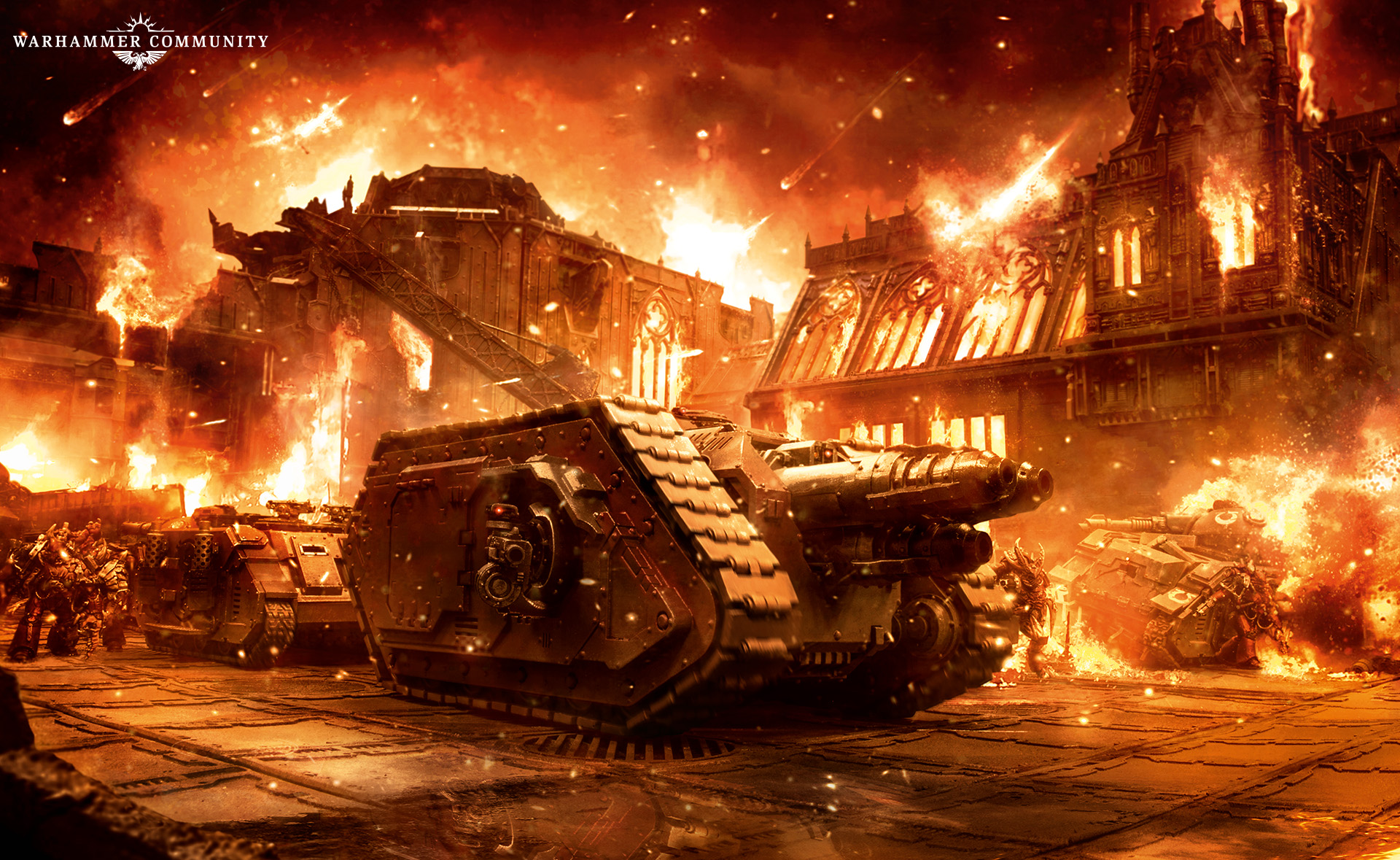
All of that patience cashed out at Calth, where Kor Phaeron brought “tens of thousands of Space Marines” and, by his own account, cultists numerous enough that the old sourcebooks don’t even try to give a real figure, just “too many to accurately estimate.” It was the first time the Word Bearers deployed cultist forces at mass scale, and it set the template for how every Traitor Legion would use them for the next ten thousand years: a useful, disposable body of mostly compliant flesh for garrison duty, menial labour, and the sort of unsavoury jobs nobody wants to assign a Space Marine to. They got used as human shields to blunt Ultramarines counterattacks while Dark Mechanicum war machines did the actual work of cracking the loyalist lines. Most of them don’t even get named in the accounts that survive.
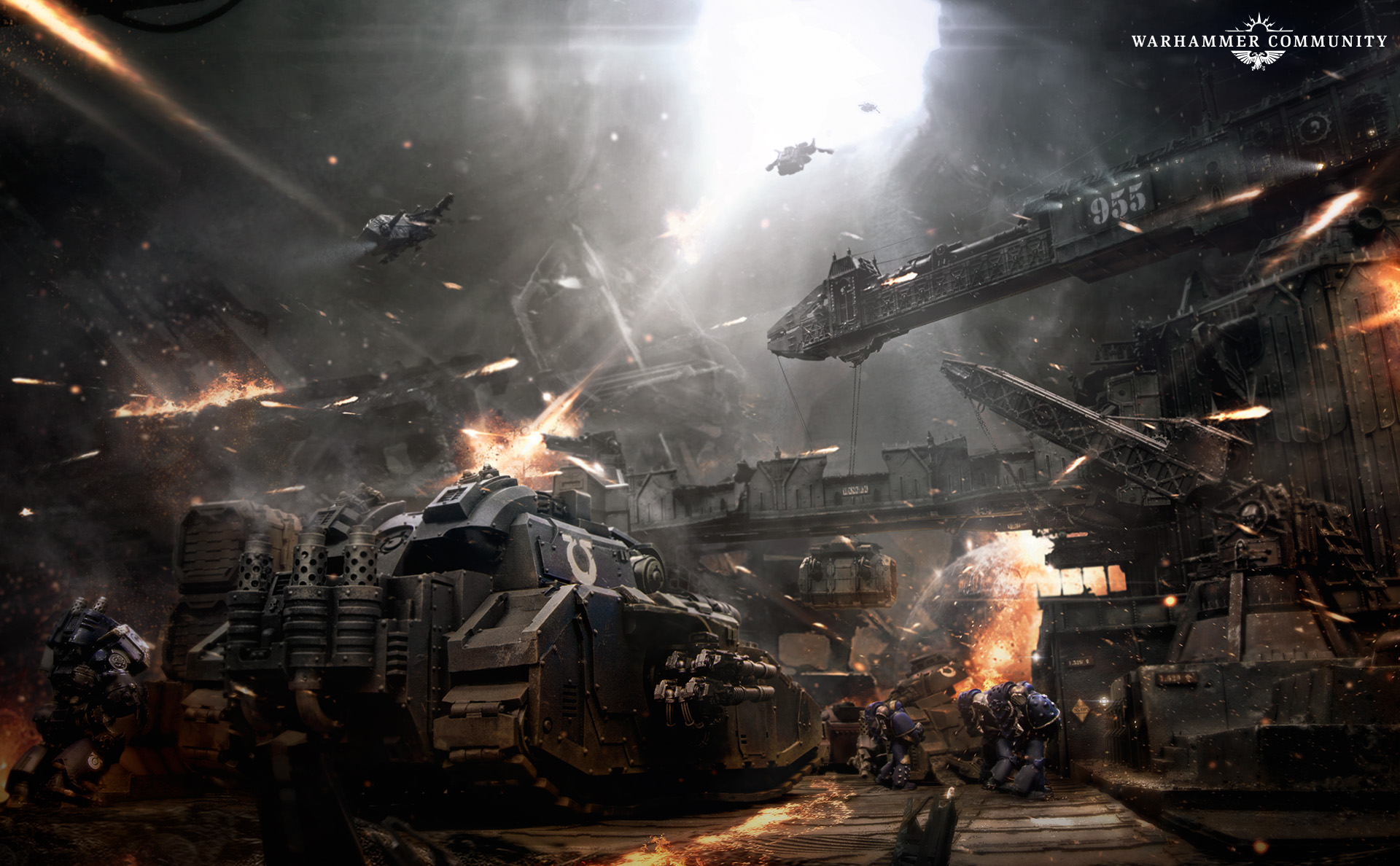
Then the planet stopped being fightable at all. Calth’s sun got crippled in the opening exchange, the atmosphere started cooking, and both sides ended up fighting the rest of the war underground, in tunnels dug by starving refugees with their bare hands. Everyone remembers Guilliman’s counterattack and Chapter Master Gage losing his hand to a daemon in the first hours. Almost nobody talks about the Underworld War that came after, a decade-long guerrilla grind through collapsing tunnels that outlasted the “real” battle everyone assumes decided the whole thing. Rumours persisted for years afterward that something was still living down there in the wrecked lower levels, waiting. The old sourcebooks never confirm it, and never quite rule it out either.
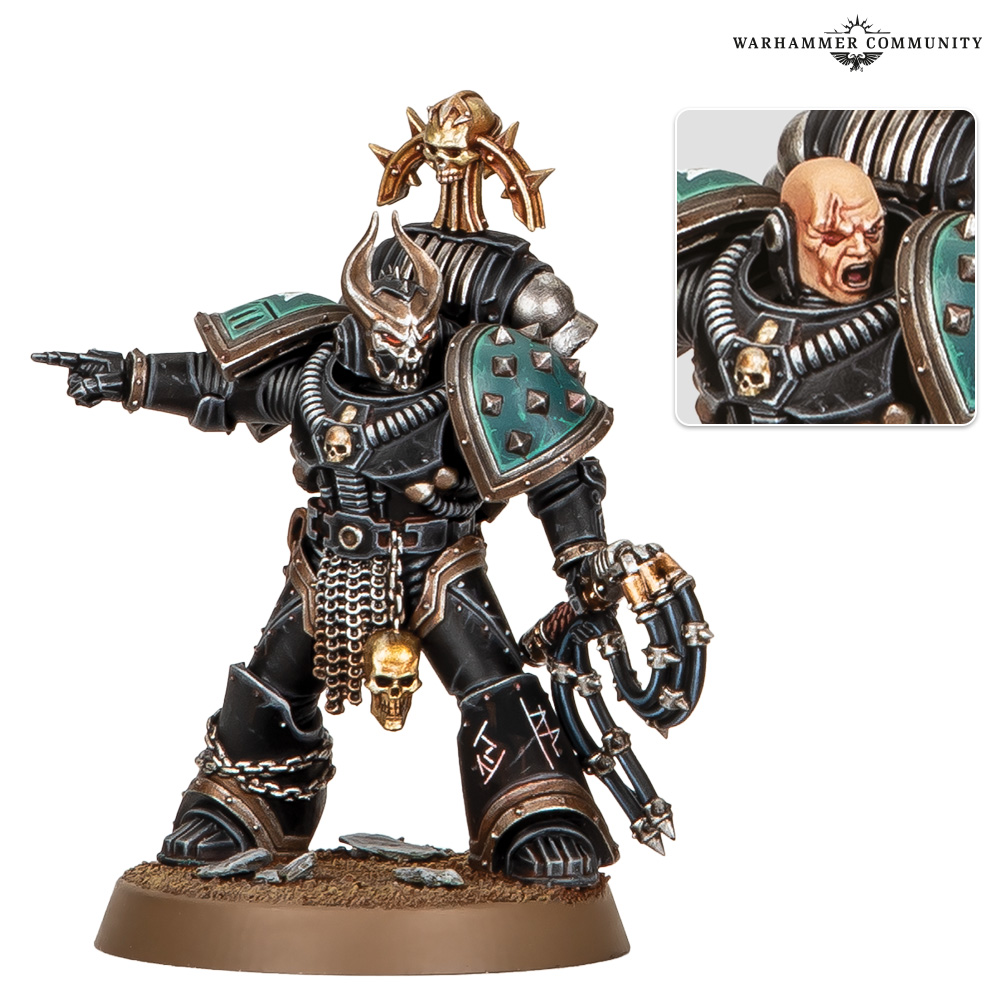
I brought this up to Kiran at the store a few weeks back, mostly because I’d been down a Calth rabbit hole for something unrelated, and it turned into one of those arguments that runs forty-five minutes longer than either of us planned. His position: Word Bearers cultist spam on the tabletop is thematically dishonest, because nobody’s actually fielding millions of disposable human shields, so running three units and calling it lore-accurate is having it both ways. I don’t fully agree, but I didn’t have a great comeback for “so why do you only ever run the armoured units and none of the mob.” Fair point. My Beta-Garmon supplement has a Traitor Overseer Consul in it that I’ve owned for the better part of a year and never once put a brush to.
Which, credit where it’s due, is a genuinely nasty little model once you actually look at him. He’s a Centurion whose entire battlefield job is keeping unaugmented human levies in line, and GW gave him a power whip and what the reveal article calls a “borderline daemonic” mask, because apparently the fear-based-command-structure concept needed a physical prop. There’s something almost administrative about the whole idea. Somewhere in the Word Bearers’ order of battle there’s a guy whose job title is genuinely just Overseer, over people one bad morale check away from running.
Anyway. Point is, somebody in a design meeting decided the Word Bearers specifically needed a guy whose entire job is scaring conscripts, gave him two head options and a whip, and shipped it. That’s a choice. I don’t think it’s an accident.
I’m not sure the plan actually worked
Here’s where I start talking myself out of my own argument a bit. Lorgar’s covens gave the Word Bearers the biggest cultist army fielded anywhere in the early Heresy, deployed at exactly the moment an unsuspecting Legion had its guard down, and the result was a stalemate that ran the better part of ten years and ended with Guilliman alive, Ultramar mostly intact, and the Thirteenth Legion turned into one of the most dangerous Loyalist forces still standing by the time Terra burned. The generous read is that Calth was never meant to be a knockout blow, that pinning an entire Legion away from Terra for a decade was the actual win condition all along, in which case it worked exactly as designed. I go back and forth on which read is correct pretty much every time I reread the chapter, and the Zhao-Arkhad entry from a couple of weeks back didn’t help me decide either way, since that one’s about a forge world that never picked a side and got invaded twice for the trouble anyway. Not every Age of Darkness story resolves into a clean strategic lesson. Some of them are just what happened.
Whether the Word Bearers came out of the whole war better or worse off than Legions that fought all the way to Terra is a separate argument, and I’m not convinced it has a tidy answer. Ten years underground does something to a fighting force that ten years marching on Terra doesn’t. I just don’t know which is worse.
What I keep landing on, regardless of which read wins, is that pre-Heresy Imperial doctrine had no category at all for what Lorgar actually built. “Isolated incidents barely worth recording” was a perfectly serviceable policy for a cult that flared up on one feral world and burned itself out in a season. It had nothing whatsoever to say about a Legion patiently running a second religion in parallel with its real job for the better part of a decade, in plain sight, on every world it touched, wearing the same colours as everyone else on the manifest. You can’t glass a problem from orbit once the problem is embedded in your own supply chain. The Emperor’s answer to the Disintegrator was built from the same reflex, really: too dangerous to understand, so simply erase it and move on, no further questions asked.
GW’s teasing next week’s entry as a look at the “Hidden War,” the daemonic side of all this rather than the human one, which I’m reading as a promise we’ll finally get past crowd control and into the actual summoning business. Worth a look next to the Xana Incursion piece if you want to see what the loyalists were up against when the same trick got run in reverse. My Beta-Garmon book is still on the shelf. The Overseer’s still grey plastic.