Commander Farsight told Aun’Va that his friend was dead. Killed in the last engagement, body burnt beyond recognition. An unfortunate loss. He even bowed his head while delivering the news, according to Codex Supplement: Farsight Enclaves’ section The Mercy of the Ethereals. The missing commander, Sha’vastos, had been hidden away before the Ethereal Supreme arrived to collect him.
Sha’vastos had a failing Puretide neurochip in his head. The supplement describes the removal procedures performed on other commanders as leaving them mentally devastated, and Aun’Va had come to arrange the same operation for him. Farsight’s lie bought his friend time. In the supplement’s later entry Shas’o Sha’vastos, we learn that he was placed in stasis until O’Vesa could repair the implant, many decades afterwards.
That’s the Farsight story I wish people started with. I like the red battlesuit and enormous sword as much as anyone. My Thousand Sons collection hardly gives me grounds to complain about someone choosing a spectacularly impractical weapon. But this little exchange with Aun’Va gives O’Shovah a personal reason to distrust authority before he ever picks up the Dawn Blade on Arthas Moloch. At Dal’yth, that authority had already put Sha’vastos on a list for surgery.
The T’au Empire teaches collective duty through the Greater Good. Farsight keeps that belief while rejecting the Ethereals’ claim to direct it. His colonies across the Damocles Gulf retain Fire caste training, rituals and a great deal of his own attachment to the traditions he grew up with.
The Friend With Puretide in His Head
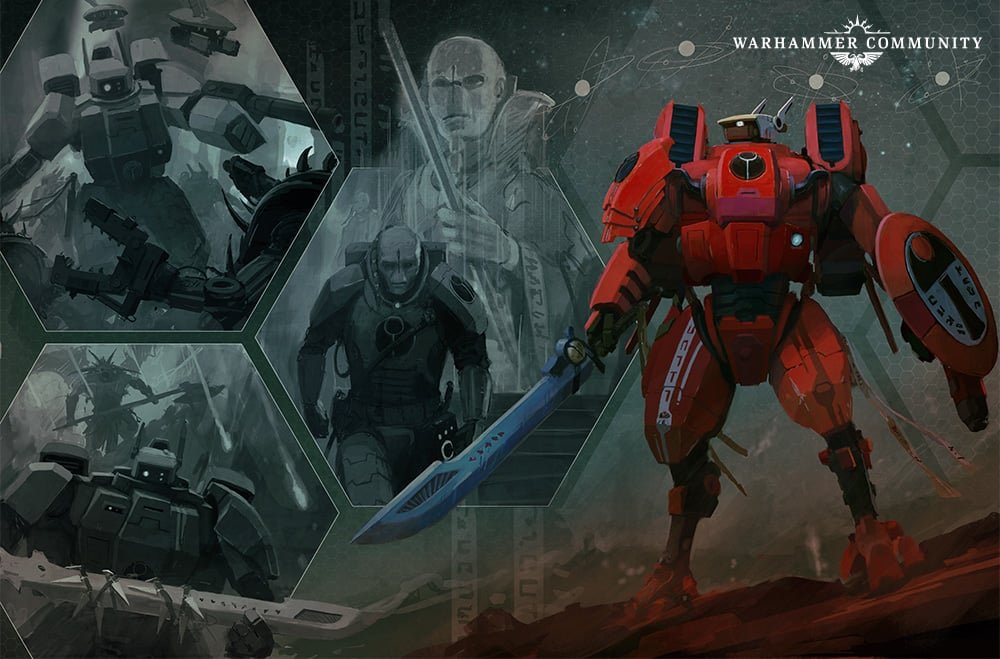
Puretide was the military teacher whose influence followed Farsight throughout his career. Warhammer Community’s official character history places O’Shovah’s upbringing on Vior’la and describes his apprenticeship under Puretide alongside Shadowsun. Farsight specialised in Mont’ka, the Killing Blow, and put those lessons to work against the Imperium during the Damocles Gulf Crusade.
Preserving a brilliant commander’s tactical knowledge sounds like an obvious use for T’au technology. The supplement’s Shas’o Sha’vastos entry says Sha’vastos was the first Fire caste warrior to receive a Puretide neurochip, and that the prototype degenerated rapidly. In The Mercy of the Ethereals, the wider programme’s surgical aftermath is described with a cruelty that the accompanying diplomatic language barely acknowledges. The commanders had helped save Dal’yth. They were then subjected to procedures that ruined their minds.
Farsight knew enough to get Sha’vastos out of the way. When he told Aun’Va the fabricated account of his death, the Ethereal held his gaze for a long time before leaving. The passage gives us no confession, no confrontation, and no explanation of what Aun’Va believed. I don’t actually know whether that look means he recognised the lie. I’d rather keep the uncertainty, because Farsight has to stand there and deliver the story anyway.
I used to file the neurochip under clever T’au wargear and move straight on to the battlesuit pages. That’s a fairly embarrassing thing to admit after spending so much time defending the weird corners of this setting. There’s an injured person attached to the equipment entry, and the attempt to preserve Puretide’s knowledge has consequences for the people receiving it. Sha’vastos eventually returns as one of Farsight’s trusted companions, with the repaired implant still helping him anticipate enemy plans.
The rescue also brings O’Vesa into the story early. An Earth caste scientist, he supplies the technical answer that Farsight needs. O’Vesa later appears among the Eight, piloting a Riptide.
Arthas Moloch Leaves Him Without Guidance
The familiar disaster comes later. In the supplement’s Arthas Moloch, Farsight’s forces confront Orks on a dead world covered in ruined shrines and ancient statues. A rift releases creatures the T’au struggle to understand. We recognise the daemons; O’Shovah is trying to work out why shooting them keeps producing more enemies while his communications fill with panicked reports.
The account is wonderfully physical about that confusion. Some creatures avoid a statue carrying a hexagrammatic medallion. Farsight notices that looking at the symbol eases the pain in his head, orders it recovered, and has his warriors test its effect. He also deduces a connection between the blood on the dais and the creatures appearing there. Flamer teams burn away the blood while other troops keep the Orks from reaching the site.
He acquires the sword when a daemon knocks him into a statue and breaks his battlesuit’s arm. The fallen statue’s weapon is within reach. Later, he uses the blade to throw the collected medallions into the rift, and the resulting blast banishes the creatures. By the time the battle ends, all three Ethereals accompanying the expedition have been killed.
The supplement lets him solve pieces of the problem while remaining frightened by what he has seen. I like the attention it gives to the practical work of getting his troops through this. It’s a military response assembled under pressure, involving unfamiliar artefacts and observations that his existing education can barely accommodate. His troops return to their fleet in silence.
WarCom’s character history connects this experience to his growing suspicion of Ethereal control and his subsequent exile in the Farsight Enclaves. The earlier Sha’vastos episode gives that suspicion somewhere to take root. He has already concealed a friend from the authorities; now the people charged with guiding his expedition are dead, and his understanding of the galaxy has acquired some very unpleasant gaps. If you need the wider explanation of what came through the portal, our guide to the Warp covers the setting’s psychic machinery.
A Red Battlesuit Still Has a Caste Inside It
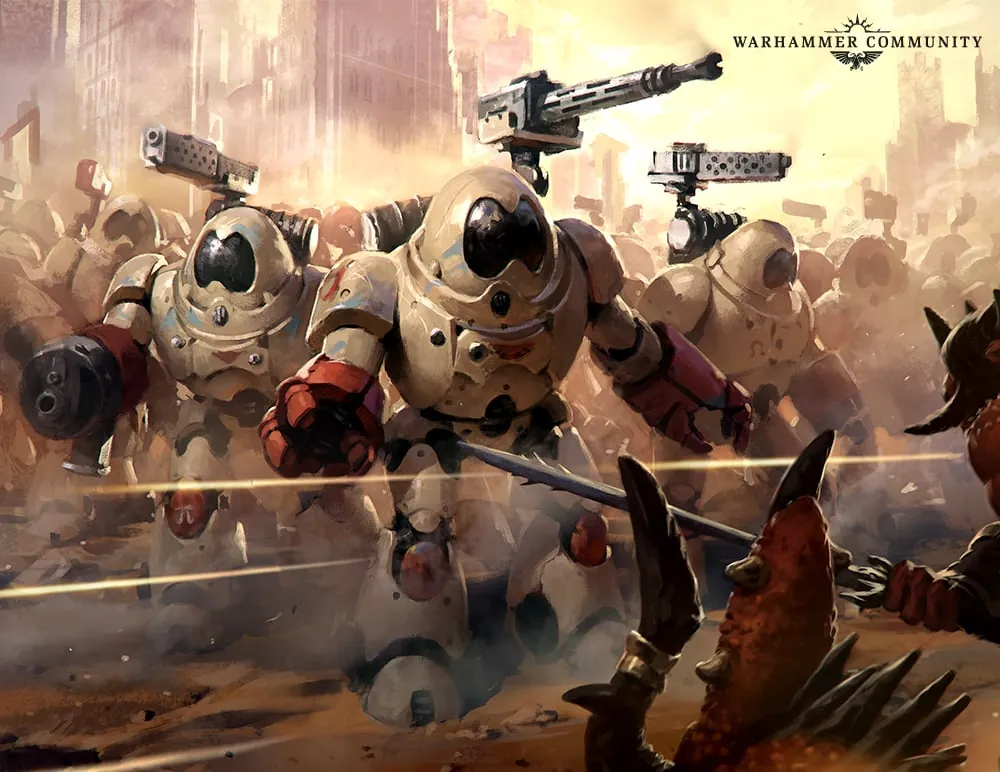
The supplement’s Farsight Enclave Organisation describes colonies beyond the Damocles Gulf, politically separated from the Empire, whose forces retain Fire caste rituals and training. Their armies often centre on Crisis battlesuits, favour rapid insertion and follow Farsight’s preference for aggressive tactics. They also sometimes fight to assist the Empire they left.
O’Shovah continues to have people and places worth defending across the border. His history with Shadowsun remains part of that connection. WarCom’s character history records his return to help her fight the Imperium at Mu’gulath Bay. The supplement also leaves room for Enclave forces to help their former rulers.
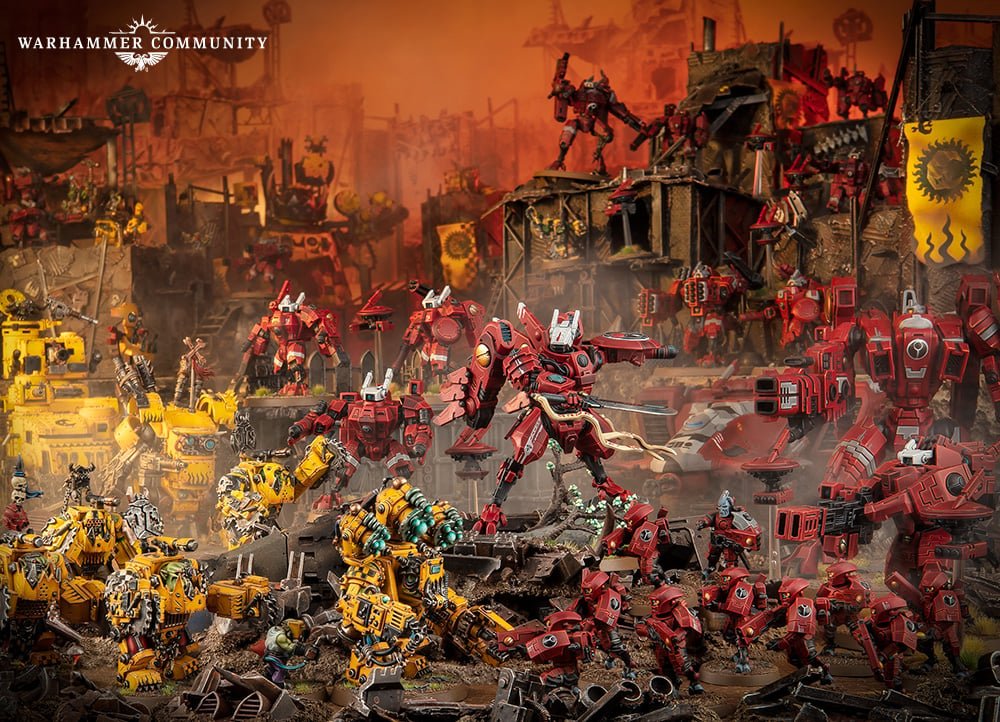
The entry O’Vesa calls Farsight a committed Fire caste traditionalist. It then explains how remarkable it is that his Earth caste friend pilots a Riptide among the Eight. O’Vesa’s artificial-intelligence systems compensate for the combat training he lacks. His battlesuit’s targeting and piloting systems incorporate AI suites of his own invention.
I’m cautious about turning that into a claim that the Enclaves have abolished the T’au social order. A powerful commander personally allowing his friend to cross a caste boundary tells us something specific about their bond. The text still presents the permission as an extraordinary honour. If I were an Earth caste engineer asking for the same opportunity, I’d want a bit more written down before buying a pilot’s helmet.
And the Enclaves’ survival involves friends inside the Empire. In Hidden Allies, a seemingly empty ship arrives with frozen passengers, Commander Torchstar and a cargo of experimental technology. Sympathisers among the septs have secretly diverted it. Torchstar brings experimental Riptides and schematics with her.
Those supply arrangements make the breakaway colonies feel inhabited. There are people willing to risk a shipment for them, people waiting in stasis aboard it, and scientists with enough practical work to occupy whole lifetimes. I’d happily read a story about the person who altered that ship’s course and then had to go back to work the next morning. Our Kroot article approaches the wider alliance through another group whose participation comes with its own interests.
The Sword He Should Probably Stop Using
The supplement’s The Dawn Blade supplies the horrible answer to Farsight’s long life. The weapon’s chronophagic alloys add the natural lifespan stolen from a victim to its wielder. In that account, the process has allowed O’Shovah to live for almost three centuries. He suspects the sword has something to do with his longevity, but he doesn’t understand how it works.
The passage goes further: discovering the truth would likely drive him to ritual suicide. That’s the narrator’s assessment of his probable reaction, and I think it deserves to stay attached to the source. Farsight remains unaware of the mechanism in this account, with the prospect of his discovery left unresolved.
The blade’s precise makers remain another limit. This account attributes it to the ancient inhabitants of Arthas Moloch and says Earth caste scientists can’t understand its materials. That’s enough for the argument here. Pinning a familiar faction label on every unexplained artefact can consume an evening and leave you with three browser tabs confidently disagreeing about the same sword.
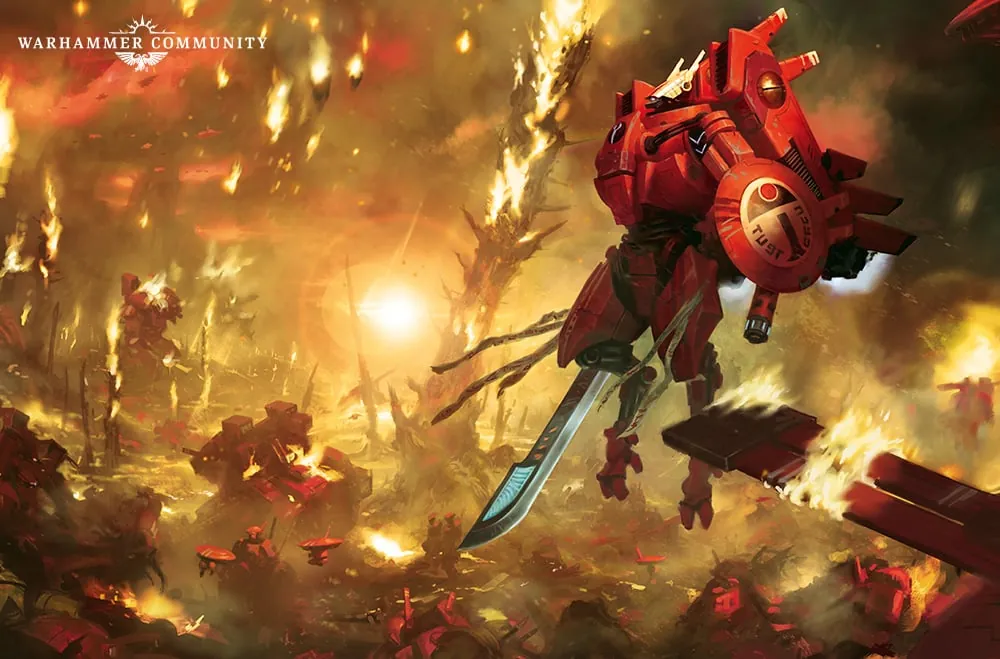
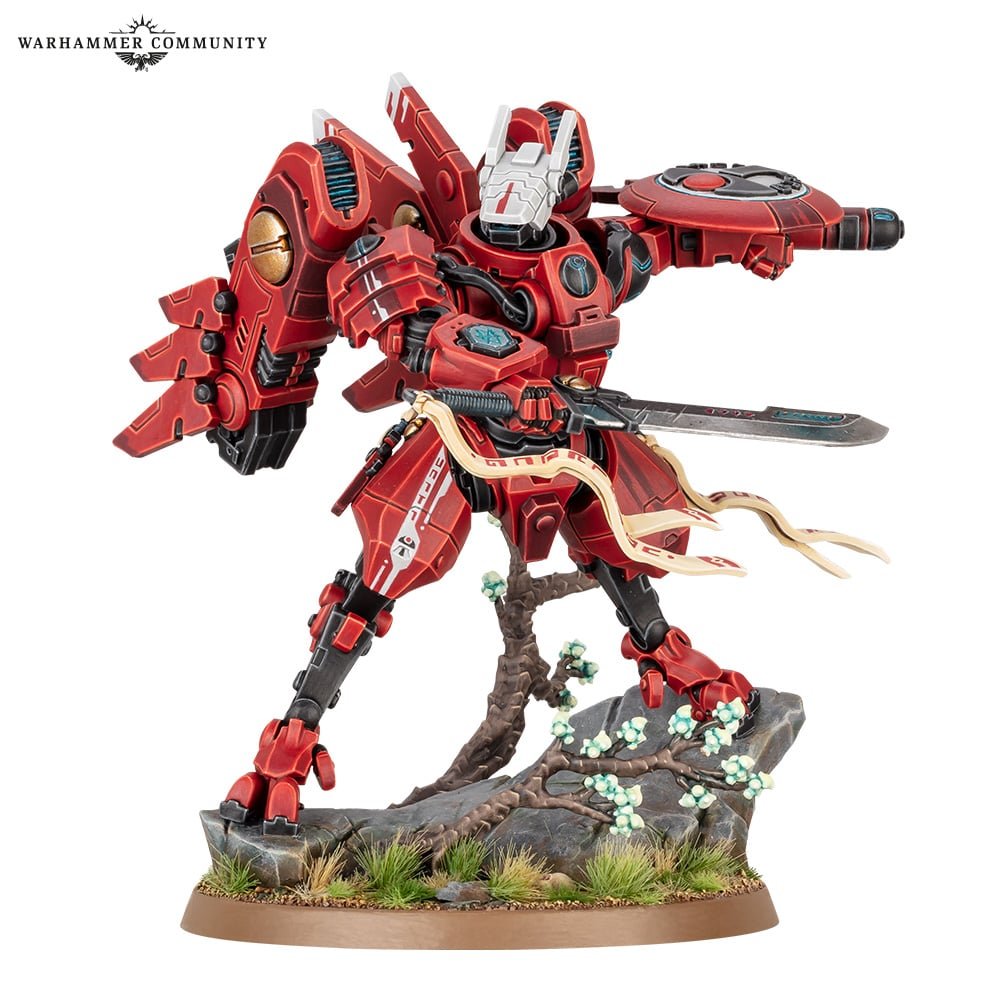
The miniature gives the blade plenty of attention, which it deserves. GW’s 2023 model announcement identifies the suit around it as an XV-86 Supernova, designed by O’Vesa with improved command systems and an onboard AI. I love this awkward, tree-perching boy. Even with the plasma rifle on the other arm, the long blade and trailing cloth make the pose feel like an invitation to a duel I’d rather somebody else’s Rubrics accepted.
Farsight has therefore accumulated a very particular leadership problem. The colonies benefit from his experience across generations, and the weapon lets him keep returning to their wars. Each successful close engagement may extend that period further. The source’s version of him would find the actual mechanism appalling, while everyone around him continues to rely on the commander who keeps surviving.
The Scientists Who Fed Themselves to a Hive Fleet
My favourite episode in the supplement arrives in Mont’ka Denied. Tyranids attack Vior’los, and Farsight’s favoured decapitation strikes fail. Every destroyed leader-beast is replaced. The swarm adapts as he adjusts his plans, and citizens die while the defences give way. O’Vesa proposes letting the enemy consume the world and arranging a counterattack through what it eats.
Farsight orders the population evacuated and guards the research facility with his commanders while the scientists develop their weapon. The defenders are eventually extracted, but three Earth caste scientists remain behind. They have swallowed the countermeasure themselves: delayed-release, self-replicating poisons intended to enter the Tyranid digestion process with their bodies. O’Vesa survives to explain the plan as the feeding bio-ships begin to rot apart in orbit.
It’s an extravagant piece of codex warfare, and I can see why someone would want more explanation of how the poison beats a hive fleet’s biology. The passage concentrates on the people creating its delivery system. Farsight has to evacuate a world, accept that his preferred method is failing, and trust an old scientist with the remaining chance of saving the surrounding colonies. When he watches the planet being consumed, he still doubts their decision.
In A Hero Reborn, the supplement describes the scientists’ sacrifice as renewing his understanding of the Greater Good. Their selflessness humbles a commander accustomed to seeing Fire caste warriors die. He oversees Vior’los’ reconstruction, with its three principal cities named for the scientists who stayed behind. On Lub’grahl, memorials are laid out for those lost in the fighting.
I’d like an Enclaves army to make room for that bit of the story. A little Earth caste maintenance crew beside the Riptide, perhaps, or one of those city names on a transport. I don’t have a T’au force, and my small Drukhari project has already used up the shelf space I was pretending I’d reserved for something sensible. Still, I’d keep those scientists’ names in the project notes before choosing another battlesuit loadout.