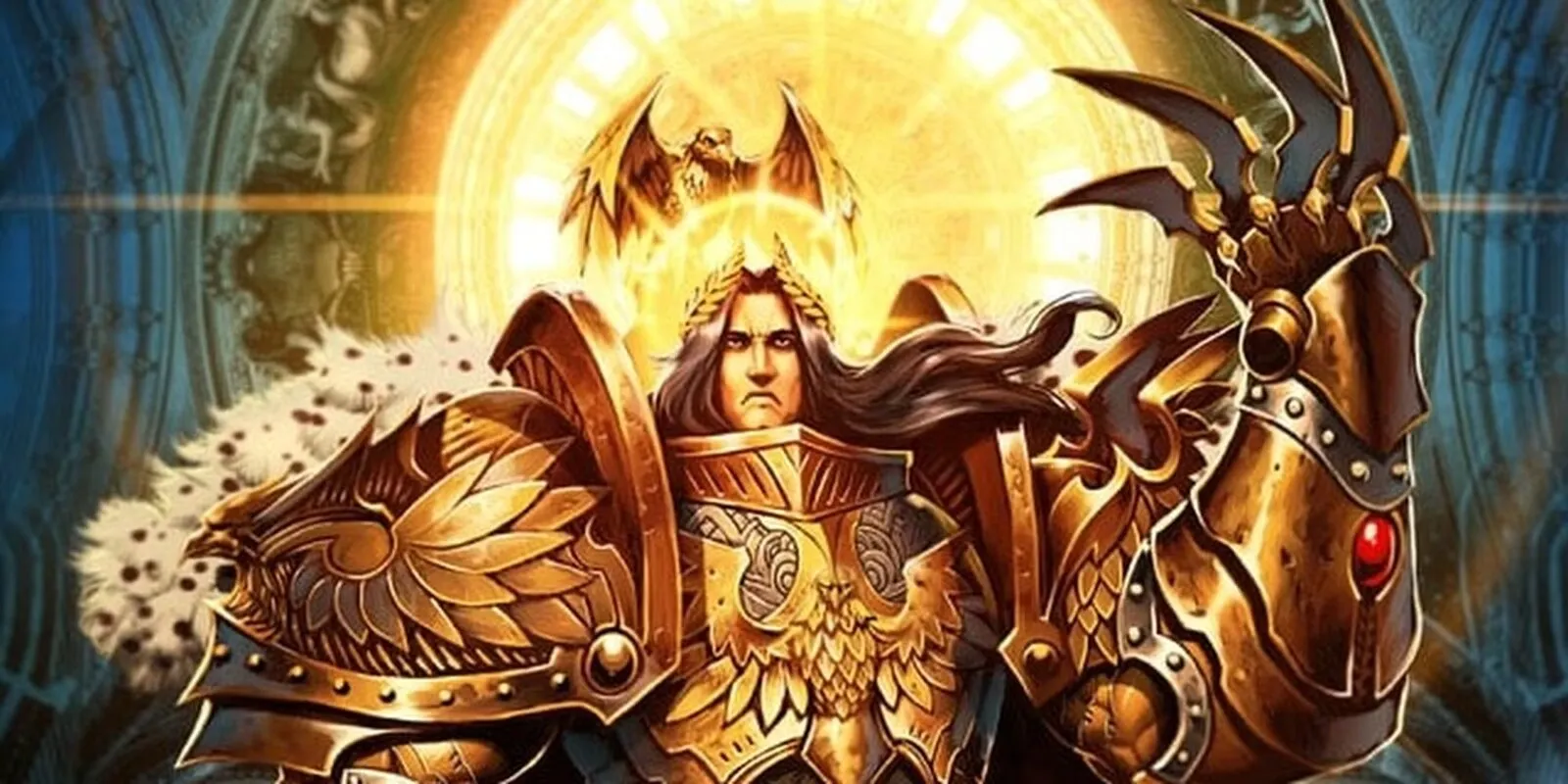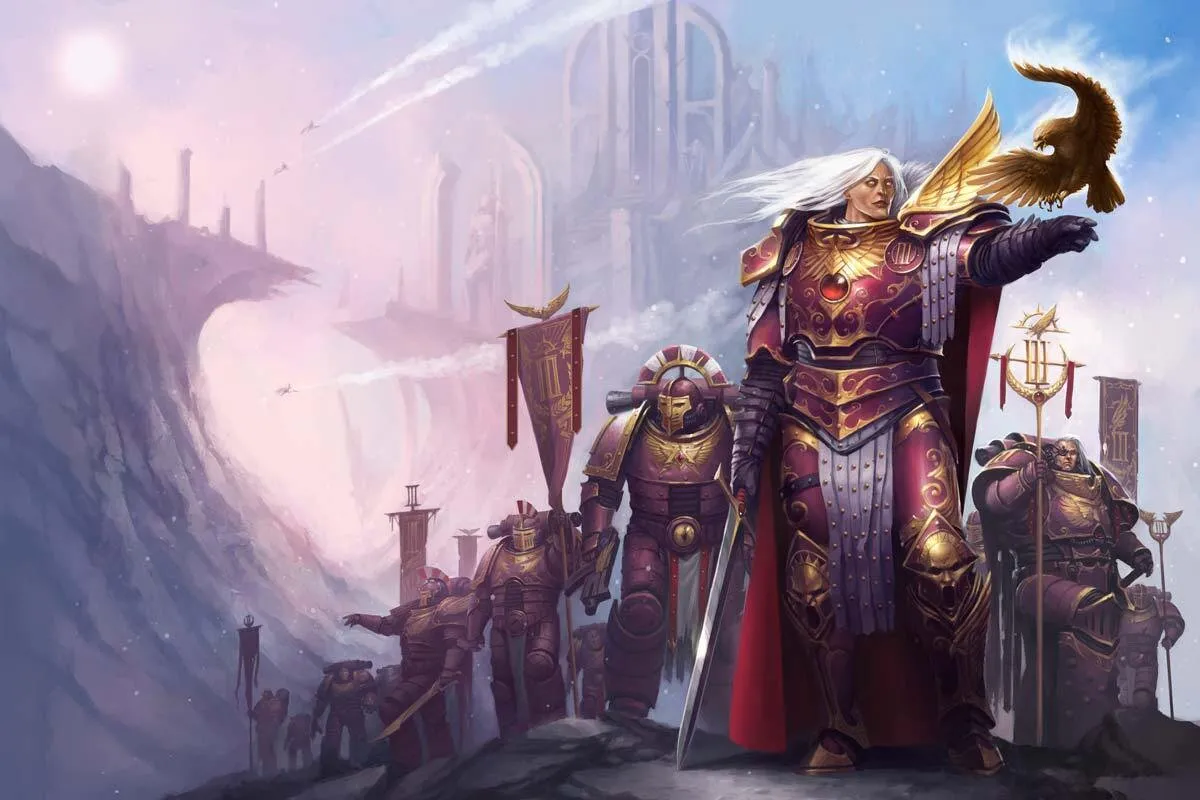
The Emperor’s Children might have the best fall-from-grace arc in all of Warhammer 40K. No other Legion went from such heights to such depths. These were the only Space Marines ever allowed to wear the Emperor’s own symbol, the Palatine Aquila, on their chest. They were the golden boys. The overachievers. And they ended up as drug-addled, skin-wearing murder hedonists dedicated to the god of excess.
If you’ve read Graham McNeill’s Fulgrim, you know how good this story is. If you haven’t, I’m genuinely jealous that you get to experience it for the first time.
The Legion That Had to Be Perfect
The IIIrd Legion started small. Really small. A near-fatal gene-seed crisis early in their history reduced them to barely 200 battle-brothers at one point. When their Primarch Fulgrim was found on the industrial world of Chemos, he inherited what was essentially a skeleton crew.
But Fulgrim didn’t see a weak Legion. He saw potential. The Phoenician (as he came to be known) was obsessed with perfection in everything. Not just warfare, but art, music, philosophy, governance. His first speech to those 200 marines was a promise that they’d prove worthy of their name. And they did. They rebuilt, they excelled, and they became one of the most celebrated Legions of the Great Crusade.
The Emperor was so impressed that he granted them the right to bear his personal symbol. No other Legion got that honor. Think about what that does to a group of people already inclined toward pride. You’re literally wearing the Emperor’s seal on your armor. You’re the chosen ones.
And that’s where the problems started.
The Laer Blade Changed Everything
The real turning point is the campaign against the Laer, a serpentine xenos species that worshipped Slaanesh. The Emperor’s Children fought hard to wipe them out, and at the end of the campaign, Fulgrim claimed a trophy from a Laer temple: a beautiful silver sword.
It was a daemon weapon. Fulgrim didn’t know it, and honestly, even if someone had told him, I’m not sure he would’ve listened. His pride was already that far gone.
The sword’s whispers were subtle at first. Fulgrim became more irritable, more obsessive, more fixated on surpassing everyone around him. His inner circle started experimenting with exotic stimulants, strange music, and increasingly bizarre “cultural” pursuits that were really just Slaanesh’s influence creeping in through the back door. They told themselves they were expanding their horizons. They were being corrupted.
When Horus made his pitch to recruit Fulgrim to the rebellion, the Laer blade had already done most of the work. Horus played on Fulgrim’s vanity, suggested the Emperor didn’t appreciate the IIIrd Legion’s greatness, and promised that Fulgrim could achieve true perfection unfettered by Imperial bureaucracy. For someone who’d spent decades being whispered to by a daemon, it was an easy sell.
The Drop Site Massacre and the Death of Ferrus Manus
The Emperor’s Children’s betrayal became permanent at Isstvan V, and the moment that sealed it was one of the most tragic scenes in Heresy lore.
Fulgrim and Ferrus Manus, Primarch of the Iron Hands, had been genuine friends. Close friends. They’d exchanged gifts (Fulgrim’s warhammer Forgebreaker was made by Ferrus, and Ferrus’s sword Fireblade was made by Fulgrim). So when Fulgrim tried one last time to convince Ferrus to join Horus, it wasn’t just politics. It was personal.
Ferrus refused. Obviously.
What followed was a duel between brothers that ended with Fulgrim cutting off Ferrus Manus’s head. And in that moment, according to McNeill’s novel, Fulgrim was briefly horrified at what he’d done. There was a flicker of the old Fulgrim, the one who actually cared. But it was too late. The daemon in the Laer blade surged forward and took control, and whatever was left of the real Fulgrim was gone.
I think that’s what makes the Emperor’s Children story so effective. It’s not that Fulgrim was always evil. It’s that he was too proud to admit something was wrong until the thing that was wrong had completely consumed him.
The Siege of Terra and the Birth of Noise Marines
By the time the Traitor Legions reached Terra for the final siege, the Emperor’s Children were barely recognizable as a military force. While the other Traitor Legions actually attacked the Imperial Palace, Fulgrim’s boys went the other direction. They poured into the civilian districts and just… went absolutely feral.
Millions of people died. Not for any strategic objective. The Emperor’s Children did it because they enjoyed it. They’d fully embraced Slaanesh by this point, and the suffering of innocents was their form of worship.
This is also when Noise Marines first appeared. Astartes whose senses and weapons had been warped by Chaos into sonic instruments of death. Weaponized sound, basically. Guitars that kill. It’s one of the most metal concepts in 40K (literally), and it’s become the Emperor’s Children’s signature ever since.
Fulgrim himself completed his transformation during the Heresy, ascending to Daemon Prince of Slaanesh. His body twisted into a serpentine, four-armed horror. Beautiful and terrible at the same time, which is pretty much the Emperor’s Children aesthetic in a nutshell.
Ten Thousand Years of Excess
After the Heresy, the Emperor’s Children fell apart. Without Horus’s leadership and with Fulgrim increasingly checked out (he retreated to a daemon world to endlessly replay his old battles in search of “perfect outcomes”), the Legion splintered into warbands.
The Legion Wars made it worse, and Fabius Bile was at the center of the chaos. Bile is one of the most fascinating characters in the entire setting, a former Chief Apothecary of the Emperor’s Children who decided that if the Emperor could create the Primarchs, he could do it too. Or at least try. His obsession isn’t Slaanesh (he’s contemptuous of Chaos worship, which is remarkable for a Traitor Legionnaire). It’s perfection through science. He’s spent ten thousand years experimenting on captured subjects, cloning Astartes, and trying to create what he calls the “New Men,” a successor to humanity that would be superior in every way. He cloned Fulgrim at one point. He cloned Horus. The Horus clone actually worked briefly, which is what triggered the catastrophe.
Abaddon, who was building his Black Legion from Heresy survivors, saw a resurrected Horus as a direct threat to his authority. He was furious and retaliated by dropping a starship on the Emperor’s Children’s capital city. After that, the Legion was done as a unified force. Bile survived because Bile always survives. He’s a cockroach in power armor, bouncing between warbands and Chaos factions, offering his services in exchange for subjects and resources. He’s worked with Dark Eldar in Commorragh, traded with xenos species, and created entire populations of enhanced humans on isolated worlds just to see what happens. The Fabius Bile trilogy by Josh Reynolds is some of the best Chaos-focused fiction Black Library has produced, and it makes a compelling case that Bile might be the most dangerous individual in the Eye of Terror, precisely because he has no loyalty to anyone or anything except his own research.
But scattered doesn’t mean gone. Emperor’s Children warbands have been showing up across the galaxy for ten millennia, and they’re consistently some of the most horrifying antagonists in the lore. They don’t conquer worlds for territory. They attack for the experience. A shrine world’s holy choir turned into screaming victims. An entire planet’s water supply poisoned with a nerve sensitivity toxin before the assault begins. These are the kinds of operations they plan.
Every engagement with the Emperor’s Children is described as an assault on the senses. Strobing lights, deafening sonic weapons, the laughter of lunatics on the vox. They’ve turned war into performance art, and the audience doesn’t survive the show.
Fulgrim Now
The Daemon Primarch is still out there. He’s spent most of the last ten thousand years on a hidden daemon world, but he’s made appearances. When Roboute Guilliman was resurrected in the closing days of M41, Fulgrim possessed an Imperial dignitary just to show up at Guilliman’s triumph and taunt him personally. He also led a force against the Iron Hands on Sabbyst, killing their champions one by one in what was clearly a deliberate callback to his murder of Ferrus Manus. The guy holds grudges and he holds them in the most theatrical way possible.
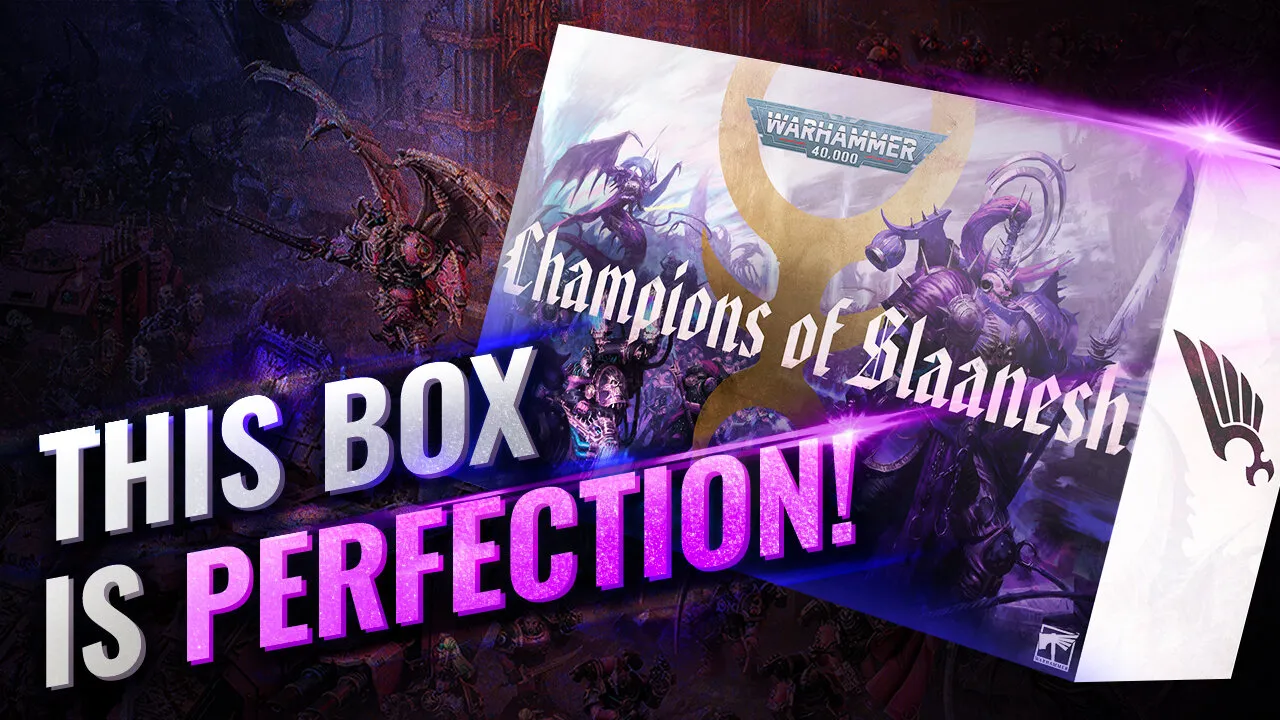
The new Emperor’s Children codex and model range represent something GW fans have been begging for since, honestly, forever. The Noise Marine kits are gorgeous. They finally look like what they’re supposed to be: warriors whose weapons and armor have fused with sonic technology into something grotesquely beautiful. The Lucius the Eternal refresh captures his vanity and menace in a way the old model never managed. And the army plays how it should on the tabletop: fast, fragile compared to other Chaos Marines, but devastating at the right range, with mechanics that reward aggressive overextension in a way that feels genuinely Slaaneshi. You’re pushing your luck every turn, chasing the high of the perfect play, and sometimes it all falls apart spectacularly. Thematic game design at its finest.
The codex mechanics deserve a closer look because GW really nailed the feel of the army on the tabletop. The core mechanic revolves around a sensation system that rewards you for pushing units into risky positions and keeping them engaged. The more your units fight and suffer, the more powerful they become, which is exactly how Slaaneshi devotees should work. There’s a “crescendo” mechanic where certain abilities escalate over the course of a battle, starting subtle and building to devastating by turn three or four. Noise Marines get access to sonic weapons that ignore cover entirely, which is both fluffy and brutal in practice. The Lucius the Eternal datasheet is a standout, with a dueling mechanic that lets him challenge enemy characters and grow stronger with each one he kills, but leaves him vulnerable if he picks a fight he can’t finish. The army-wide rule around excess means you’re constantly making decisions about whether to overcommit for a bigger payoff or play it safe, and playing it safe always feels wrong with Emperor’s Children. That tension between risk and reward captures the faction’s identity better than any amount of lore text could. If you run them conservatively, you’re leaving half their power on the table. If you run them aggressively, sometimes you’ll overextend and get punished for it, and that spectacular failure is just as thematic as the spectacular success. It’s the kind of design where losing a game still feels fun because the army did something memorable on the way down.
GW has clearly decided the IIIrd Legion is relevant again. And honestly, they should be. In a setting full of grim stoicism and noble sacrifice, the Emperor’s Children are a reminder that Chaos doesn’t always look like rotting zombies or blood-crazed berserkers. Sometimes it looks like beauty taken too far. Perfection that curdles into obsession, obsession into excess, excess into something genuinely horrifying.
The current state of the Emperor’s Children in the lore is one of slow reunification. Fulgrim is stirring. Warbands that have been independent for millennia are hearing the call. The Legion Wars scattered them, but the opening of the Great Rift and the general escalation of conflict across the galaxy has given them new purpose and new opportunities for excess. Whether GW is building toward Fulgrim’s full return to the narrative the way they brought back Guilliman and Angron remains to be seen, but the pieces are being put in place.
If you want to dive deeper, start with McNeill’s Fulgrim and then read The Reflection Crack’d and Angel Exterminatus. The Horus Heresy novels do Fulgrim’s arc better than almost any other Primarch’s. And if you’re thinking about starting an Emperor’s Children army on the tabletop, well. I hope you like painting purple and gold. And hazard stripes. There are always hazard stripes.