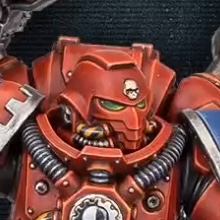
The Fire Angels withdrew from the Badab War after protesting the Carcharodons’ extermination of populations in systems where resistance had already ended. They had fought for the loyalist cause for years and suffered crippling losses doing it. When their own allies’ conduct became intolerable, they took the grievance to their commanders.
Imperial Armour Volume 9: The Badab War — Part One gives that decision an unusually clear setting. The Fire Angels are devout followers of the Imperial Creed, comfortable working with the church and other Imperial institutions. Their dispute with the Carcharodons shows how far apart two loyal Chapters could stand while both claimed to serve the Emperor.
The Emperor’s divinity is settled business
The book’s “The Fire Angels” section describes a Chapter that regards itself as part of the wider Imperial order. Its warriors openly embrace the God-Emperor and have earned allies among the Ecclesiarchy’s senior clergy. They fight alongside the Adepta Sororitas, participate in Wars of Faith and attract requests for aid from the Ministorum and Ordo Hereticus.
Those connections trouble some fellow Space Marines. In the same account, critics consider the Fire Angels’ closeness to the church a potential compromise of Astartes independence. Being easier for Imperial generals to cooperate with can look rather different to a Chapter determined to guard its autonomy.
Their theology also has precise boundaries. “Organisation” identifies them as Ultramarines successors who regard Guilliman as an exceptional warrior. Divinity belongs to the Emperor and his saints; venerating their primarch as divine would, to them, be idolatry.
That makes their religious identity more specific than a collection of candles and purity seals. It shapes who they trust, which institutions seek their help and how they understand their place among the Space Marine Chapters.
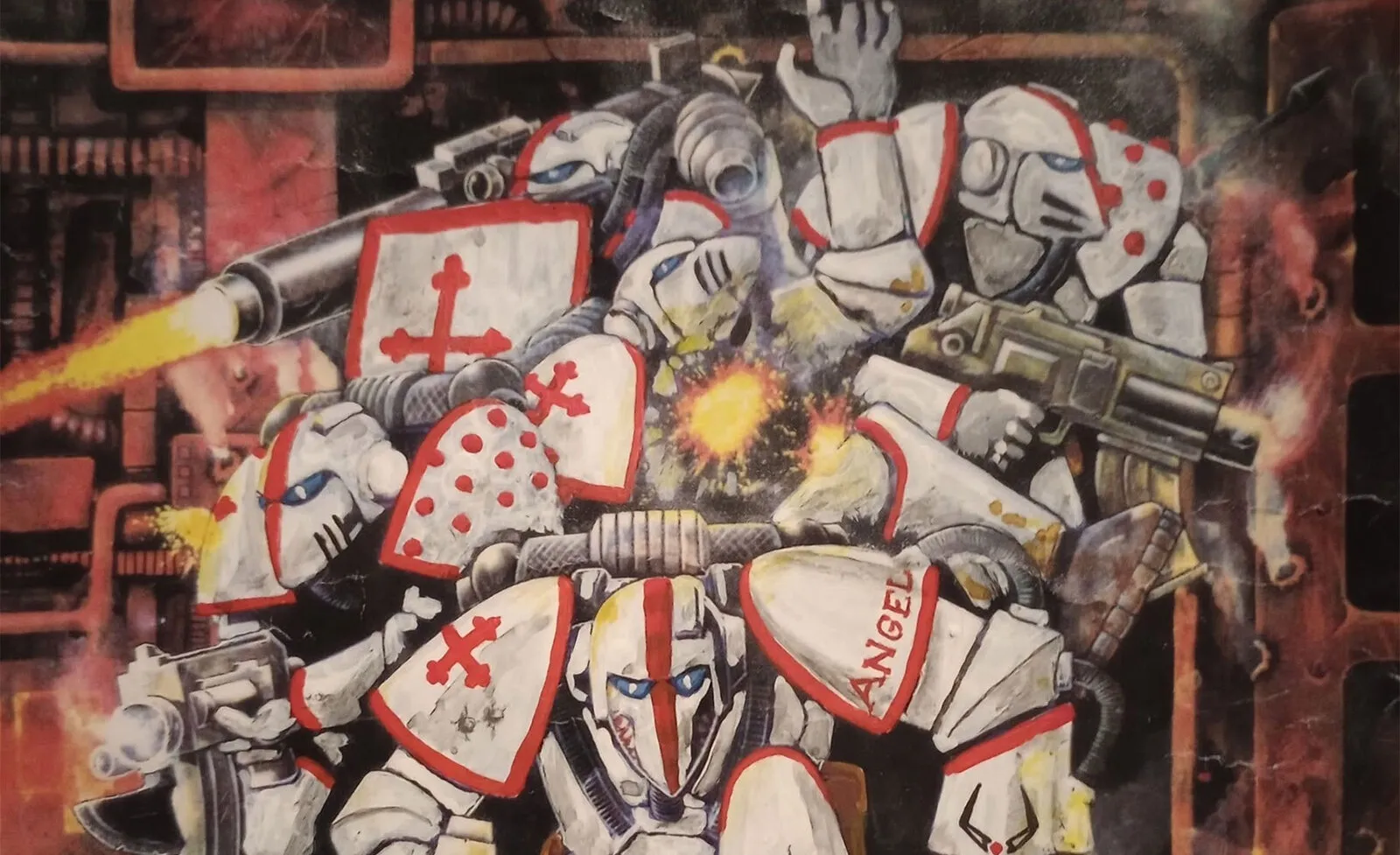
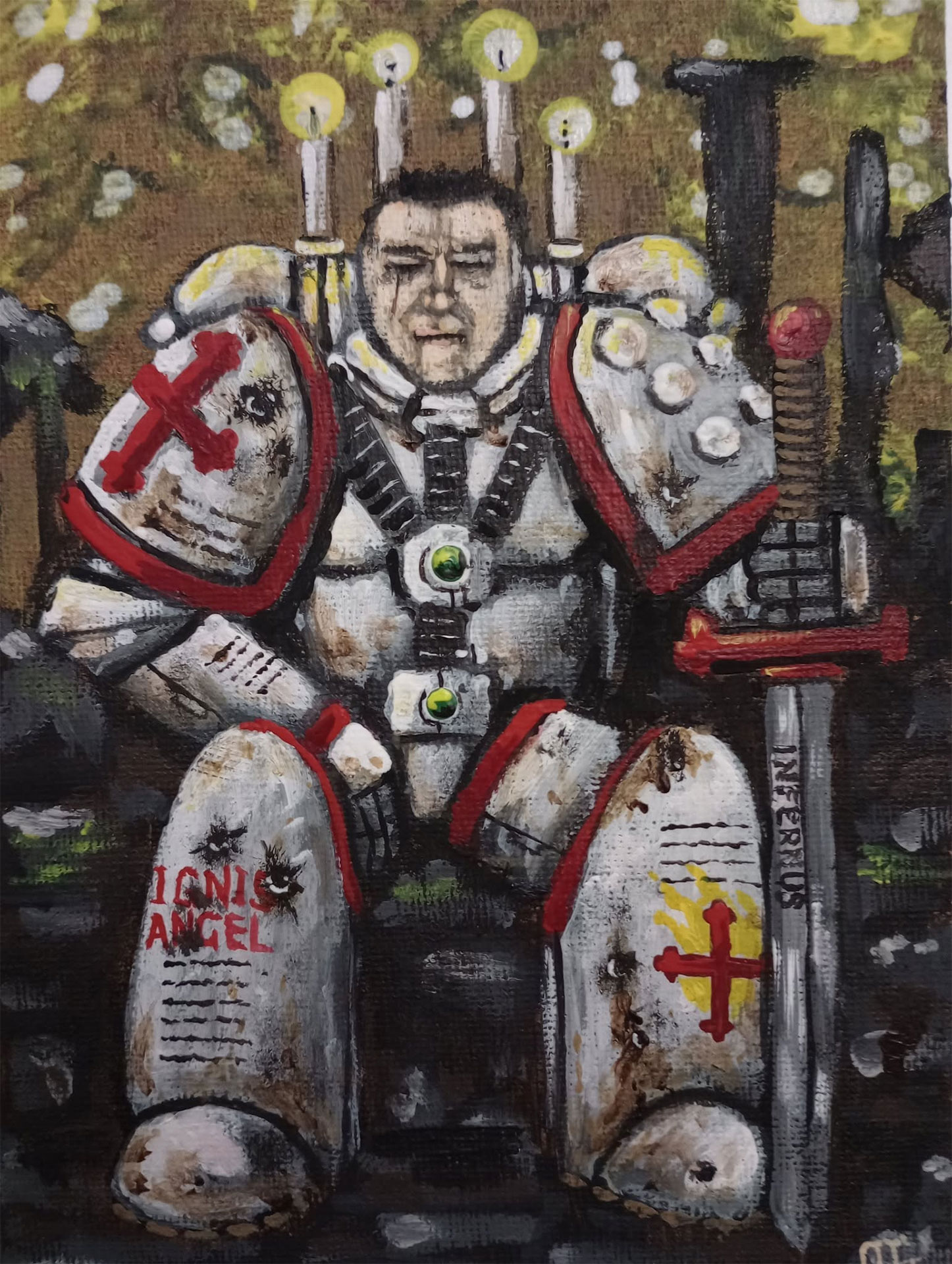 Glen Cheal’s Fire Angels interpretation, via 40K Gallery.
A hive world supplies their kind of war
The Chapter’s home is Lorin Alpha, an industrial hive world where the High Lords granted it an island territory. According to the Chapter history, recruits come from both a military caste and the violent gangs beneath the hives. The Test of Fire pits candidates against one another in successive trials overseen by the Chapter and assisted by the local Ministorum. Fewer than one in twenty participants are selected to begin initiation.
Faith sits beside a very practical supply system. Lorin Alpha’s manufactories can provide Rhino hulls, variants and replacement parts in the quantities the Chapter requires. “Organisation” connects that capacity with a preference for mobile mechanised warfare and substantial stocks of Predators, Whirlwinds and Vindicators.
The same historical profile describes relatively few Terminator suits, Land Raiders and Dreadnoughts. Much of the First Company fights as Sternguard instead. Reliable, replaceable equipment supports their campaigns, while scarce relics are carefully valued.
I like how directly the home world explains the fighting style here. The factories can keep the vehicles running, so commanders can plan around mobile armoured formations. The Fire Angels’ discipline has a material foundation: workshops, spare hulls and a doctrine their supply base can sustain.
Sagan broke the frontline force
“Badab War Disposition” brings the Fire Angels into the war in early 906.M41 with a force equivalent to seven companies. They left veteran instructors and fresh initiates guarding home, then committed heavily to the loyalist advance into secessionist territory.
At Sagan, their methods initially worked. During the struggle for its tithe-bastions, they used the planetary road network to split into small armoured formations and strike rapidly. Astral Claws units were isolated and destroyed in detail.
The counterattack turned their own kind of mobility against them. The Astral Claws sent Rhinos carrying forbidden viral-corrosive weapons into the loyalist ranks. The Fire Angels prevented those attacks from breaking the siege, but lost more brothers in a few hours than in their preceding three years of the war. Sagan’s population also suffered appallingly.
Those losses left the Chapter unable to continue as a frontline force. Its survivors were assigned, with Sons of Medusa support and naval assistance, to suppress the Endymion Cluster. There they helped contain the remaining Mantis Warriors until the Carcharodons arrived.
The grievance that ended their campaign
The book describes the Carcharodons’ conduct and beliefs as immediately at odds with those of the Fire Angels. The decisive grievance concerned the extermination of populations across several secessionist-held systems after resistance had ended.
The Fire Angels formally protested to loyalist command. Imperial Armour also mentions scattered reports of open fighting between the Chapters; that remains a reported escalation, rather than a fully documented battle in this account.
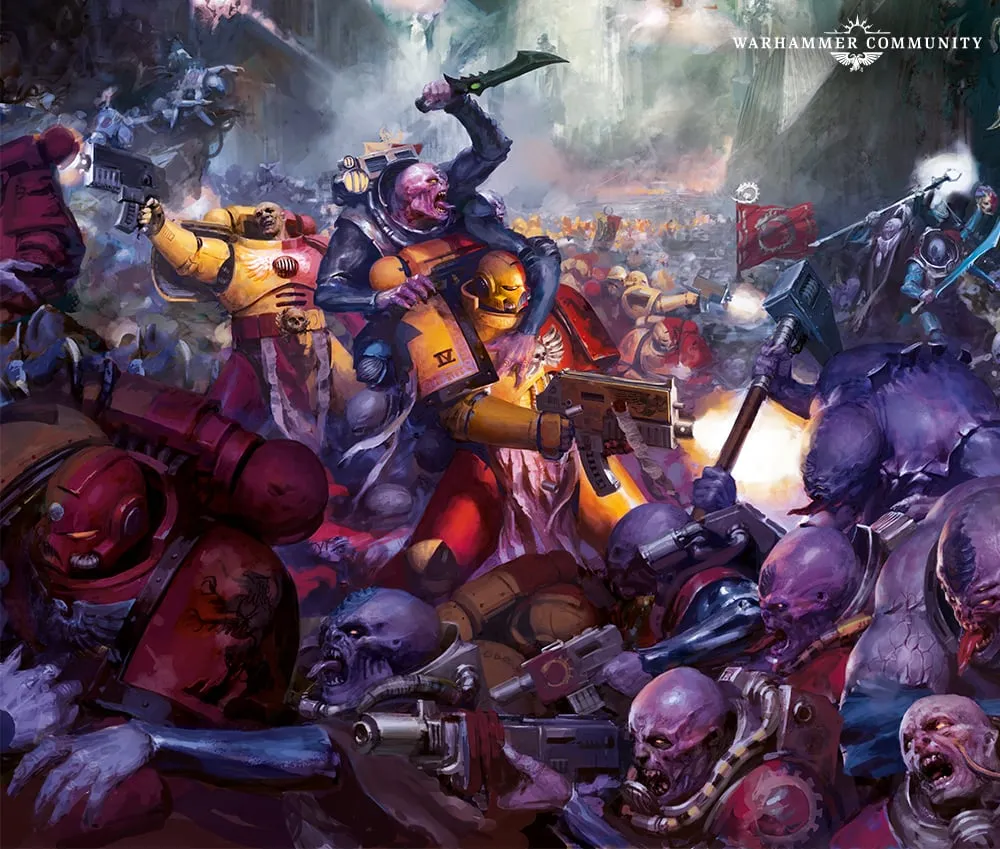
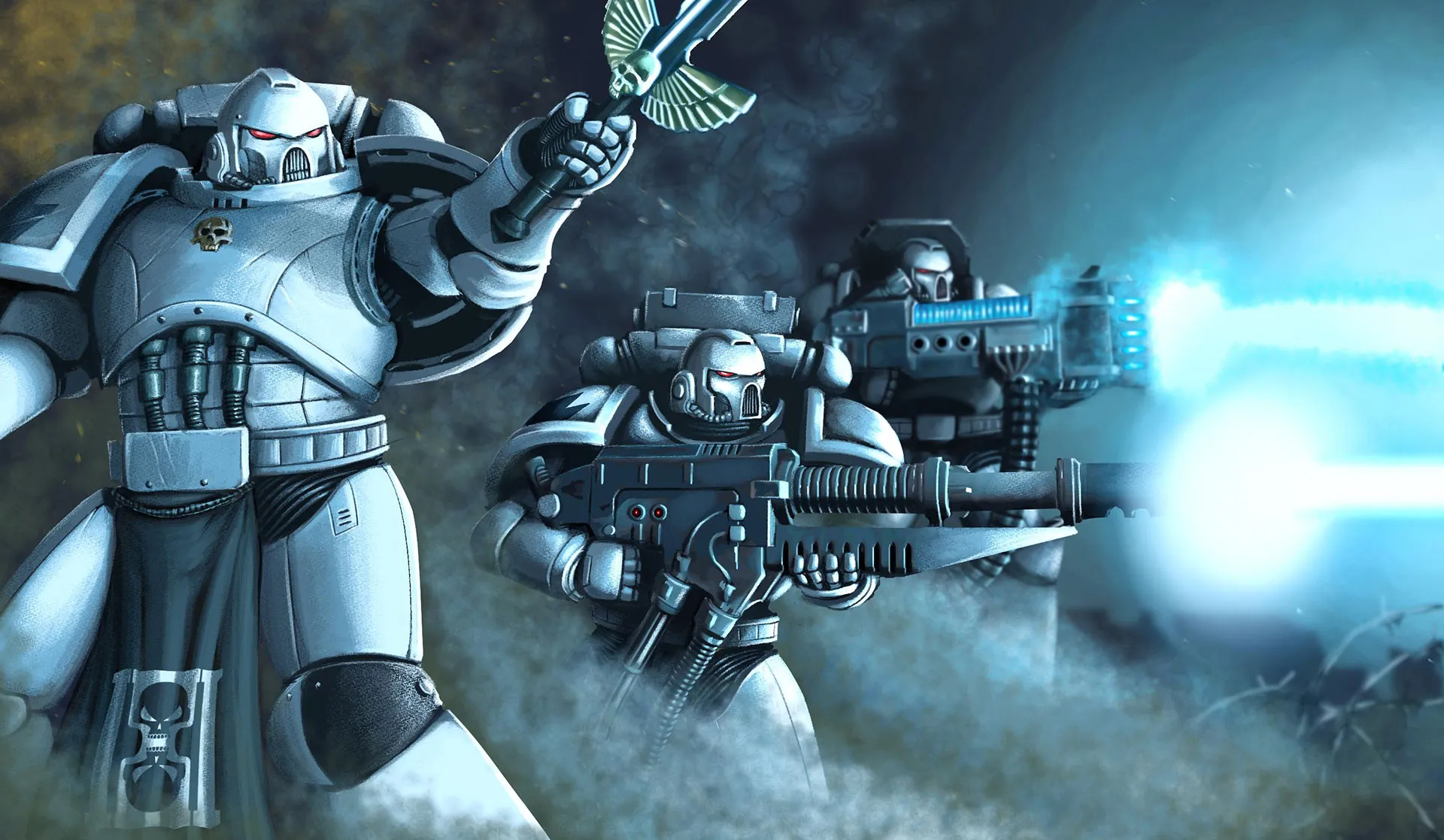
 A Carcharodons miniature collection, rather than a depiction of the confrontation. Image: Games Workshop / Warhammer Community.
Reduced in strength, the Fire Angels nevertheless maintained their position. High Commander Culln explicitly permitted them to withdraw in 910.M41 to prevent civil war within the loyalist ranks. Their campaign ended through an authorised departure.
Their earlier service gives that departure its weight. These were warriors who had already used lethal force to restore Imperial authority and endured catastrophe fighting secessionists. The objection arose over what their allies did once resistance was over.
It also makes their faith interesting. Their commitment to the Imperial order had brought them into the war, sustained relationships with other Imperial servants and helped define their duties. On this occasion, the same Chapter insisted that loyal service allowed it to challenge an ally’s actions.
Culln’s solution preserved the coalition by letting the dissenters leave. The Fire Angels carried their losses home, having fought the enemy and then forced their own commanders to answer a harder question: what happens when loyal Chapters disagree about the people they have conquered?
Lore source: Imperial Armour Volume 9: The Badab War — Part One, “The Fire Angels,” “Organisation” and “Badab War Disposition.” Equipment and organisation follow that historical profile. Header: Glen Cheal’s Fire Angels recolouring of classic Space Marine artwork, cropped from the image featured on 40K Gallery; it illustrates the Chapter rather than a particular Badab engagement.