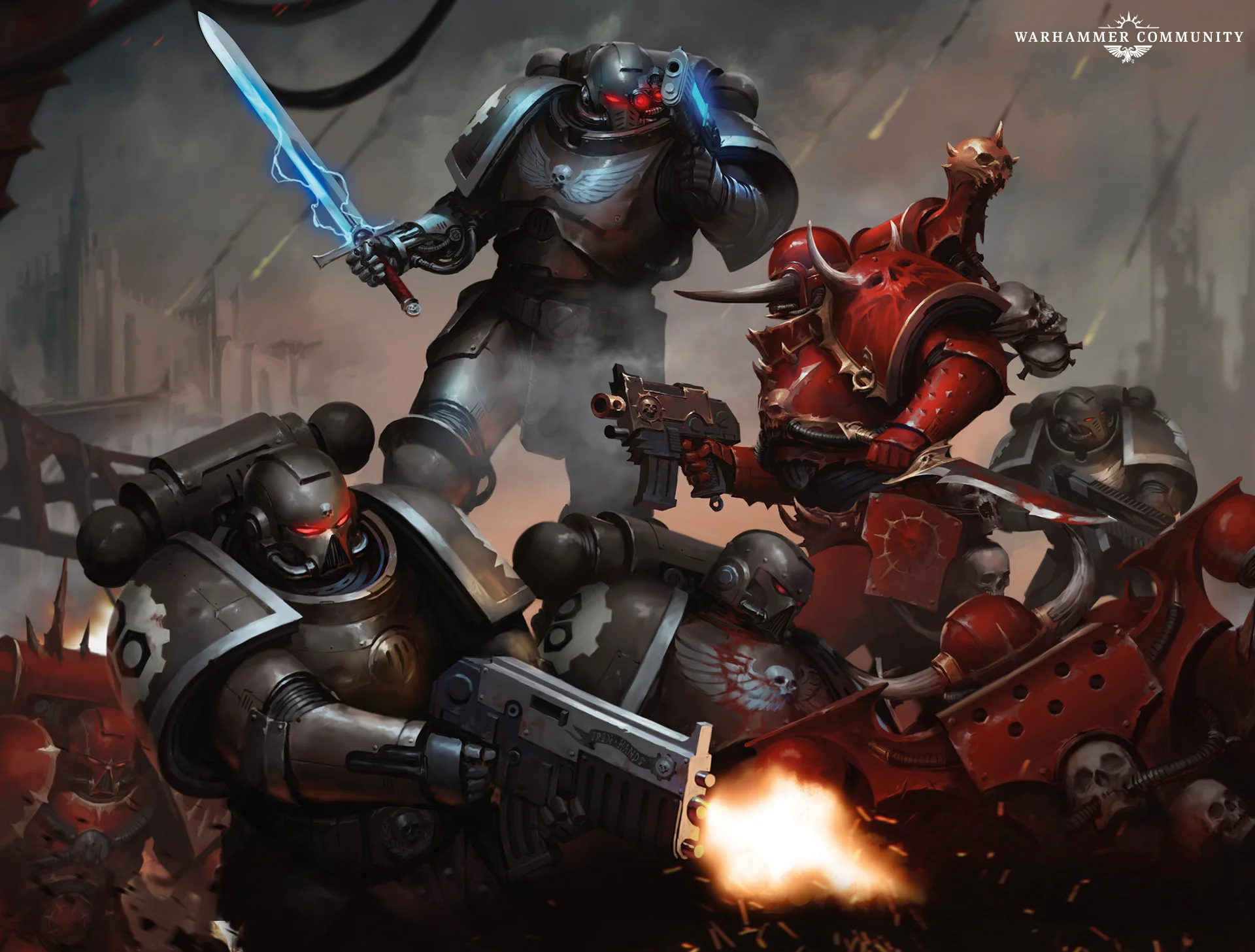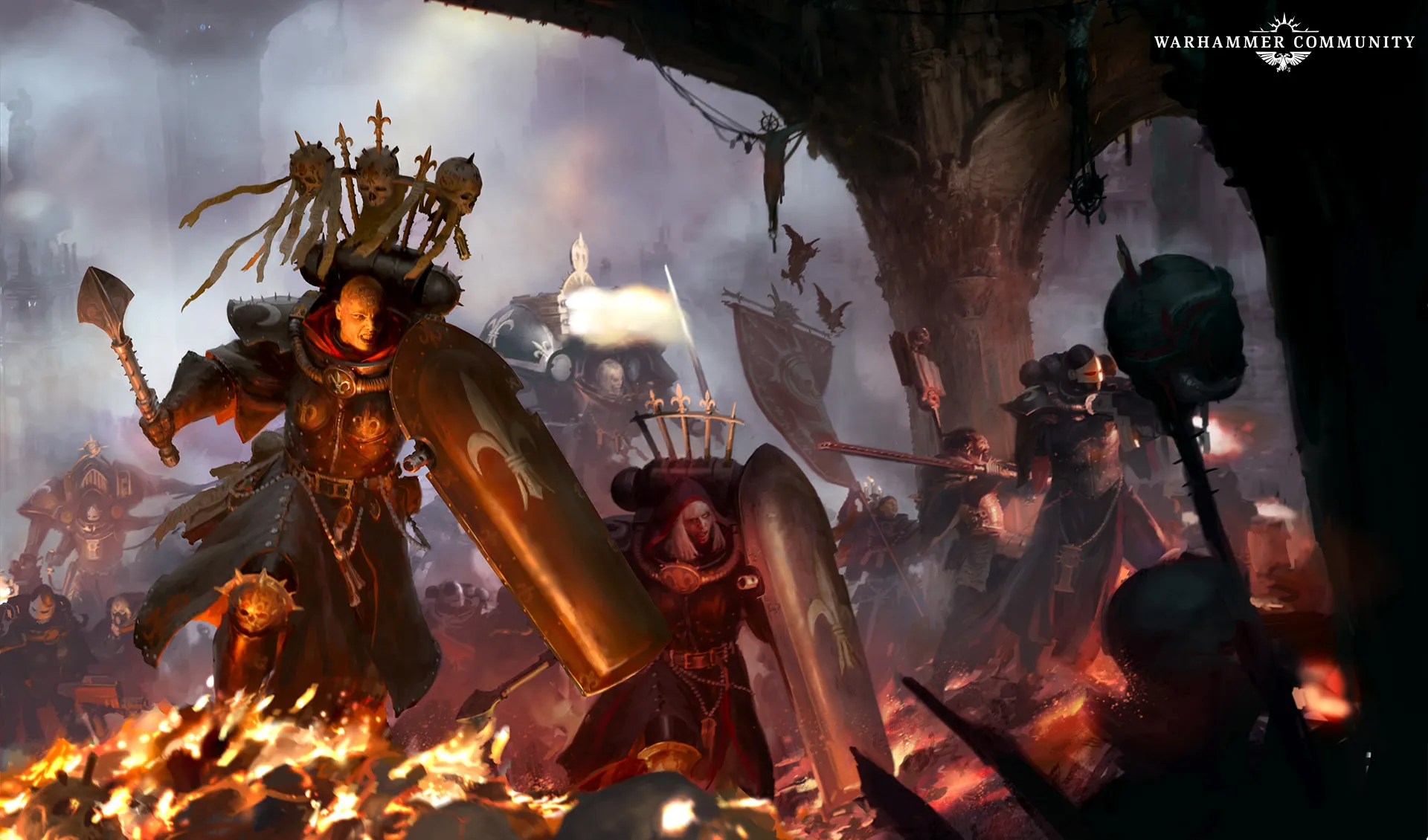
The Reign of Blood lasted nearly a century. The man at the centre of it was Goge Vandire, the 361st Master of the Administratum, who took control of the Ecclesiarchy as well and ruled the Imperium as his personal estate for almost a hundred years. His own bodyguards killed him. Those bodyguards then renounced their oaths and were re-organised into the Adepta Sororitas. The Sisters of Battle exist because of a rebellion against the Emperor’s own state. The introductory material doesn’t really frame the Sisters that way.
I went down a rabbit hole this week. BoLS ran a list of obscure Imperial rebellions and I ended up on a Lexicanum page literally called “List of Anti-Imperial Rebellions” that has hundreds of entries. Hive worlds, agri-worlds, forge worlds, sector capitals, entire crusade territories. The list keeps going the further I scroll.
Most introductions to 40K talk about the Great Crusade, the Imperium of Man, ten million worlds, the conquest of the galaxy. The Lexicanum list catalogues the rebellions: hundreds of times the Imperium has been reconquered by its own generals, governors, or Chapter Masters. The total dwarfs the alien-war count, if not the alien-war body count. Even the Horus Heresy, the foundational tragedy of the setting, is a rebellion. Just the biggest one.
I want to talk about five of the deeper cuts.
The Reign of Blood
Vandire’s story I’ve already half-told above. Worth adding: he was an Administratum careerist who spent decades climbing through bribes, threats, and assassination. He got the Master of the Administratum job and then somehow swung the Ecclesiarch position too, which made him the most powerful single individual in the Imperium since the Great Crusade. He executed people for not loving him enough. He sent fleets to burn worlds that disappointed him. He had a personal bodyguard of all-female warriors called the Brides of the Emperor — really the Daughters of the Emperor, a Cult Imperialis sect — who served him because he’d convinced them he was the Emperor’s chosen.
What ended him was Sebastian Thor, a preacher whose sermons spread through underground vox transmissions, and the Brides themselves, who got an audience with the actual Emperor on Terra and discovered Vandire had been lying to them about everything. Their commander Alicia Dominica drew a power sword in his throne room and killed him.
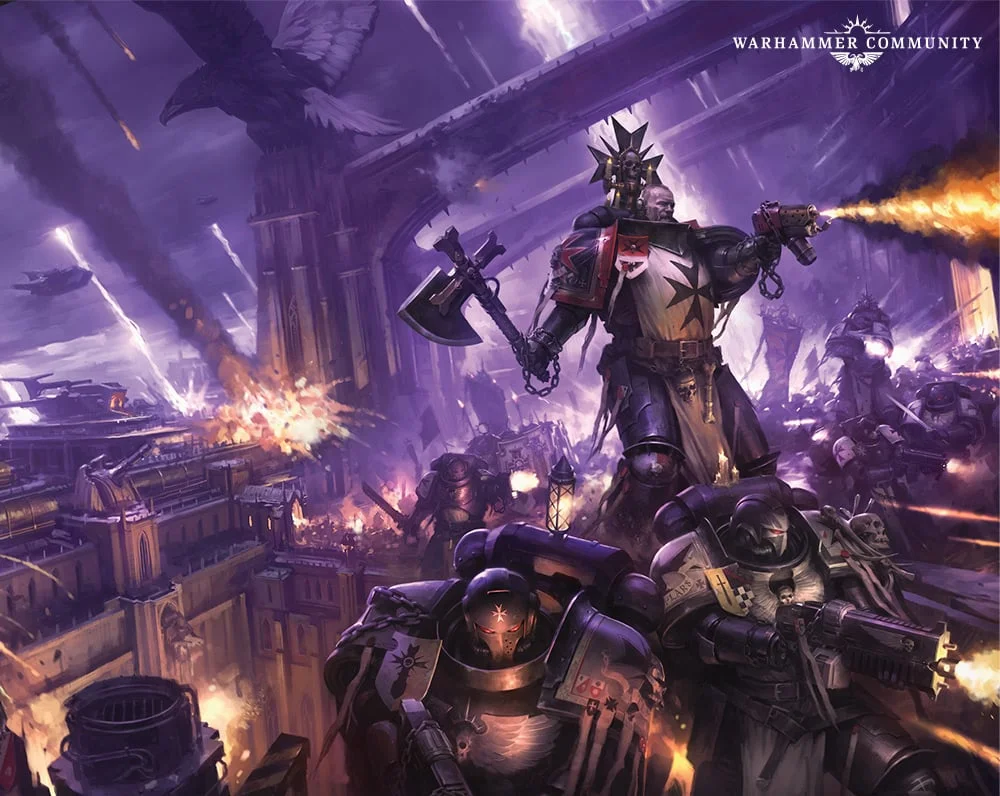
The aftermath is the part that lasted. The Ecclesiarchy was banned from keeping men under arms. The all-female loophole that worked around that ban became the Sisters of Battle. The Inquisition created the Ordo Hereticus specifically to make sure another Vandire couldn’t happen. Three of the Imperium’s most distinctive institutions trace back to Vandire’s century.
The Macharian Heresy
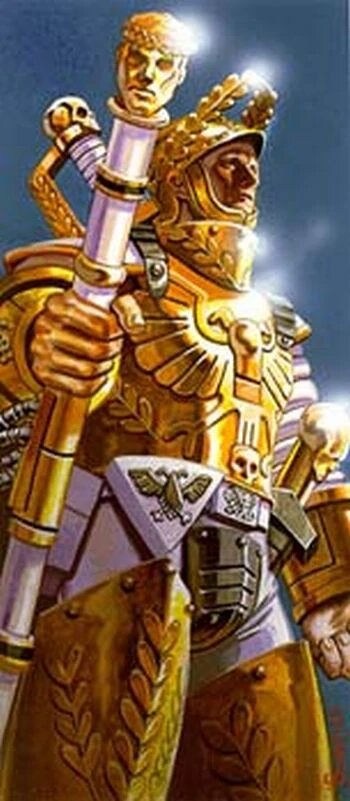
Lord Solar Macharius led the largest single conquest since the Emperor walked the galaxy. Seven years, a thousand worlds. Then he died, and his seven Army Group Generals decided they didn’t want to give the territory back. Each declared a successor empire. They fought each other and the Adeptus Terra. The Space Marine chapters that had taken part in the Crusade turned on each other over old grudges. The Doom Warriors and the Inceptors specifically.
Seventy years to put down. A hundred Space Marine chapters were involved in the suppression. Many of the worlds Macharius had liberated were either annihilated in the fighting or successfully seceded and stayed lost. The Imperium spent more time undoing the Macharian Crusade than Macharius spent doing it. Most of the splinter empires outlived the unified one.
What I love about the Macharian Heresy is what it shows about the Imperium’s basic limit. Imperial conquests run on personal momentum. When Macharius died, the momentum did too. The single most successful military campaign in modern Imperial history, the only thing in the 41st millennium that even remotely echoes the Great Crusade, produced as much wasteland as Imperial territory.
Actually let me qualify that. The Macharian Sector still exists and a lot of those worlds did stay Imperial. “As much wasteland” is overstating it. The Heresy ate enough of the gains that the conquest is remembered as much for its aftermath as for itself. The aftermath includes worlds the Imperium never recovered.
The Badab War
The Badab War is the one I went deepest on as a teenager. I bought the Forge World Imperial Armour books — Volumes 9 and 10, the two big black ones — for £50 each at a UK Games Day, second-hand from a bloke selling off his collection. I remember Pete giving me grief in the queue about spending that much on books for an army I didn’t even play. I read both of them cover to cover over a long weekend. The maps, the orders of battle, the photo plates of Astral Claws colour schemes. There’s a whole heraldry appendix. It’s the closest 40K has ever come to a proper military history book and it’s a war between Space Marines.
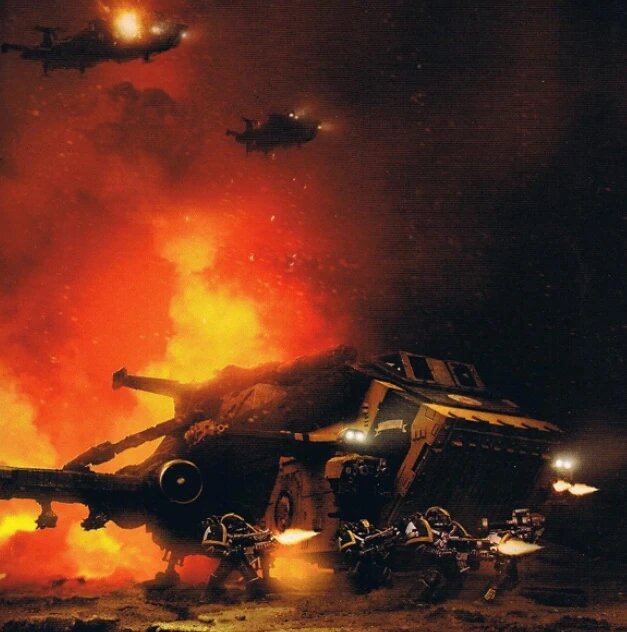
Lufgt Huron, Chapter Master of the Astral Claws, decided in late M41 that he was going to keep his sector’s tithe instead of paying it. He claimed the funds were needed for security against the Maelstrom. The Inquisition disagreed. He started restricting trade routes. Three other Chapters (the Mantis Warriors, the Lamenters, the Executioners) eventually sided with him for various reasons that mostly amounted to local politics and grudges against the Imperial Navy. The Imperium sent ten Chapters in response. The Lamenters, who fell in with the secessionists more or less by accident, ended up on a hundred-year penitent crusade for it.
So yeah, Badab. Huron survived the war. He renamed himself Huron Blackheart and became one of the most successful warlords of the Eye of Terror era. The Imperium drove his secessionists out, and Huron walked away with most of his Chapter and turned them into the Red Corsairs. There’s a longer essay to be written about how Badab wasn’t really suppressed so much as relocated. I’m not going to write it today.
The Moirae Schism
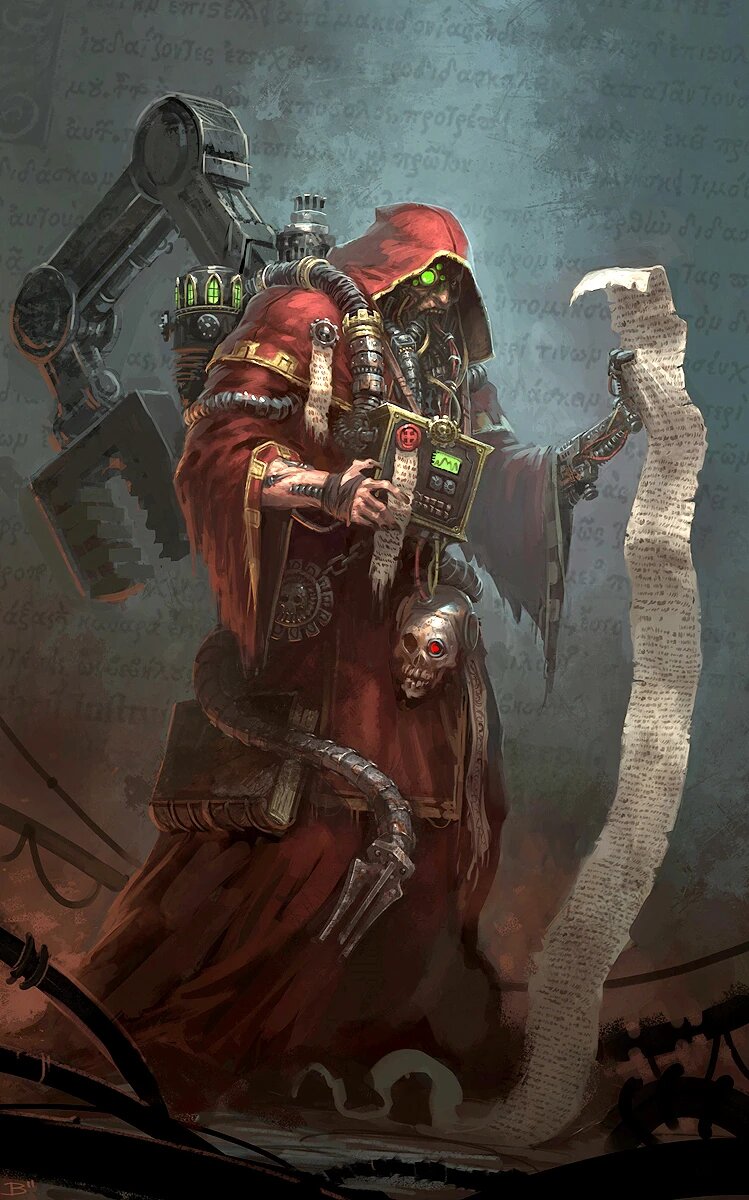
The Adeptus Mechanicus had a civil war in M35 that almost nobody outside deep-lore circles knows about. Three Tech-priests on a forge world called Moirae claimed they were receiving prophetic transmissions encoded in the micro-fluctuations of the Astronomican. Their reading was that the Astronomican carried messages from the Omnissiah, that Mars would eventually fall, and that the Mechanicus and the Ecclesiarchy were destined to fuse into a single faith.
This was, by Mechanicus standards, the most heretical thing imaginable. The Mechanicus and the Ecclesiarchy spend most of their existence quietly hating each other. The Moirae creed spread anyway. It ended up tearing forge worlds apart for two thousand years before Mars finally crushed it.
What’s interesting about the Moirae Schism is that it’s a rebellion based on theology, inside a faction that officially doesn’t have any. The Cult Mechanicus presents itself as a religion of pure science. Then a triad of Tech-priests starts having visions and half the priesthood believes them. Somewhere in M35 there’s a Magos who watched his colleagues walk out of his Forge World to join a heretical sect because they thought the Astronomican was telling them so. I’d read that novel.
The War of Brass
The War of Brass took place in the Calixis Sector, in the Gelmiro Cluster of hive worlds. A charismatic lunatic calling himself the Emperor of Brass turned half a dozen industrial worlds Chaos. The fighting drew in Titan Legions, Astartes, and the local Astra Militarum. Daemonic forces from the Eye of Terror got involved. The campaign was officially short by Imperial standards, measured in years rather than centuries, but it left the Gelmiro worlds rated as War Worlds afterwards. Permanently inhabitable but cursed. The Imperium reclassified them as no-go zones and they remain that way in the 41st millennium.
The Calixis Sector carries the Gelmiro Cluster on its sector maps as a dead zone and pretends it isn’t there. It’s like a haunted basement in a family home that everyone agrees not to mention at Christmas dinner.
A Digression on the Ratling Rebellions
BoLS’s list also mentions two separate Ratling rebellions, which I refused to believe was canon until I checked. One on Delta Arbuthnot, where an Alpha-level psyker forced the entire Ratling serf population to rise up against their landowners and the White Scars had to zoom in to put it down. The other on Sigma-Agrius, where the Ratlings rebelled on their own initiative, fled to the hills, and forced the 122nd Finreht Highlanders into a months-long counterinsurgency campaign across an agri-world’s grain belt.
I don’t think anybody at GW remembers these two events exist. They’re in canon. The mental image of a Land Speeder squadron strafing waist-high abhumans across a hayfield is the funniest thing I’ve encountered all month.
What the Pattern Says
If there’s a thread through Vandire, Macharius, Huron, Moirae, and the Emperor of Brass, it’s that the Imperium’s worst enemies are mostly the Imperium itself. The Tyranids are an existential threat. The Necrons are an existential threat. What actually breaks Imperial worlds in any given century is the Imperium losing its grip on its own people. A High Lord goes mad. A war hero dies and his lieutenants squabble. A Chapter Master decides he should keep what he protects. A Tech-priest starts hearing voices. A Hive Lord declares himself a god.
I should probably qualify that. The Imperium has lost more people to xenos predation than to rebellion in raw numbers, especially counting Tyranid hive fleets. The Behemoth body count alone dwarfs every rebellion on this list combined. So when I say the rebellions are the real plot, I’m overstating for narrative effect. The rebellions are where the setting’s character lives. The bodyguards killing the High Lord. The Tech-priests defecting because they think the Astronomican is whispering. The Knight household siding with the wrong general.
Pete asked me once, after a garage-group game, why I keep an Imperial Knight in my Cadian list when the points are so bad. I gave him some answer about table presence. My Knight is named Domitia. Gold and green. I love her. The real reason for keeping her in the list is a Forge World book on the Macharian Heresy I read ten years ago that mentioned a Knight household siding with one of the rebel generals. I’ve never been able to find the passage again.