40K is packed with references to mythology, history, and pop culture that GW barely tries to hide. The community recently had a great thread about which ones took people embarrassingly long to notice. I’m not going to pretend I caught all of these on my own. The Ghazghkull one took me years. The Corvus Corax one took me longer than I’d like to admit.
Here’s a collection of the best ones, roughly sorted by how red your face should be when you finally get it.
The Latin Names (Oh No)
Ferrus Manus (Iron Hands)
The Primarch of the Iron Hands is called Ferrus Manus. In Latin, that means “Iron Hands.” His Legion is also called the Iron Hands. He has iron hands. The man named Iron Hands, who leads the Iron Hands, has iron hands. I refuse to believe this wasn’t a joke in the GW writers’ room. It’s the most on-the-nose naming in the entire setting, and people still go years without noticing.
Corvus Corax (Raven Guard)
The Primarch of the Raven Guard is named Corvus Corax. Corvus is Latin for “raven.” Corax is also Latin for “raven.” His name is Raven Raven. He leads the Raven Guard. He looks like a raven (pale skin, dark hair, able to literally cloak himself in shadow). At some point GW just stopped trying to be subtle with this one.
Roboute Guilliman
Not Latin, but try saying “Robot Gorillaman” out loud. The community meme has been going for decades, and while Guilliman’s name actually derives from Robert Guillaume (the French form of William), the phonetic resemblance to “Robot Gorilla Man” is too perfect to be entirely accidental. GW has never commented on this. Smart move.
Mortarion
“Mort” means death in French and Latin. Mortarion. The death guy. Who leads the Death Guard. Who worships Nurgle, the god of death and decay. Subtle.
Sanguinius
“Sanguis” is Latin for blood. The Blood Angels’ Primarch is literally named “Blood.” His sons drink blood. They suffer from a blood thirst. The blood is kind of their whole thing.
Vulkan
Named after Vulcan, the Roman god of the forge. He’s the Primarch of the Salamanders, who are master smiths and artificers. At least this one makes thematic sense, even if it’s not exactly hidden.
Lion El’Jonson
Named after Lionel Johnson, the real-life poet who wrote “The Dark Angel,” a poem about keeping a terrible secret. The Dark Angels’ entire lore is about keeping a terrible secret. Their homeworld was called Caliban, after the monster in Shakespeare’s The Tempest. And their fortress-monastery was in a forest that hid dark beasts, just like Johnson’s poem describes hidden sins. This is one of the more layered references in 40K, and most people only catch the first layer.
Mythological and Religious References
Nurgle and Nergal
Nurgle, the Chaos God of decay, gets his name from Nergal, an ancient Babylonian deity of death, disease, and the underworld. The parallels go deep: Nergal imprisoned his wife in the underworld, and Nurgle captured the Eldar goddess Isha and keeps her in his garden. GW did their mythology homework on this one.
Khaine and Cain
The Eldar war god Khaine references the biblical Cain, the first murderer. Khaine eternally drips with the blood of Eldanesh (the first Eldar he killed), paralleling Cain’s eternal punishment for murdering his brother Abel. Both are figures of divine violence cursed by their own acts.
Commorragh and Gomorrah
The Dark Eldar city of Commorragh, known for unspeakable depravity, references the biblical cities Sodom and Gomorrah. Cities of sin destroyed by divine judgment. Commorragh hasn’t been destroyed yet, but given what goes on there, it probably should be.
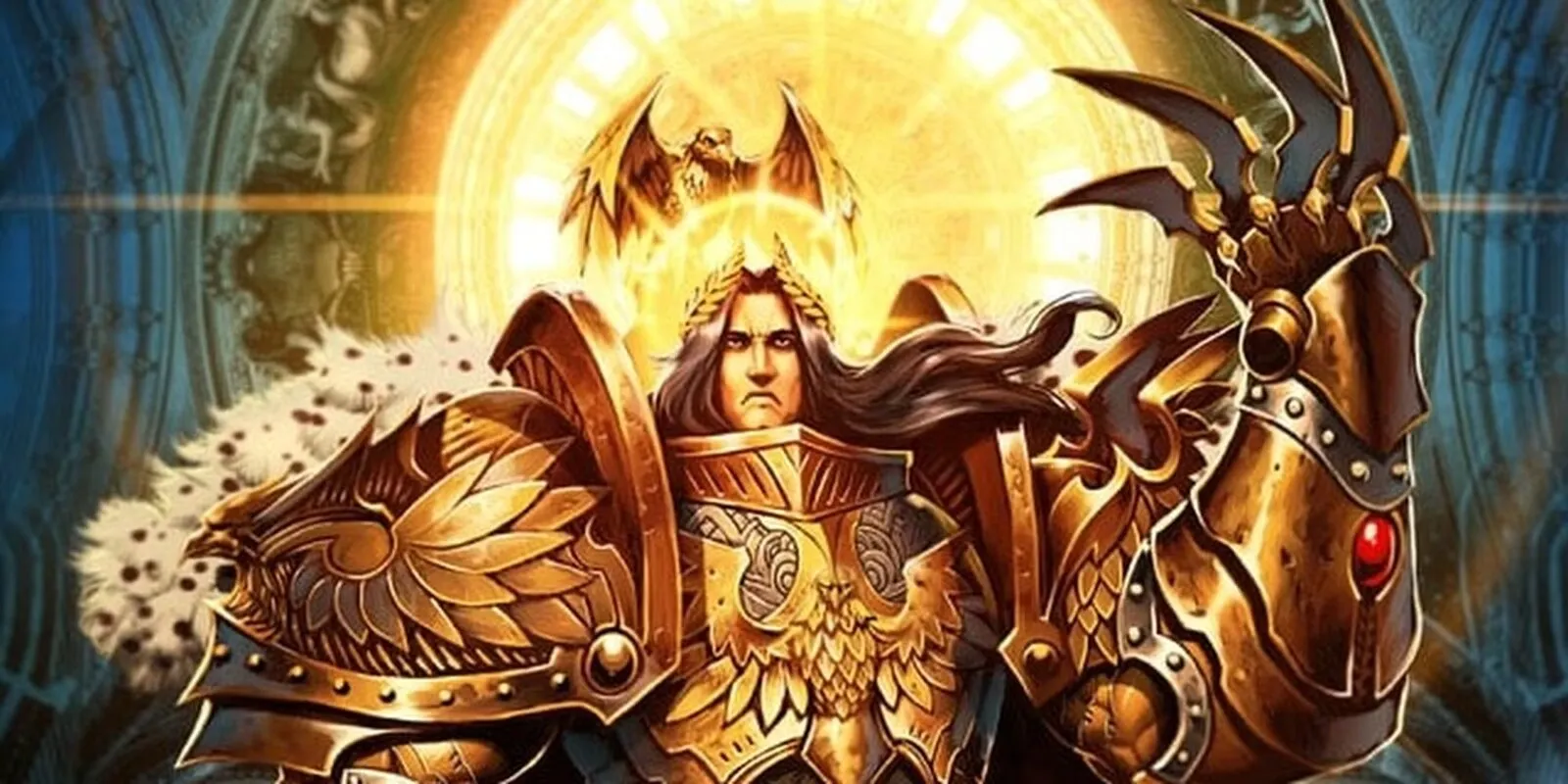
The Emperor and Jesus/God-Emperor of Mankind
This one’s obvious, but the layers are worth noting. A divine figure who sacrificed himself for humanity, sits enthroned and worshipped, is tended by fanatical priests, and whose teachings have been wildly misinterpreted by the institution built in his name. The Ecclesiarchy is the Catholic Church in space, right down to the schisms, the corruption scandals, and the warrior-nuns.
Historical and Cultural Connections
Maccabian Janissaries
This Imperial Guard regiment’s name mashes together the Maccabees (Jewish rebels who fought for religious freedom) and the Janissaries (Ottoman elite soldiers originally recruited as child slaves). They come from a shrine world with intense religious devotion. Two completely different warrior traditions from opposite sides of a historical conflict, merged into one 40K regiment. That’s either clever or chaotic, and with GW it’s probably both.
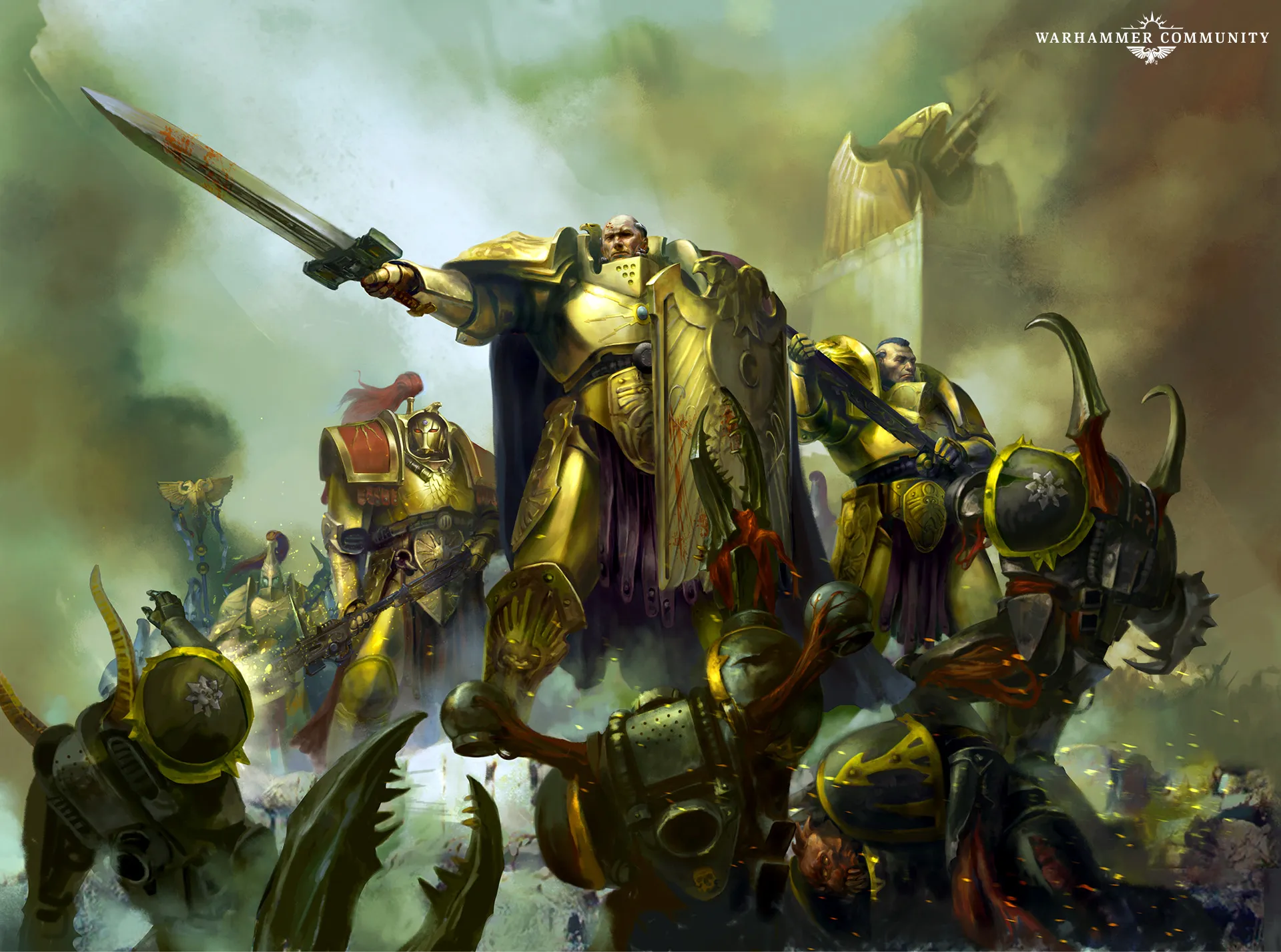
Adeptus Custodes and the Swiss Guard
Golden-armored warriors with ceremonial spears who guard the most important religious figure in their civilization. The Custodes are basically the Vatican’s Swiss Guard, but eight feet tall and genetically engineered. The Swiss Guard carry halberds and wear colorful Renaissance uniforms. The Custodes carry guardian spears and wear golden auramite plate. Same energy.
Cadian Shock Troops and Stalingrad
Cadia, the fortress world that guarded the Eye of Terror, has strong parallels to Stalingrad during World War II. A city that becomes a symbol of resistance. Defenders who refuse to give ground. A siege that grinds on long past the point where retreat would be rational. “Cadia stands” became a rallying cry the same way “not one step back” did for the Soviets. And like Stalingrad, Cadia was eventually destroyed, but the symbolism survived.
Literary and Sci-Fi Homages
Dune (Everywhere)
The Imperium’s structure borrows heavily from Frank Herbert’s Dune: a galaxy-spanning human empire, navigators who use a psychic sense to guide ships through a dangerous medium, a God-Emperor who’s been sitting immobile for millennia, a feudal political structure with noble houses, and a fanatical state religion. GW has never been shy about their Dune influence. The Navigators are practically a copy-paste.
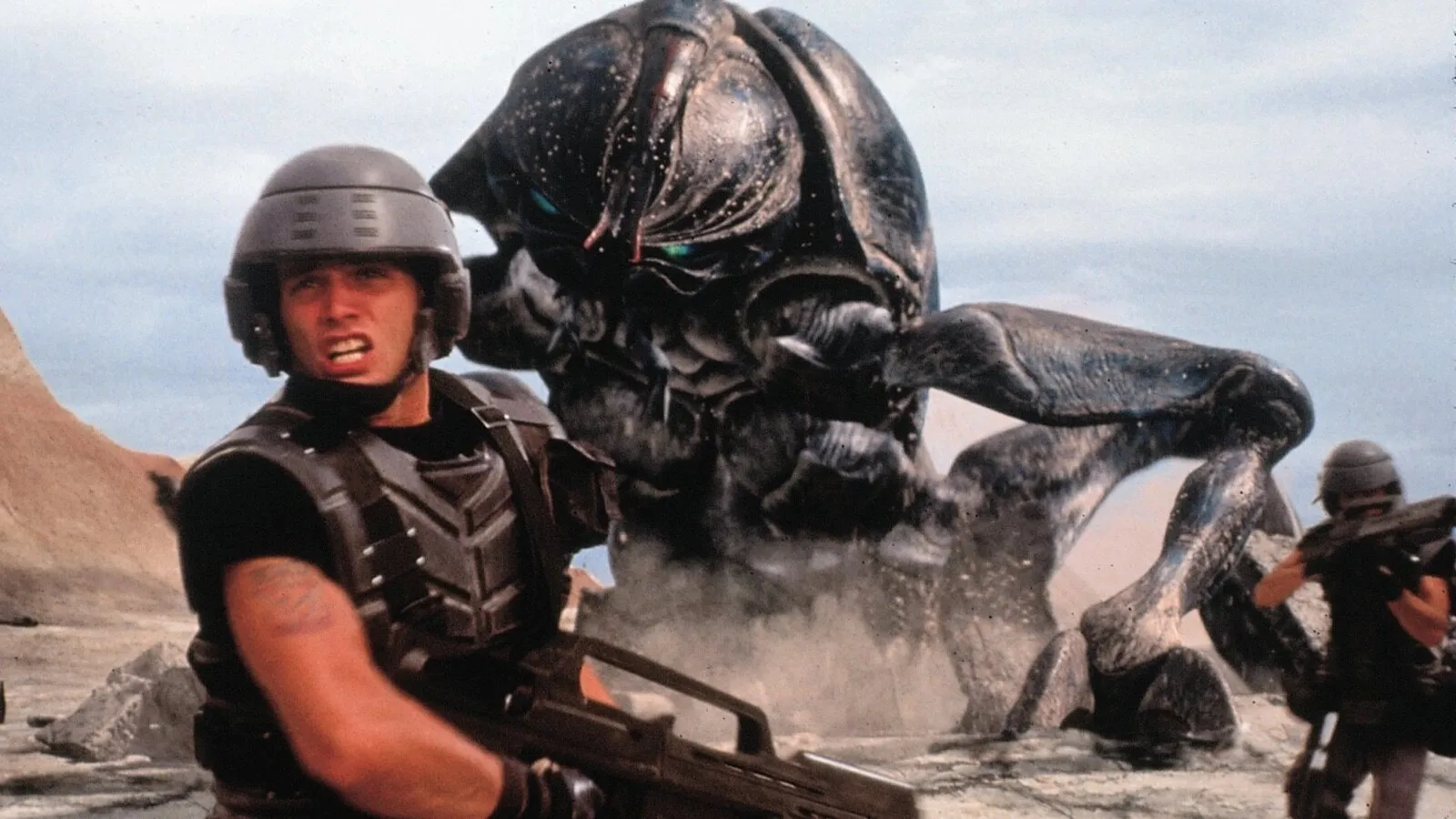
Starship Troopers
Humanity fighting endless waves of alien bugs in power armor. The Astra Militarum vs Tyranids dynamic is Robert Heinlein’s Starship Troopers with the grimdark dial cranked up. The Tempestus Scions dropping from orbit in enclosed drop pods are basically Mobile Infantry.
Konrad Curze and Apocalypse Now
The Night Lords Primarch’s name is a double reference. “Konrad” from Joseph Conrad, who wrote Heart of Darkness. “Curze” from Colonel Kurtz, the character in Apocalypse Now (which is itself an adaptation of Heart of Darkness). Curze’s assassin is named M’Shen, a phonetic echo of Martin Sheen, who played the man sent to kill Kurtz in the film. That’s three layers of reference in one character, and GW just slipped it in there like it was nothing.
Ciaphas Cain’s Hidden Jokes
Sandy Mitchell loaded the Cain novels with stealth puns. Simia Orichalcae translates from Latin as “Brass Monkey,” referencing the British expression about cold weather. Planet names, character names, and location names throughout the series are full of jokes that only work if you know Latin, military history, or British slang. Half the fun of rereading the Cain books is catching references you missed the first time.
The Ones That Break People
Mon-keigh = Monkey
The Aeldari slur for humans, “Mon-keigh,” is just “monkey” with a fancy spelling. The ancient, psychically gifted, culturally sophisticated space elves call humans monkeys. And fans went YEARS without hearing it out loud and making the connection.
WAAAGH! = War
Orks screaming “WAAAGH!” are just screaming the word “war” in a thick Orkish accent. That’s it. That’s the whole thing. Some people played Orks for a decade before this clicked.
Ghazghkull Mag Uruk Thraka = Margaret Thatcher
Say it out loud. Ghazghkull Mag Uruk Thraka. Margaret Thatcher. The most feared Ork warlord in the galaxy is named after a British Prime Minister. GW has officially denied this was intentional. Nobody believes them.
Alpha Legion XX = Double Cross
The Alpha Legion is the XXth Legion. The Roman numeral XX. A double cross. They’re the Legion famous for betrayal, infiltration, and never being what they seem. Their Legion number literally means “double cross.” I love this one because it works on multiple levels and you can imagine whoever came up with it being very pleased with themselves.
Rune of Activation = Power Button
The Adeptus Mechanicus performs elaborate rituals to activate their sacred machines, including tracing the “Rune of Activation.” The Rune of Activation is a power button. They’re pressing the on button with religious ceremony. This single detail captures everything about the Mechanicus’s relationship with technology better than any codex entry ever could.
Dante’s Inferno Pistol
Chapter Master Dante of the Blood Angels carries an Inferno Pistol. Dante. Inferno. As in Dante Alighieri’s Inferno. The famous literary work about descending into hell. The Chapter Master named Dante carries a gun called Inferno. How did this take anyone more than five seconds?
Custodes = Custard
The golden-armored Custodes are the Emperor’s personal guard. Their name comes from the Latin “custodes” (guardians). But they’re also bright yellow. Custodes. Custard. The community has been making this joke since the 1990s, and it never stops being funny. Somewhere, a Custodian is very annoyed about this.
The Deep Cuts
Leman Russ and the Leman Russ Tank
The Space Wolves Primarch and the Imperial Guard’s main battle tank share a name. In-universe, the tank is named after the Primarch. But it’s also a reference to a real British tank designer (though that connection is murkier). The real joke is that the Space Wolves, who ride giant wolves and drink mead from tankards, have their name on the most ubiquitous, utilitarian, no-frills tank in the Imperium. Russ would either be honored or demand they paint wolves on it.
Angron and “Angry One”
The World Eaters Primarch, the angriest being in the galaxy, has a name that sounds like “Angry One” with the vowels shuffled. He was raised on a world called Nuceria (sounds like “nuke area”), and his signature weapon is called Gorefather. GW wasn’t being subtle. They were being efficient.
Rogal Dorn and “Regal Dawn”
The Imperial Fists Primarch’s name loosely translates to “Regal Dawn” or “Royal Fist” depending on which linguistic root you follow. “Rogal” from “regal,” “Dorn” from the Gaelic “dorn” meaning fist. Royal Fist. Imperial Fists. Again, not exactly hidden, but it took the community a while to trace the etymology.
Fenris and Norse Mythology
The Space Wolves’ homeworld Fenris is named after Fenrir, the monstrous wolf of Norse mythology who is destined to devour Odin during Ragnarok. The Space Wolves’ Primarch, Leman Russ, was raised by wolves on this planet. Their prophesied final battle is called the Wolftime, which parallels Ragnarok almost exactly. Their great fortress, the Fang, is reminiscent of the halls of Asgard. Even their Rune Priests mirror the Norse tradition of rune magic. GW essentially transplanted the entire Norse mythological framework into space and dared anyone to notice.
Lorgar Aurelian and Aurelius
The Word Bearers Primarch, Lorgar Aurelian, takes his surname from Marcus Aurelius, the Roman emperor-philosopher. But the parallel runs deeper than the name. Aurelius wrote Meditations, a foundational text of Stoic philosophy, while waging brutal military campaigns. Lorgar wrote holy texts while leading a Crusade that he genuinely believed was divinely inspired. Both men tried to reconcile intellectual devotion with the practical demands of empire. The difference is that Lorgar’s devotion led him somewhere considerably darker.
Catachan and Vietnam
The Catachan Jungle Fighters are lifted wholesale from every Vietnam War movie GW’s designers ever watched. The bandanas, the emphasis on guerrilla warfare, the hostile jungle environment where the terrain is as dangerous as the enemy. Colonel “Iron Hand” Straken is basically a mashup of every action hero from the 1980s, right down to the prosthetic arm and the bare chest. The planet Catachan itself is a death world where the plants eat people, which is Vietnam-era jungle paranoia turned up to eleven.
If you’ve got one I missed, I’d love to hear it. There are probably dozens more hiding in unit names, planet designations, and obscure codex entries that nobody has decoded yet. GW’s writers have been doing this since 1987, and thirty-eight years of accumulated puns, references, and Easter eggs means we’re probably still only scratching the surface. Finding them is half the fun of digging into the lore.