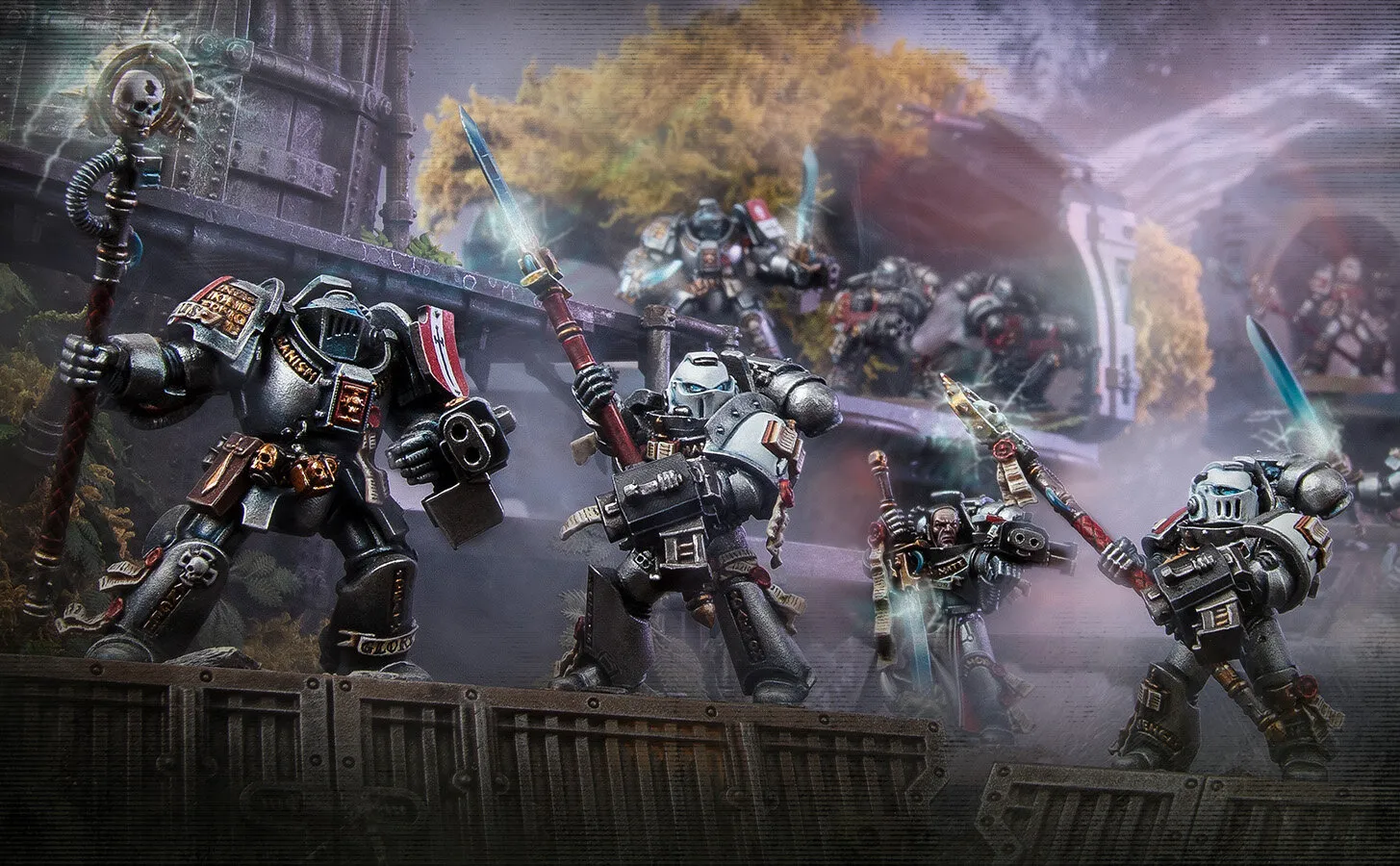
The Grey Knights are the coolest concept in 40K that most people outside the hobby have never heard of. A secret Chapter of Space Marines where every single member is a psyker, their gene-seed comes directly from the Emperor himself, and in over ten thousand years of service, not one of them has ever fallen to Chaos. They exist to fight daemons, and they’re terrifyingly good at it.
What makes them interesting to me isn’t the power fantasy (though teleporting Terminators with force weapons is pretty great on the table). It’s the cost. The Grey Knights operate in total secrecy. After they deploy, the Inquisition mind-wipes or executes every witness. Imperial Guard regiments who fought alongside them get their memories erased. Civilians who saw them fight get disappeared. The Grey Knights save humanity from daemons, and then humanity gets punished for knowing about it.
That tension between protection and oppression is peak 40K.
Founded in Secret, Hidden on Titan
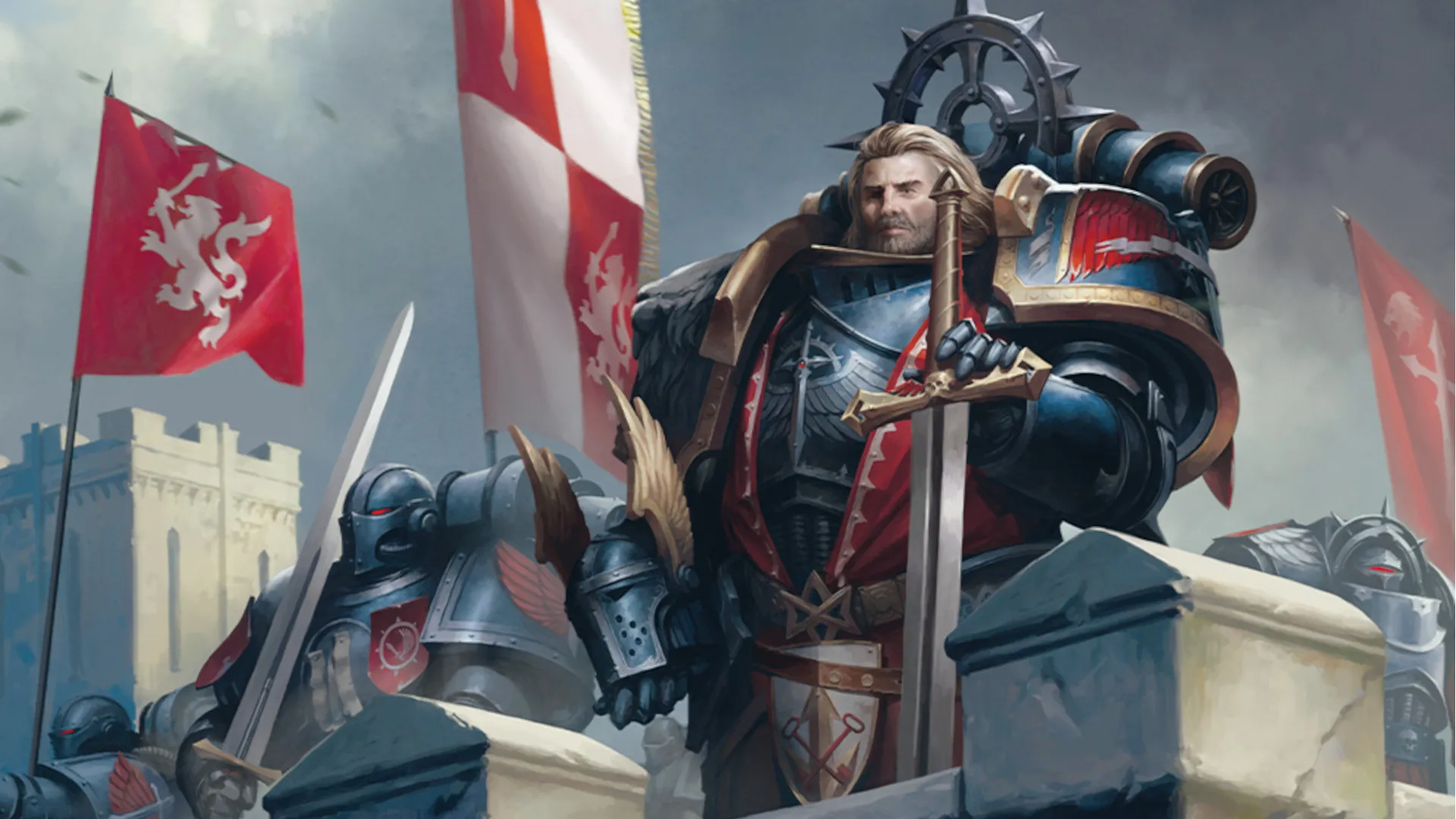
The Grey Knights were created at the very end of the Horus Heresy, when the Emperor and Malcador the Sigillite realized that the Imperium would need a permanent defense against daemonic incursion. Malcador gathered twelve champions (eight Space Marines from various Legions, including some from Traitor Legions who had stayed loyal, plus four human agents) and brought them to Titan, Saturn’s largest moon.
While the Siege of Terra raged, Malcador hid Titan in a pocket of the Warp. When it re-emerged, years had passed in realspace but centuries had passed on Titan. The original champions had used that time to build an entire Chapter from scratch, training hundreds of recruits with gene-seed derived from the Emperor’s own genetic material. Not from any Primarch. From the Emperor directly. That’s unique among all Space Marine Chapters.
The first Supreme Grand Master was Janus, one of the original eight Marine champions. His real identity was erased from history (all of theirs were), and the Chapter was quietly added to Imperial records as Chapter 666. The number isn’t accidental.
Nathaniel Garro, the Death Guard loyalist who escaped Isstvan on the Eisenstein and later became one of Malcador’s Knight-Errants, was one of the founding members. If you’ve read the Heresy novels, you know Garviel Loken was another of Malcador’s agents. The Grey Knights’ founding connects directly to some of the best characters in the entire series.
Every Battle-Brother Is a Psyker
This is the thing that sets the Grey Knights apart from every other Chapter. The Space Wolves have Rune Priests. The Blood Angels have Librarians. Most Chapters have a small cadre of psykers who serve specialized roles. In the Grey Knights, psychic ability isn’t a specialization. It’s a baseline requirement.
Every recruit must have strong psychic potential. Every battle-brother channels psychic energy through their weapons, their armor, and their flesh. Their collective psychic discipline creates a protective field called the Aegis, which functions as a permanent anti-daemon ward. Being near a Grey Knight is physically painful for Warp entities. Their presence causes daemons to flicker and weaken. A squad of Grey Knights projecting the Aegis in concert can suppress daemonic manifestation in their vicinity.
They also memorize 666 Words of Banishment, incantations that can unravel a daemon’s connection to realspace. Each Grey Knight’s name is itself a fragment of anti-daemonic lore, chosen specifically to counter a particular type of Warp entity. Even their names are weapons.
The recruitment process is brutal even by Space Marine standards. The Grey Knights draw candidates from across the Imperium, selecting only those with the strongest psychic potential and the most resilient minds. Most candidates don’t survive the training. Those who do undergo trials that would break a normal Space Marine, including direct exposure to daemonic influence under controlled conditions. The idea is that if a recruit can resist corruption during training, he can resist it in the field. Those who fail… don’t get a second chance.
The Chapter is organized into Brotherhoods rather than the standard Codex company structure. Each Brotherhood is led by a Grand Master and specializes in a particular aspect of daemon-hunting. The 1st Brotherhood typically handles the most dangerous Greater Daemon incursions. The 3rd Brotherhood specializes in Warp rift containment. And the 8th Brotherhood (which, in the lore, has the most casualties) gets the suicide missions that nobody else wants. The Grand Masters themselves are some of the most powerful psykers in the Imperium outside the Emperor, and their combined psychic projection can seal minor Warp rifts or banish entire daemonic hosts.
The gene-seed purity is the other piece. Because their genetic material comes from the Emperor rather than a Primarch, the Grey Knights don’t suffer from any of the gene-seed flaws that plague other Chapters. No Red Thirst. No Wulfen curse. No Black Rage. And critically, no vulnerability to Chaos corruption. In ten thousand years, the Grey Knights have maintained an absolutely clean record. Zero traitors. Zero heretics. Zero compromises. Whether that’s because the Emperor’s gene-seed is genuinely incorruptible or because the Grey Knights are just extraordinarily well-trained and disciplined is one of those questions the lore lets you decide for yourself.
The Dirty Secret
Here’s where the Grey Knights get morally complicated, and where I think the faction becomes really interesting.
The Grey Knights work closely with the Inquisition’s Ordo Malleus (the daemon-hunting branch). After a Grey Knights deployment, standard operating procedure is to purge all knowledge of what happened. Guardsmen who witnessed Grey Knights fighting daemons get mind-wiped. Civilians get relocated, memory-scrubbed, or killed. In extreme cases, entire planetary populations have been sterilized or executed to prevent knowledge of daemons from spreading.
The logic is that knowledge of Chaos is itself a vector for corruption. If people know daemons exist, they might seek them out. They might be easier to corrupt. The Inquisition and the Grey Knights genuinely believe that ignorance is the best defense for ordinary humans, and they’re willing to murder innocent people to maintain that ignorance.
The Space Wolves nearly went to war with the Grey Knights over this after the First War for Armageddon. The Wolves refused to let the Inquisition purge the surviving civilian population, and the resulting standoff (the Months of Shame) saw Fenris and the Inquisition actively shooting at each other. Logan Grimnar killed an Inquisitor Lord over it.
The novel The Emperor’s Gift by Aaron Dembski-Bowden covers this conflict from the Grey Knights’ perspective, and it’s one of the best 40K novels ever written. ADB doesn’t let the Grey Knights off the hook. You see their reasoning, you understand why they believe the purge is necessary, and you still feel sick watching them do it. The protagonist, a Grey Knight named Hyperion, is sympathetic and decent, and he participates in atrocities because his duty requires it. That’s the kind of moral complexity that makes the Grey Knights more than just “Space Marines but cooler.”
I think both sides had a point, which is what makes it such good lore. The Grey Knights aren’t villains. They genuinely believe they’re protecting humanity. But the methods they use to do it are monstrous by any moral standard, and the fact that the Imperium considers this acceptable tells you everything about the kind of civilization it is.
Notable Grey Knights
Kaldor Draigo is the current Supreme Grand Master and the most controversial Grey Knight in the lore. He was banished into the Warp by Mortarion and has been fighting his way through the Realm of Chaos for centuries, carving his predecessor’s name into Mortarion’s heart (literally) and apparently achieving impossible victories against daemonic forces on their own turf. The community has strong opinions about Draigo. Some think he’s awesome. Others think his lore is absurdly overpowered. I’m somewhere in between. The concept of a lone warrior trapped in hell, fighting endlessly because he refuses to die, is great. Some of the specific feats attributed to him strain credulity even by 40K standards.
Castellan Garran Crowe is more interesting to me. He’s the Warden of the Black Blade of Antwyr, a daemon sword so powerful and so corrupting that it has to be kept under constant psychic suppression. Crowe’s job is to carry this weapon into battle without ever using its daemonic powers, relying purely on his own skill. He’s essentially the Grey Knight whose entire existence is a test of willpower. The sword whispers to him constantly, offering power, and he constantly refuses. It’s a brilliant character concept.
On the Tabletop
Grey Knights play as an elite, psyker-heavy army where every unit has psychic abilities and most of your force can Deep Strike. The teleport-in, smash, teleport-out playstyle is the defining mechanic. You’ve got fewer models than almost any opponent, but each one hits hard and is surprisingly mobile.
The new codex (releasing with the Crusade: Armageddon supplement) gives them five detachments that lean into different aspects of the Chapter. Brotherhood Strike is the signature: teleport in, re-roll hits and wounds, charge, then warp back out before the enemy can respond. The Hallowed Conclave detachment is built around Terminators and rewards aggressive use of their toughest models. And the Banishers detachment enhances their psychic output for players who want to lean into the mystic warrior-monk fantasy.
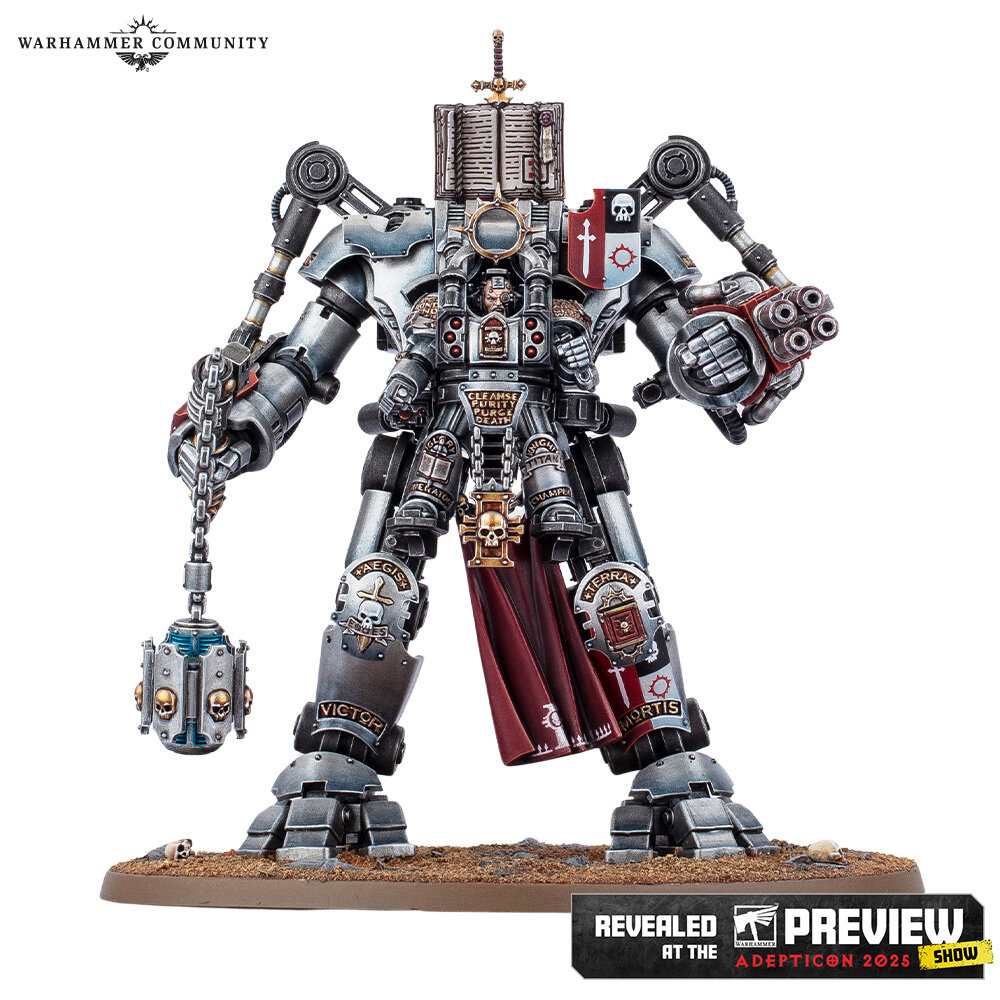
The Nemesis Dreadknight is the army’s centerpiece and the model that generates the most debate. The original sculpt looked, to put it charitably, like a baby carrier strapped to a mech suit. The updated kit with new weapon options (Nemesis Flail and Nemesis Mace) is a massive improvement and actually looks like something that would terrify a daemon. A Grand Master in a Dreadknight is one of the most potent single models in the game, combining devastating melee with psychic output that can wipe units.
The army’s main weakness is model count. At 2,000 points, you might have 25-30 models on the table. If your opponent can weather the initial Deep Strike alpha and force you into a grinding game, Grey Knights struggle. They don’t have cheap bodies to throw at objectives. Every loss hurts. Playing Grey Knights well means knowing when to commit and when to teleport back to safety, and getting that wrong costs games.
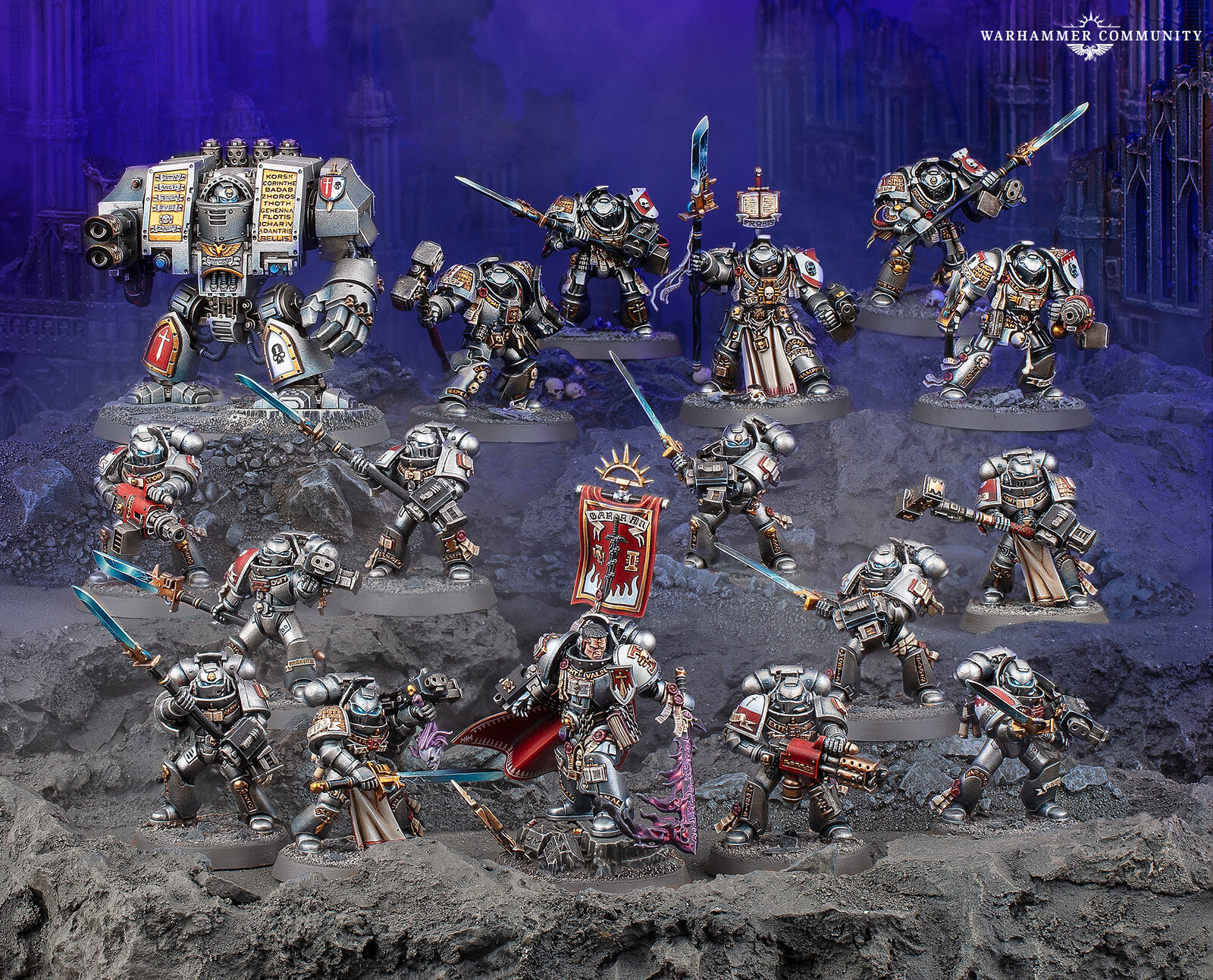
Model-wise, the Grey Knights range is solid. The Strike Squad kit (which also builds Interceptors and Purifiers) is one of the more versatile Space Marine kits GW has produced. The new Nemesis Dreadknight with updated weapon options is a significant improvement over the original sculpt, which was… polarizing. If you’re starting Grey Knights, the Combat Patrol box (Crowe, Strike Squad, Terminators, Venerable Dreadnought) is a good entry point.
Painting Grey Knights is deceptively tricky. The silver armor looks simple but requires careful work to avoid a flat, boring finish. A base of Leadbelcher, washed with Nuln Oil, then layered back up with Stormhost Silver on the edges gives you clean results. The blue-white force weapon glow is the signature detail, and there are dozens of tutorials online for getting it right. Take your time on the halberds and swords because they’re the focal point of every model.
If you want a small, elite army where every model is a character and the playstyle rewards precision over brute force, Grey Knights are hard to beat. Just be ready to explain to every opponent what the Aegis does, because you’ll be doing it a lot.