Games Workshop is taking us back to Armageddon. A brand new animation released just last week showed Commissar Yarrick — the legendary Hero of Hades Hive — returning to the war-ravaged world alongside a stunning new miniature. Ork art galleries have appeared on Warhammer Community. Stompa teasers and Steel Legion hints are piling up. And with Warhammer 40K’s reliable three-year edition cycle pointing squarely at a summer 2026 launch for 11th edition, the conclusion is hard to avoid: the greenskins are coming, and Armageddon is where the next great story begins.
But for fans who know the lore, this isn’t just another marketing cycle. Armageddon is arguably the most storied war world in the entire Warhammer 40,000 setting — a planet that has been the crucible of three devastating wars, each one reshaping the balance of power in the galaxy. If GW is truly returning here for 11th edition, the narrative possibilities are extraordinary. Let’s dig into why.
Armageddon: The Imperium’s Eternal Battleground
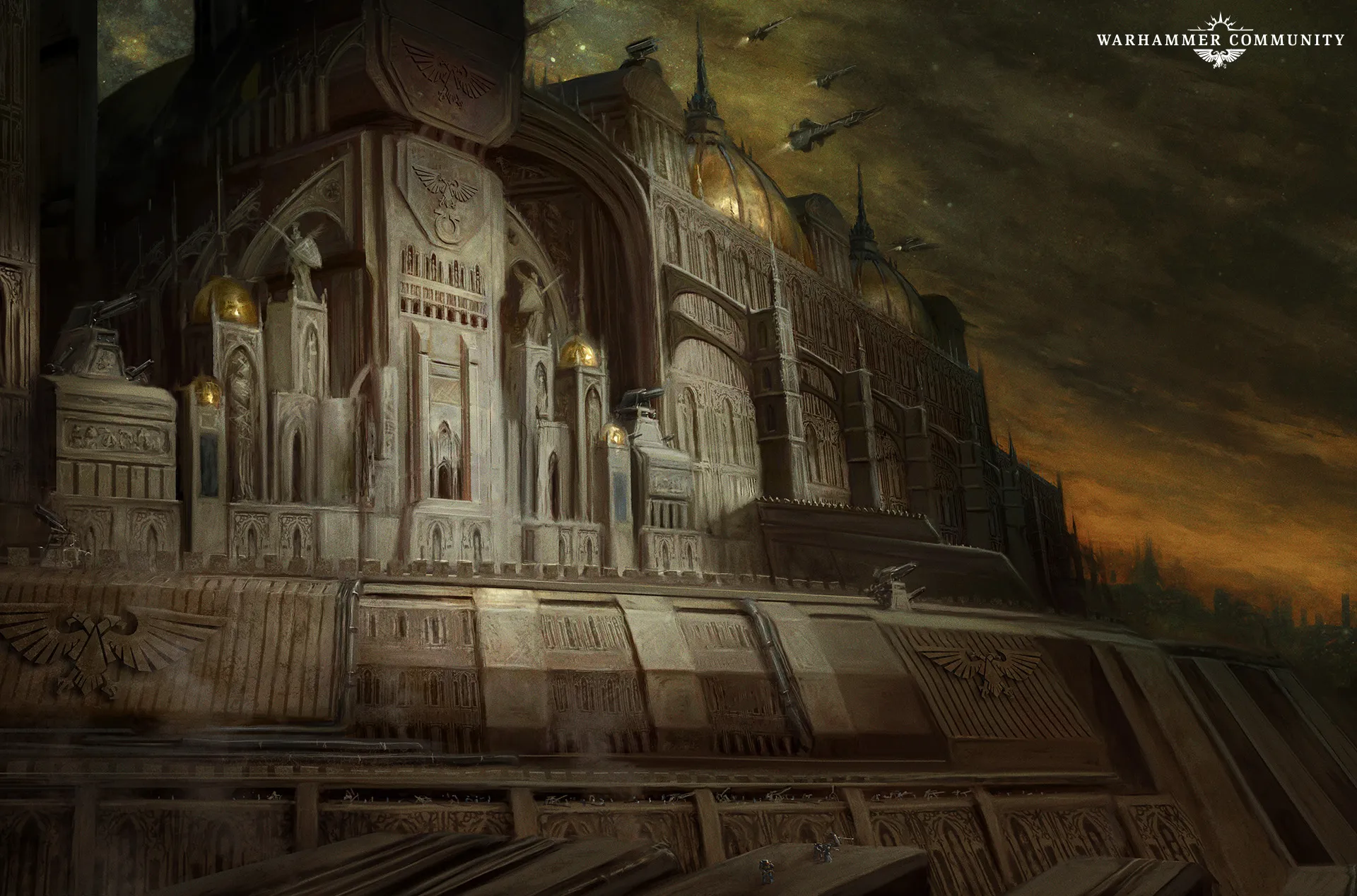
Armageddon is an industrial hive world in the Segmentum Solar, not far from Terra itself. Its surface is a nightmarish landscape of towering hive cities, toxic ash wastes, and equatorial jungles — all of it scarred by centuries of unrelenting warfare. The planet’s strategic value is immense: it sits at a crossroads of major warp routes and produces colossal quantities of war materiel for the Imperium. Losing Armageddon would tear a hole in the Imperium’s logistical network that could take centuries to repair.
What makes Armageddon unique in the lore is that it has been invaded not once, not twice, but three separate times — each by a radically different enemy, each time pushing the defenders to the absolute brink.
The First War for Armageddon: Daemon Fire
The First War for Armageddon is one of the Imperium’s darkest secrets. In 444.M41, the planet was invaded not by xenos but by the forces of Chaos — specifically, Angron, the Daemon Primarch of the World Eaters, leading a massive horde of Khornate berserkers and daemons. The scale of the incursion was apocalyptic. Hive cities burned. Millions of civilians were slaughtered in blood rituals. The defenders, a mix of Astra Militarum regiments and planetary defense forces, were overwhelmed within weeks.
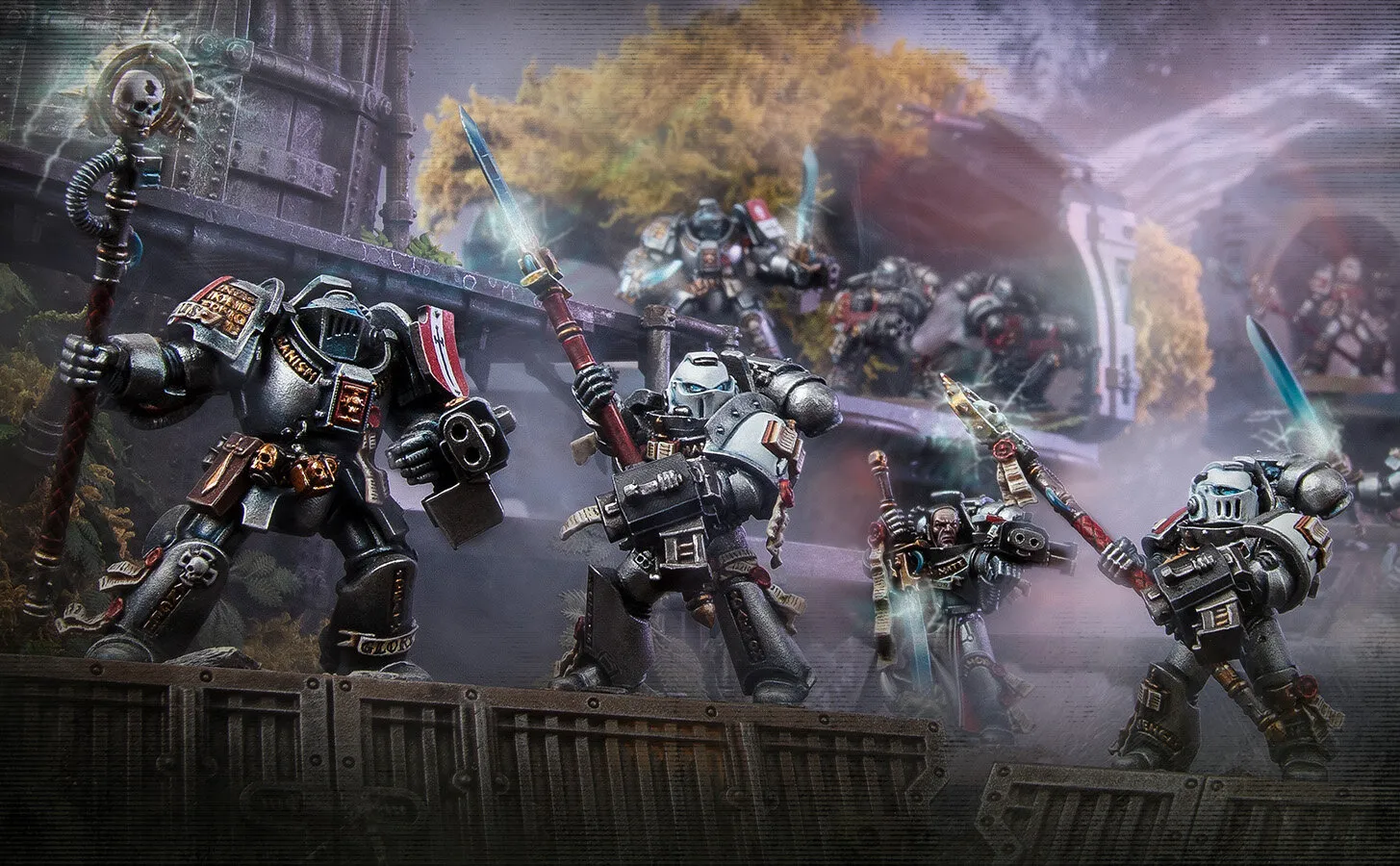
Salvation came in the form of the Grey Knights — the Imperium’s secret daemon-hunting Space Marine Chapter — along with the Space Wolves under Logan Grimnar. In a legendary battle, the Grey Knights banished Angron back to the Warp, breaking the Chaos invasion. But victory came at a terrible cost. The Inquisition, terrified of what the surviving population had witnessed, ordered a massive cover-up. Millions of soldiers and civilians who had fought alongside the Grey Knights were rounded up, mind-wiped, sterilised, or executed to maintain the secrecy of the daemon threat. This atrocity created a lasting feud between the Space Wolves and the Inquisition that persists in the lore to this day.
The Second War for Armageddon: Ghazghkull Strikes
If the First War was a secret nightmare, the Second War was a very public catastrophe. In 941.M41, the Ork Warlord Ghazghkull Mag Uruk Thraka launched his first WAAAGH! against Armageddon. Ghazghkull is no ordinary warboss. He’s the closest thing the Orks have to a strategic genius — a towering brute who claims to receive visions from the Ork gods Gork and Mork themselves. Under his leadership, a massive greenskin armada descended on Armageddon with a single-minded fury.
The early stages of the invasion were devastating. Hive cities fell, supply lines were severed, and the defending Armageddon Steel Legion was pushed to the breaking point. What turned the tide was the arrival of Commissar Sebastian Yarrick — the very same figure GW just brought back in their new animation. Yarrick became the symbol of defiance on Armageddon, rallying broken regiments and personally leading counterattacks with a captured Ork power klaw grafted to his arm. The legend says that Ghazghkull himself respected Yarrick as a worthy foe — the only human the Great Beast considered a proper fight.
With reinforcements from multiple Space Marine Chapters (notably the Blood Angels under Dante and the Black Templars) and dozens of Imperial Guard regiments, the Imperium eventually drove the Orks off Armageddon. But Ghazghkull escaped, vowing to return.
The Third War: Endless Grinding WAAAGH!
He kept that promise. In 998.M41, Ghazghkull returned with an even larger WAAAGH!, triggering the Third War for Armageddon — a conflict that, in the lore, has essentially never ended. This time, the Ork invasion was so vast that the Imperium was forced to commit forces on a scale not seen since the great crusades. Over twenty Space Marine Chapters deployed to Armageddon, alongside millions of Guardsmen and entire Titan Legions.
The Third War became a grinding war of attrition across every conceivable environment — urban warfare in the hive cities, armoured clashes across the ash wastes, and brutal jungle fighting in the equatorial forests. Neither side could achieve a decisive victory. The Orks were too numerous and too resilient to dislodge completely, and the Imperium could not afford to abandon such a strategically vital world. Armageddon became a perpetual meat grinder — a world where war is not an event but a permanent state of existence.
Why Orks Are the Perfect 11th Edition Villain
Looking at the pattern of Warhammer 40K edition launches, Orks are overdue for the spotlight. They headlined 2nd edition (1993) and 5th edition’s iconic Assault on Black Reach box (2008), but haven’t been the primary antagonist in a launch set since. Meanwhile, Tyranids got 4th and 10th edition, Chaos got 6th and 8th, and Necrons got 9th. It’s the greenskins’ turn.
But beyond the rotation logic, Orks offer something narratively unique that no other faction can match: fun. In a setting defined by unrelenting grimness, the Orks are a force of chaotic, anarchic joy. They fight because fighting is what they live for. Their technology works because they collectively believe it should. Their culture is a darkly comedic inversion of everything the Imperium holds sacred — where humans worship order, duty, and sacrifice, Orks worship speed, violence, and being the loudest one in the room.
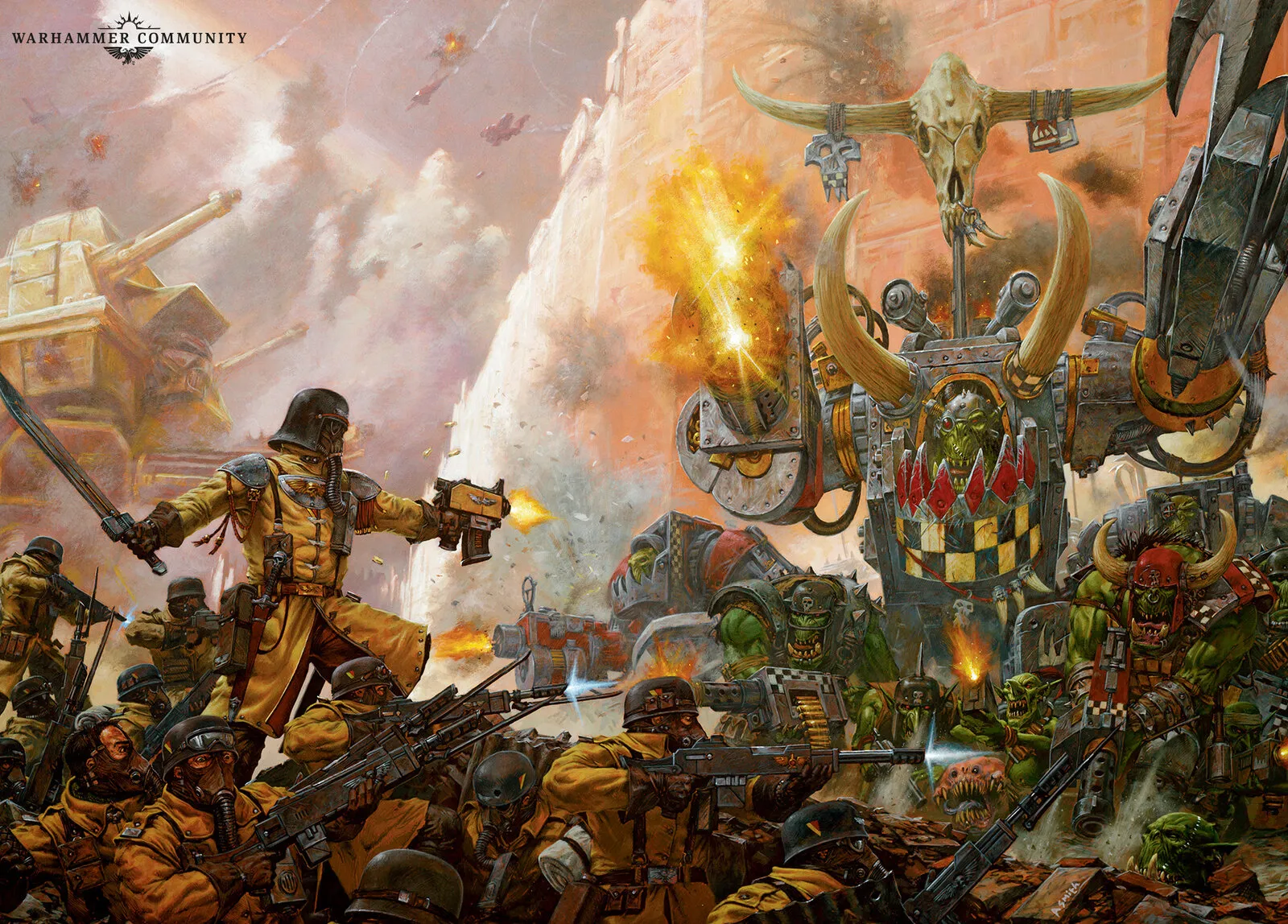
A return to Armageddon also lets GW showcase the Astra Militarum in a way they haven’t for years. The Guard are at their most compelling when they’re ordinary humans holding the line against something incomprehensibly brutal — and there’s nothing more brutal than an Ork WAAAGH! crashing against a hive city’s walls. The new Yarrick model and the Steel Legion teasers suggest GW plans to lean hard into this David-vs-Goliath dynamic.
What the Teasers Tell Us
GW’s recent output paints a clear picture. The “Return to Armageddon” animation (March 16, 2026) doesn’t just revisit the planet — it establishes a new conflict. Yarrick is older, more battered, held together by augmetics and sheer willpower. The planet’s defenders are drawn from regiments across the galaxy, with Death Korps of Krieg and Cadians notably present in the animation — though conspicuously, no Steel Legion. The Warhammer Community article even notes that “the world’s original Steel Legion defenders have been worn down to a fraction of their original strength” — suggesting this is a Fourth War for Armageddon, or at least a dramatic new escalation of the Third.
Meanwhile, model teasers have hinted at new Ork kits — including what appears to be a redesigned Stompa — and the Ork art gallery published the very next day (March 17) feels like deliberate hype-building. GW doesn’t publish faction art retrospectives by accident.
Community Reaction and Model Speculation
The community response to the Armageddon teasers has been volcanic, and I don’t think that’s an overstatement. Ork players have been waiting for their moment since 5th edition, and the prospect of a full launch box featuring greenskins has forums and social media channels running at a fever pitch. The new Yarrick model alone generated thousands of comments within hours of the reveal, and the consensus is that GW nailed it. He looks old, battered, and held together by augmetics and stubbornness, which is exactly right for a man who’s been fighting Orks for decades.
The Stompa teaser is what really set speculation on fire though. The current Stompa kit is one of the oldest in the Ork range and has been showing its age for years. If GW releases a redesigned Stompa as a centerpiece kit for 11th edition, it would signal a commitment to updating the Ork range that goes beyond a starter box. Community wishlists are already circulating: new Boyz (the current kit is over a decade old), updated Meganobz, a plastic Gargant (unlikely but a fan can dream), and new vehicle kits that reflect the junkyard engineering aesthetic with modern sculpting standards. The art gallery images GW published suggest a design direction that leans heavier into the ramshackle war-machine look, with Ork vehicles that are bigger, meaner, and covered in more dakka than the current range.
The Guard side of the speculation is equally heated. The presence of Death Korps of Krieg and Cadian forces in the animation rather than Steel Legion has sparked debate about whether GW is broadening the Armageddon narrative beyond its traditional defenders. A Fourth War for Armageddon that draws in regiments from across the Imperium would give GW an excuse to showcase the expanded Guard range that’s been rolling out since 10th edition, and that’s smart marketing wrapped in good storytelling.
What This Could Mean for the Setting
If 11th edition truly centres on Armageddon, it could advance the Warhammer 40K timeline in dramatic ways. The current era — the Era Indomitus — has seen the Imperium battered on every front: the Great Rift splitting the galaxy, Tyranid hive fleets devouring worlds, and Chaos warbands pouring through the Cicatrix Maledictum. A new, massive Ork WAAAGH! hitting Armageddon at this moment would stretch the Imperium to its absolute limit.
There’s also the tantalising question of Ghazghkull himself. In the current lore, Ghazghkull was beheaded by Ragnar Blackmane of the Space Wolves — but his head was reattached by his personal painboy, Mad Dok Grotsnik, onto an even larger body. The result is a Ghazghkull who is bigger, meaner, and more convinced than ever that he is the Prophet of the WAAAGH!, chosen by Gork and Mork to unite every Ork in the galaxy under one banner. If GW gives Ghazghkull a new model for 11th edition (his current one is already impressive), it would be a signal that the Ork narrative is being elevated to galaxy-shaking importance.
And then there’s the wildcard: could a Fourth War for Armageddon be the event that brings another Primarch back? The Imperium is stretched thin. Guilliman can’t be everywhere. If Armageddon truly faces annihilation, it might take a returning son of the Emperor — perhaps Vulkan, whose connection to Armageddon runs deep through the Salamanders, or even the Khan, whose White Scars’ speed would be invaluable against Ork mechanised assaults — to turn the tide.
What most players are hoping for from the launch box is straightforward: a starter set that gives both factions a real army, not just a handful of push-fit models that end up in a drawer after the first game. Ork players want new Boyz, because the current kit desperately needs an update, and Guard players want to see the Steel Legion or Krieg get the kind of attention Cadians received in 10th edition. A launch box featuring Yarrick opposite Ghazghkull, with updated core troops for both sides, would be the kind of product that sells out on day one and stays relevant for the entire edition.
The Green Tide Is Coming
Whatever form 11th edition takes, one thing seems certain: Armageddon is back, and the Orks are coming with it. For lore fans, this is enormously exciting. Armageddon is a setting that combines everything great about Warhammer 40K — desperate last stands, iconic characters, massive set-piece battles, and the ever-present question of whether humanity can survive one more day in the grim darkness of the far future.
The WAAAGH! is building. Yarrick is loading his bolt pistol. And somewhere in the ash wastes, a billion greenskin throats are preparing to scream the only battle cry that matters: WAAAGH!