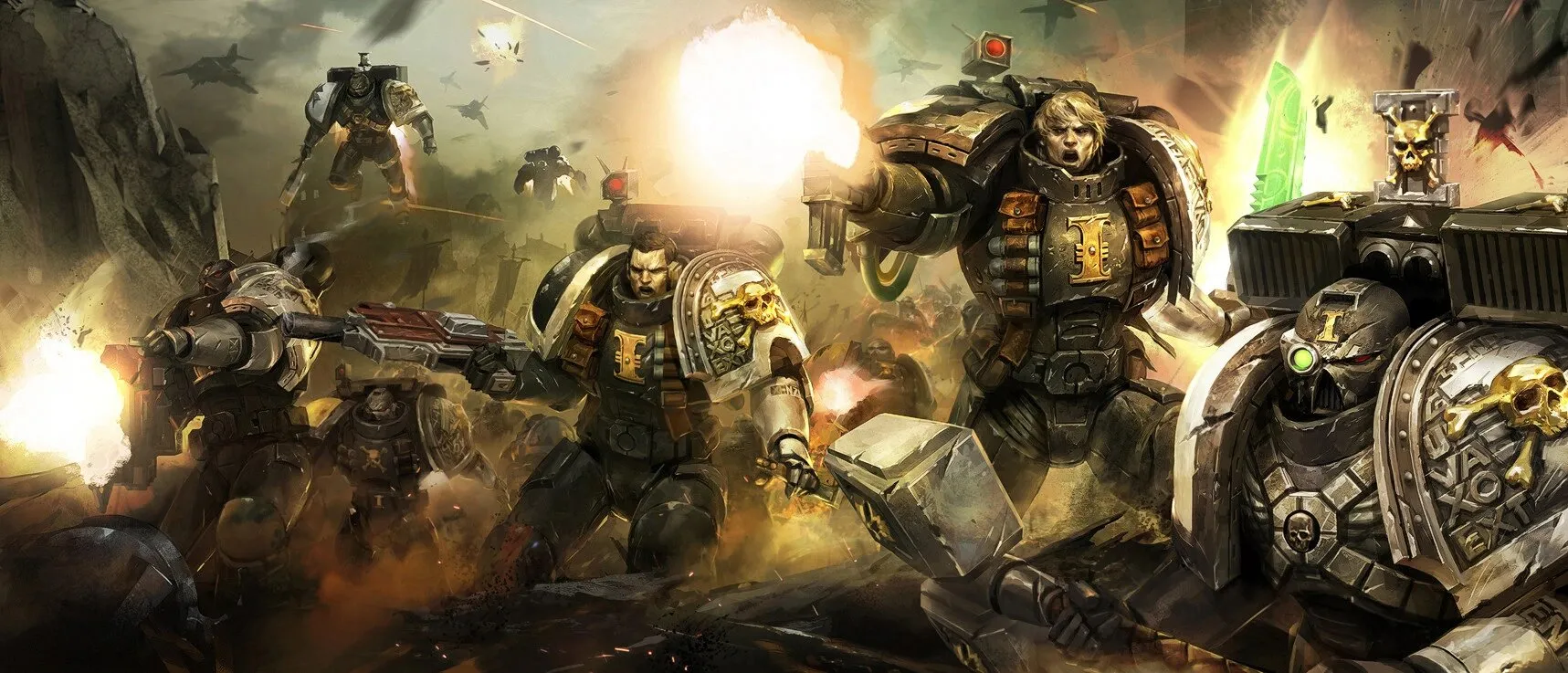
White Dwarf 259, UK edition, August 2001. Page 80. The article was called Purge the Unclean and it had to cover both the Grey Knights and the Deathwatch in nine pages, because back then nobody at GW thought either chapter justified a column on its own. The Grey Knights got most of the space. The Deathwatch got the back half, a stub of background, and Watch Captain Artemis as their only named character.
Then in 2003 itself, Codex: Daemonhunters turned the Grey Knights into a full playable army, and the Deathwatch got a Chapter Approved entry in the same wave. Marines from any Chapter, in black armour, with a silver shoulder. You used your existing Marines, applied a few special rules, and called it a kill-team. There was no codex. There was no plastic kit. There was Watch Captain Artemis in metal, in a blister pack, and that was the entire range.
The 2003 Deathwatch wasn’t really a faction
It was a concept. A way for people who already had Space Marine armies to play something different on a Saturday afternoon without buying anything new. You took five veterans from your Imperial Fists or Ultramarines or whoever, painted them black, swapped the right shoulder pad to a silver Inquisition skull, and you had a kill-team. The whole identity rested on the fact that they came from somewhere else. They were on loan from real chapters, and the rules expected them to go back when the kill-team disbanded.
I came into the hobby at 5th edition, so 2003 was already a few editions in the rear-view by the time I owned a single grey-plastic Marine. But Index Astartes II, the compilation paperback that reprinted Purge the Unclean, was the first 40K book I read cover-to-cover. I bought it secondhand off a guy at my local store who was clearing his shelves because his wife had finally won the basement-square-footage argument. He sold me the whole stack of Index Astartes paperbacks for thirty quid and I read them in the order he handed them over, which was random. Purge the Unclean is the article that made me want to paint Imperial Fists in the first place, even though Imperial Fists barely appear in it. The whole vibe of “honourable secondment” did the work. I didn’t even properly understand what an Inquisitor was at that point. I thought they were a flavour of Inquisition judge.
That secondment detail has been quietly thinning out across editions.
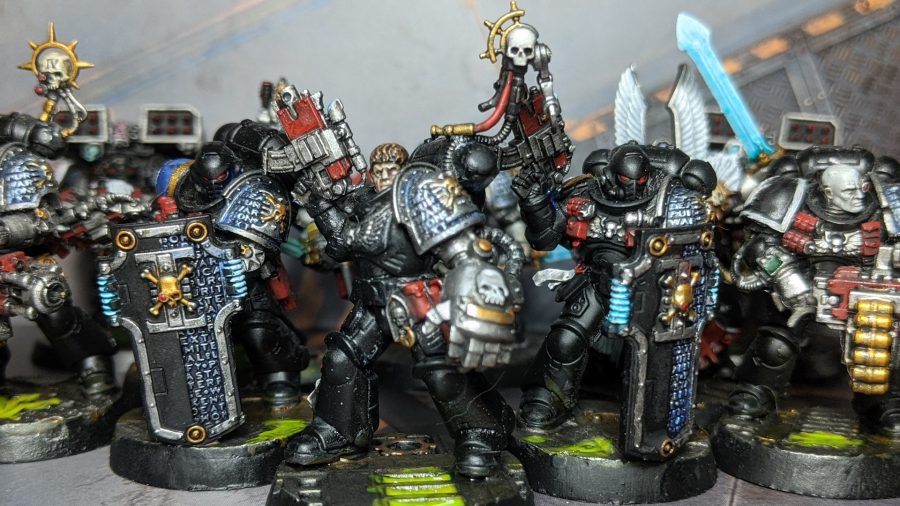
The metal Watch Captain Artemis came in a blister with a stat card and a brief paragraph of background. Fixed pose, fixed loadout, fixed name. There were no other Deathwatch-specific models for years. If you wanted a kill-team you used your existing veterans with arms swapped from the Inquisitor 54mm range or Sisters of Battle, painted them black, and stuck a printed-out shoulder pad transfer on the right pauldron. The kit and the army were the same thing.
What got added in 2010, and what got softened later
The Deathwatch got their first proper structural lore from the 2010 Deathwatch RPG by Fantasy Flight Games. That book is where Watch Fortresses came from. Watch Stations. The Long Vigil. The Black Shield, which is the bit that mattered most: a Marine who renounces his Chapter, his name, his colours, and serves the Watch with a featureless black shoulder pad. Black Shields existed because the Watch was supposed to be slightly improper. A place a Chapter could quietly send a Marine they didn’t want back. The Deathwatch processed them with no paperwork beyond the new shoulder pad.
The RPG also gave the Deathwatch its first real geography. Watch Fortresses sat at strategic xenos-threat sectors, each one a self-contained citadel-monastery-armoury staffed by Marines from a rotating list of contributing Chapters. Watch Stations were the smaller satellites, attached to specific Imperial worlds or Inquisitorial concerns. Each Watch Fortress kept records of every Marine who had served, his oaths, the xenos species he had specifically fought, and which Chapters had quietly stopped sending replacements. That last detail is the one I keep coming back to. Some Chapters just stop sending Marines, with no explanation, and the Inquisition logs the absence and keeps a quiet file open. There’s no formal rule for it. The Watch Fortress just keeps the file with no expected closure.
Modern Codex: Deathwatch softens that, and I’m fine admitting I don’t know whether it’s a real loss or just nostalgia talking. The 2016 codex and the 2024 plastic refresh both treat the Deathwatch as a clean, prestigious chamber militant. Every Marine a veteran, every shoulder pad heraldic, every kill-team a brochure for chapter diversity. The Black Shield in current Codex: Deathwatch is a single optional sergeant variant. In the RPG it was a whole archetype.
Watch Captain Artemis was sculpted in metal originally, with a power blade and a combi-flamer-boltgun called Hellfire Extremis. He stayed in metal for years. The 2016 codex made him a generic Watch Captain stat-line dressed up as a special character. The 2024 multipart plastic kit gave him a new pose, the same loadout, and the same name. He’s the only Deathwatch character who’s been continuously available since 2003. Inquisitor Lord Kryptman, who features in the Graham McNeill Ultramarines novels and led the early Deathwatch teams against genestealers, has never had a model. He’s mentioned in the current codex three times and has never been sculpted in any scale.
So yeah. The Deathwatch. Twenty-two years. Started as half an article, one metal captain, a vague encouragement to paint a unit black if you fancied it. Became an RPG with proper internal structure. Became a 28mm faction with a starter box called Overkill. Became a plastic line. Got folded into Imperial Agents, then folded back out, then back in again. Pete in my garage group has a Deathwatch army he’s been adding to since the 2016 codex, and he reckons the new plastic Artemis is the best version of the model. I’ve never owned a Deathwatch unit. I considered it during the Imperial Agents window, decided I’d rather paint another Cadian platoon, and shelved the idea. Mostly because I already have about 1,500 points of unpainted Cadians sitting in shoeboxes and adding a fifth project to the backlog felt like buying a treadmill.
Why the kill-team idea outgrew the chapter
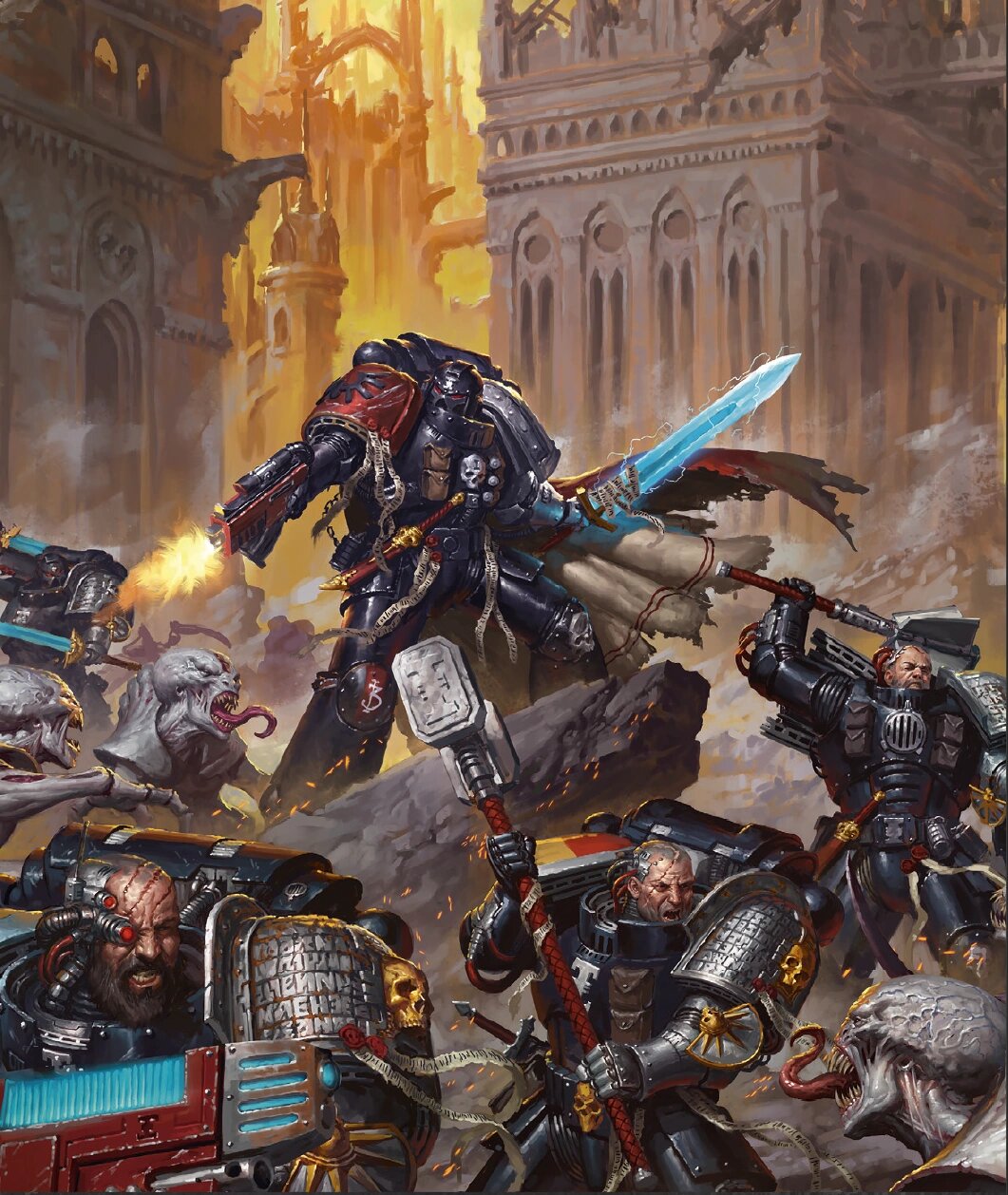
The current Kill Team game is, in a real sense, the original Deathwatch idea spread across every faction. Small elite squads, named operatives, mission-driven scenarios, narrative play over standing-army play. When the Cadian Spectre Squad got revealed for Kill Team: Terror on Devlan, the framing was almost identical to the 2003 Deathwatch entry: a small group of veterans, hand-picked, given a single named target. The DNA is the same. By 2026, every faction has at least one named Kill Team operating on those same terms. Wolf Scouts, Fellgor Ravagers, the Blooded, and now Cadian Spectre Squad.
The current Codex: Deathwatch sits inside Imperial Agents now, and the faction’s tabletop position has wobbled edition by edition. They were absorbed into Inquisition rules, then split out, then absorbed again. As of 11th edition the Deathwatch detachment lives under Imperial Agents alongside the Sisters of Silence and a few Officio Assassinorum operatives. I don’t follow Imperial Agents closely enough to have a real opinion on whether the placement is right. The placement makes some sense for the army-list game. Imperial Agents is the box where models without a real chapter end up, which is sort of where the Deathwatch lives anyway. I’m not sure whether that’s a clever recursive joke from the design team or just convergent shelving.
Black Library leaned into the Deathwatch in 2013 with Steve Parker’s Deathwatch novel and the Salamanders veteran Cassius. By the Indomitus era, Andy Clark and Justin D. Hill were writing kill-teams as small ensemble casts, which is the form the faction works best in fiction-wise. Five guys, five Chapters, one xenos to kill, eight thousand words of bickering on the way to the target. The novels treat the Marines as Chapter individuals first, with the Deathwatch role layered on top. Cassius is a Salamanders Chaplain who happens to be wearing black this decade.
There’s a tangent here I’m not following far. In the early 2000s the Deathwatch sometimes carried xenos weaponry; in Warriors of Ultramar, Inquisitor Lord Kryptman hands Uriel Ventris a Hrud Fusil during a kill-team operation. That detail has been steadily walked back over the years. Modern Deathwatch don’t really use xenos weapons in a sanctioned way; the lore now treats it as something only a radical Ordo Xenos inquisitor would condone. I think I prefer the older version where a kill-team carried whatever was on hand, including the alien stuff, but I haven’t read enough of the modern fiction to know whether that’s been formally removed or just deprioritised…
The 2003 version had less art, fewer rules, and almost no models of its own. Half a White Dwarf article and Watch Captain Artemis in a blister. The 2024 plastic Artemis is one of the nicest sculpts GW has put out for a Marine character in years, and Pete’s been painting his since June. He posts the progress photos in our group chat. He’s still got the Black Shield bits sat on his desk waiting to be assembled because he can’t decide whose Chapter pad to leave off.