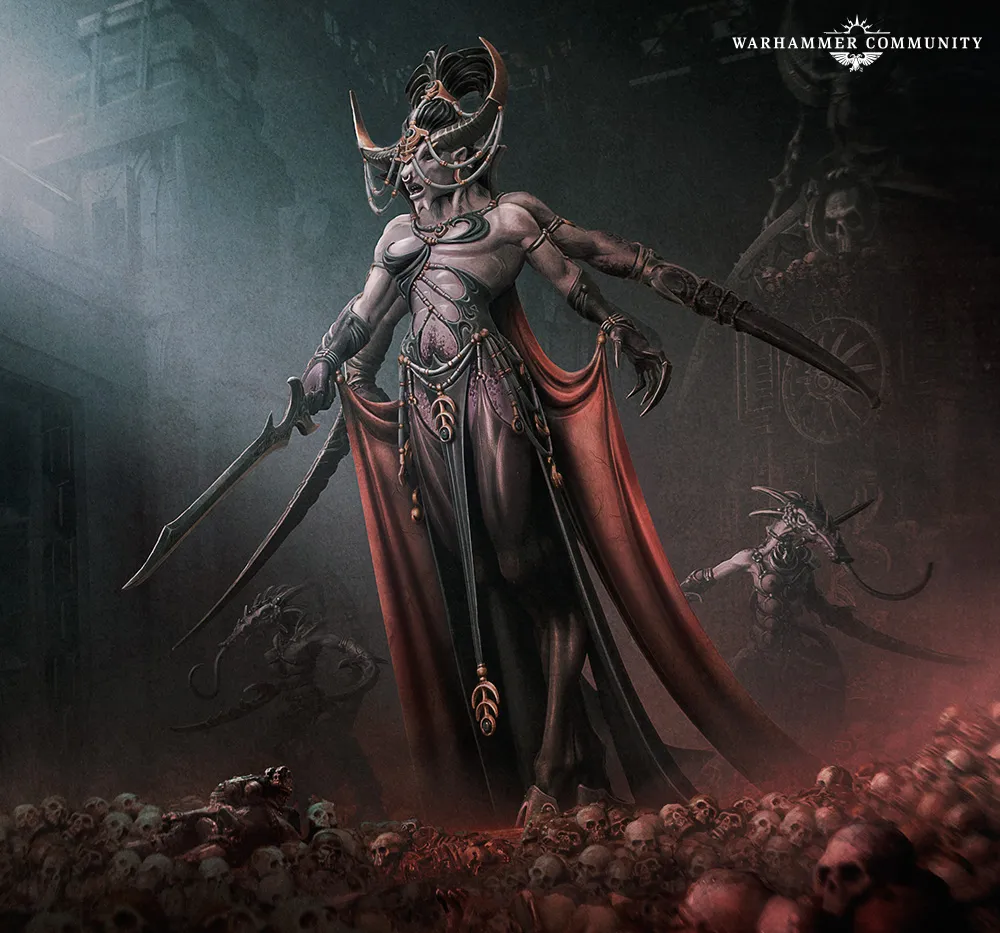
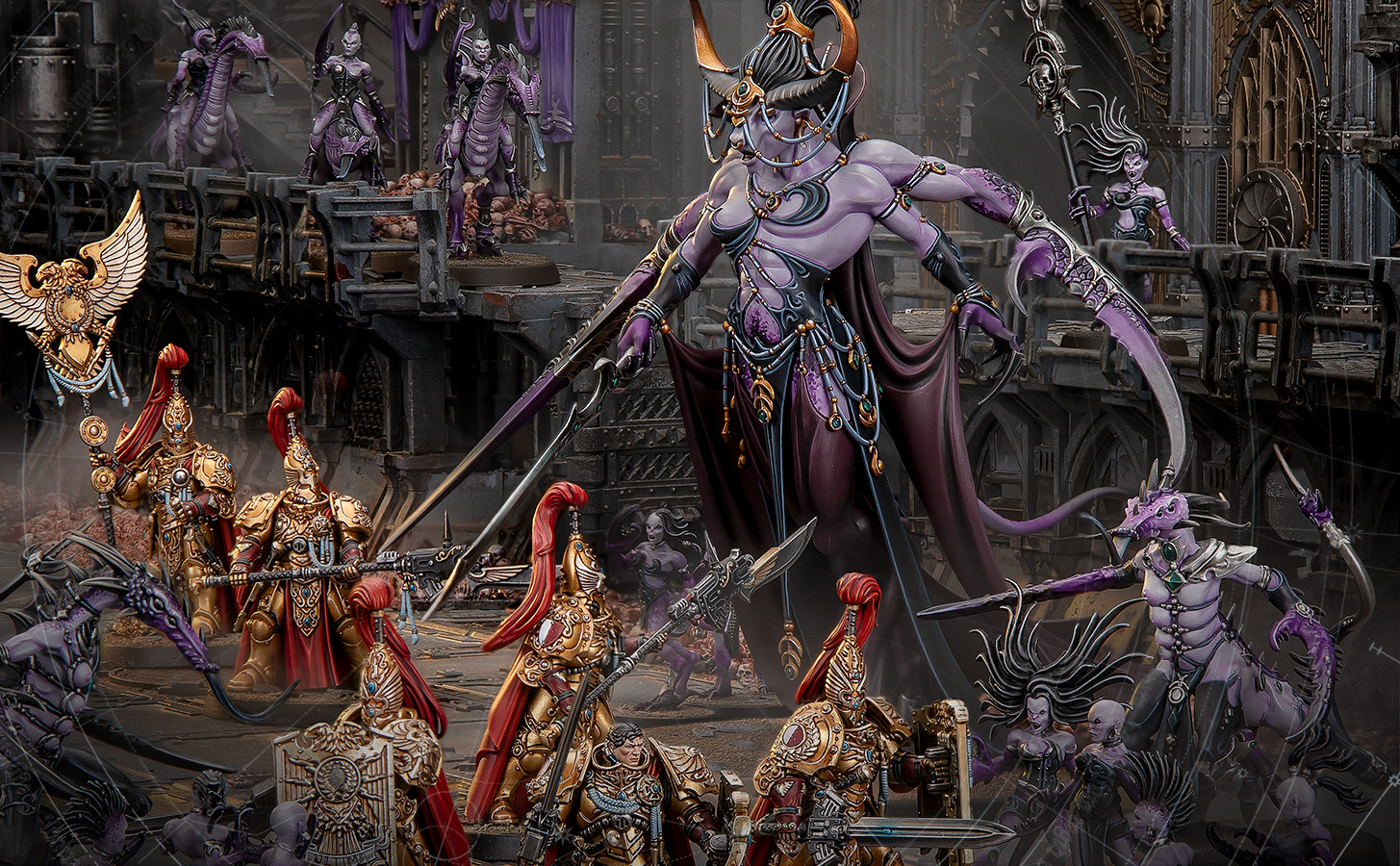
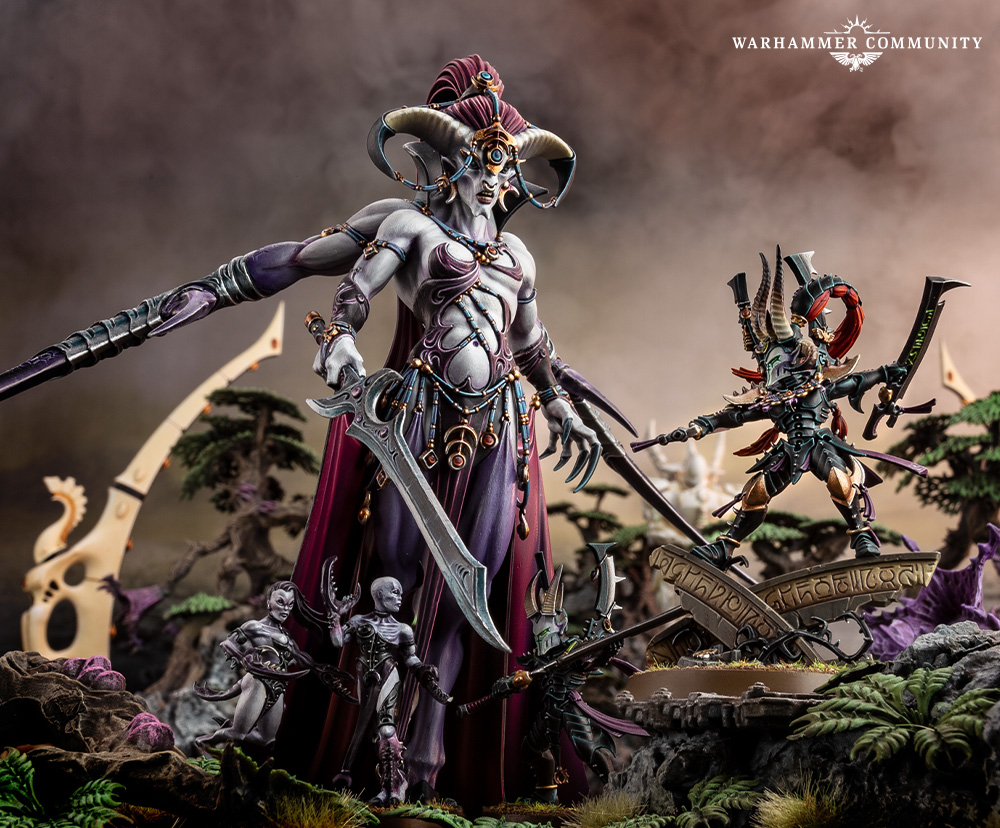
In the new Journal Tactica: The Battle for the Signus Cluster – Assault on Kol, a Keeper of Secrets can lead a Slaanesh daemon army into a Horus Heresy game. A Traitor force can bring some along as allies. The designers’ notes even give the daemons a Challenge Gambit called Blissful Pain, which rewards them for having wounds inflicted on them. The rule appears in the new army list.
The bit I kept rereading was further up the page. During the Heresy, the Imperium’s most secret investigators kept records of daemons under guard. They saw different kinds emerge over time. According to this new account, it took scholars looking back after the Heresy to attach the four familiar names: Nurgle, Khorne, Slaanesh and Tzeentch. The people actually fighting these things had a much poorer filing system.
I’ve spent years reading 40K with the answer key in my hand. Purple claws? Slaanesh. Rot? Nurgle. Put me on Kol as one of the Solar Auxilia and I wouldn’t be identifying a god; I’d be wondering why the thing coming down the tunnel had started smiling at me.
Kol had been on the map for a long time
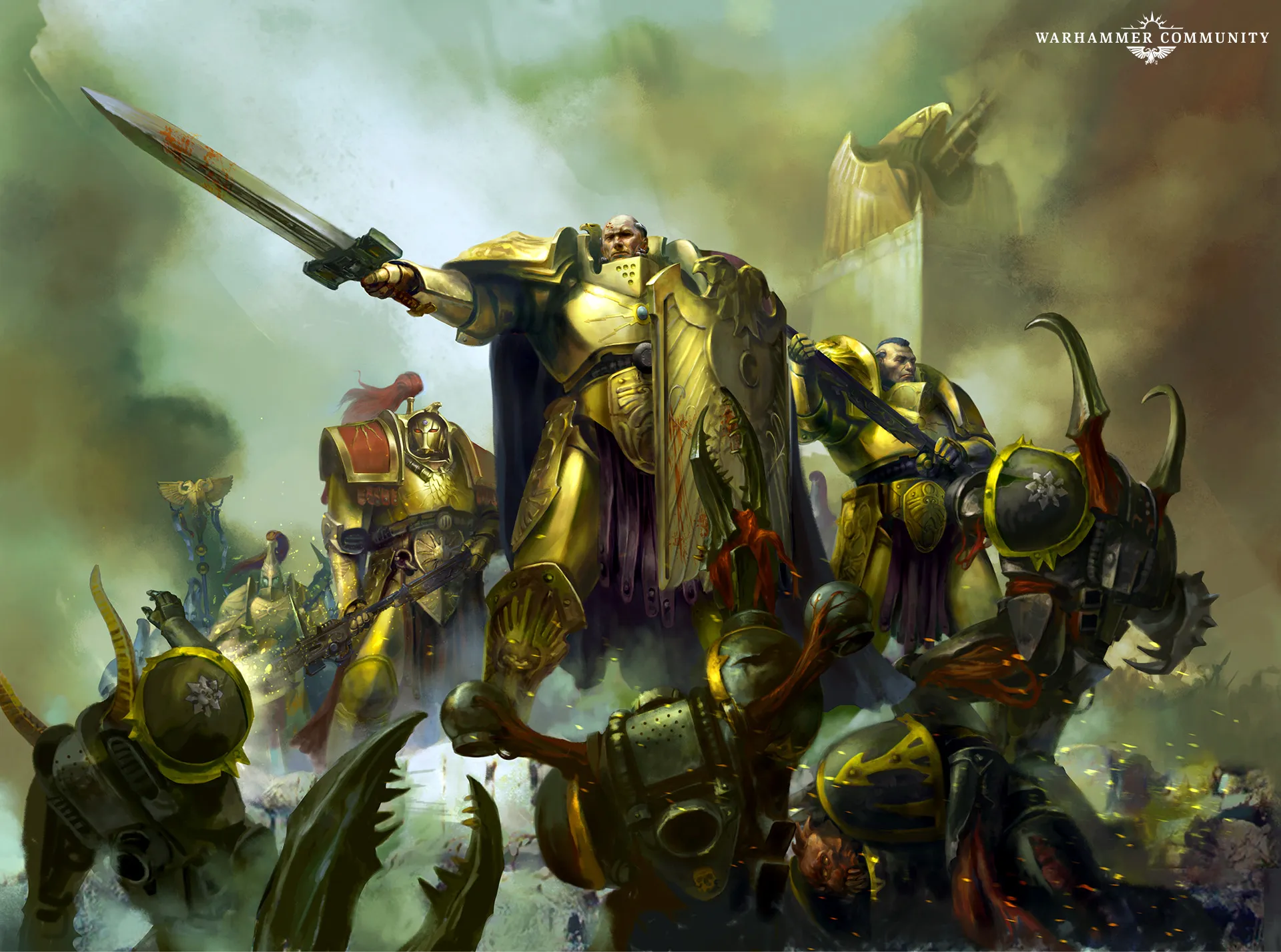
The companion design article on Assault on Kol describes a radiation-scorched mining world in the Signus Cluster. Its old mines became underground bases and hives. The 606th Cohort of the Solar Auxilia lived there. They acquired the much less reassuring name “Rad Serpents” after corruption took hold. A splinter of the Legio Custodes broke away to investigate while Sanguinius and the Blood Angels moved through the wider system.
That makes Kol a useful place to tell this story. The planet already existed in accounts of the Signus campaign, while its subterranean disaster hadn’t previously been described this way. The new supplement puts a Slaaneshi force into that gap. I’ve written about the Custodes’ part of the Kol campaign already; this time I kept returning to the corrupted 606th Cohort.
Visions of Heresy, in its section “Signus Daemonicus,” gives the larger horror some scale. Cultists planted by Horus seized control across Signus, summoned daemons and enslaved the population. Kyriss the Perverse, a Greater Daemon of Slaanesh, held the system when the Blood Angels entered it. The account says Kyriss projected an image to Sanguinius and claimed Signus in Slaanesh’s name. At least one daemon was willing to introduce itself. That says little about what a miner, a frightened auxiliary or even most officers understood.
The distinction gets slippery. The older book names Kyriss for us. The new designers’ note describes what guarded Imperial records supposedly contained and when later scholars sorted those records into four dominions. I can read both without assuming every Blood Angel at Signus knew the structure of the Chaos pantheon. In fact, the Visions of Heresy passage describes ordinary crews panicking during their first encounter with the attack, while the Marines tried to keep the fleet functioning.
A censored archive full of horrible guesses
The new article says early Imperial files mostly used a general “Ruinstorm” classification. Subsequent reports described recognisable strains of form and behaviour: rot-bearing creatures, blood-hungry beasts and other recurring types. Interrogations of cultists helped investigators connect those patterns to their origins. Their findings went into ward-sealed books under the Emperor’s authority, with access limited even within the Imperial household.
Some of the earliest sightings were explained away as mutant or alien phenomena. That fits the machinery of the Imperial Truth’s hidden war against daemons, although the new article gives the concealment a more awkward texture. A secret archive can preserve observations. It can also leave the troops who need them with nothing useful when a world goes bad. I don’t know how much an officer on Kol was told before the tunnels fell, and the article doesn’t give us a dispatch from one.
There is also a cost to getting the answer. The designers describe condemned cultists being questioned and people who studied the material losing their sanity. The books had wards; their readers faced examinations and a lifetime of suspicion. I like the detail about the examinations and the scrutiny that followed them.
We use “Slaanesh daemon” as casually as a unit name. To the Imperium, the category had to be assembled from incidents it couldn’t safely discuss in public, reported by people who might be corrupted, to investigators who could be harmed by the investigation. I doubt that arrangement made for quick updates. The wider bureaucracy could still be calling an incursion a xenos attack while its most guarded archive contained a better description.
And the Heresy arrived before the paperwork was finished. You can keep a secret because knowing about Chaos is dangerous, then find yourself dependent on people who lack the vocabulary to report what they’ve seen. The new article attributes a motive to the suppression: Imperial authorities thought knowledge itself could spread corruption and sedition. On Kol, the 606th Cohort was already corrupted.
The rules tell you what kind of trouble has arrived
The Slaanesh list is a sub-faction of Daemons of the Ruinstorm. It can form its own army or join another Traitor force as an allied faction, subject to the Journal’s restrictions. That puts these creatures within the Heresy rules without requiring every Loyalist who meets them to know the name on the roster. The earlier Tzeentch daemon list also used the Ruinstorm framework.
Blissful Pain is the clearest example. In a Challenge, successful wound tests against a Slaaneshi champion can increase that champion’s attacks, even when the wounds are saved. I need to be precise here: that’s how the published Gambit represents a theme on the tabletop. Broader lore claims about every Slaaneshi daemon would need their own sources. The rule modifies attacks during that Strike Step.
Battlelust, the new Advanced Reaction, lets these daemons move forward when targeted by a ranged attack and gives them an Initiative boost on the following turn. Shooting at the approaching horror might close the distance faster. Then there’s Enraptura: Beguile can stop reactions against units with the Slaanesh trait, while Malignity represents a whispered suggestion that a target turn on its own squad. Those are game effects, with the designers plainly using them to express appetite, attraction and loss of control.
I play Thousand Sons, so naturally my first instinct was to read the psychic power and think about which of Kiran’s Death Guard it would annoy most. That’s a poor way to make sense of a Heresy disaster. I once built a list around a trick I liked and left myself so little room to hold objectives that Kiran spent the last turn moving plague Marines onto them while I admired my own cleverness. A daemon that persuades a defender to drop their guard doesn’t need to win a satisfying duel. It needs the next doorway open.
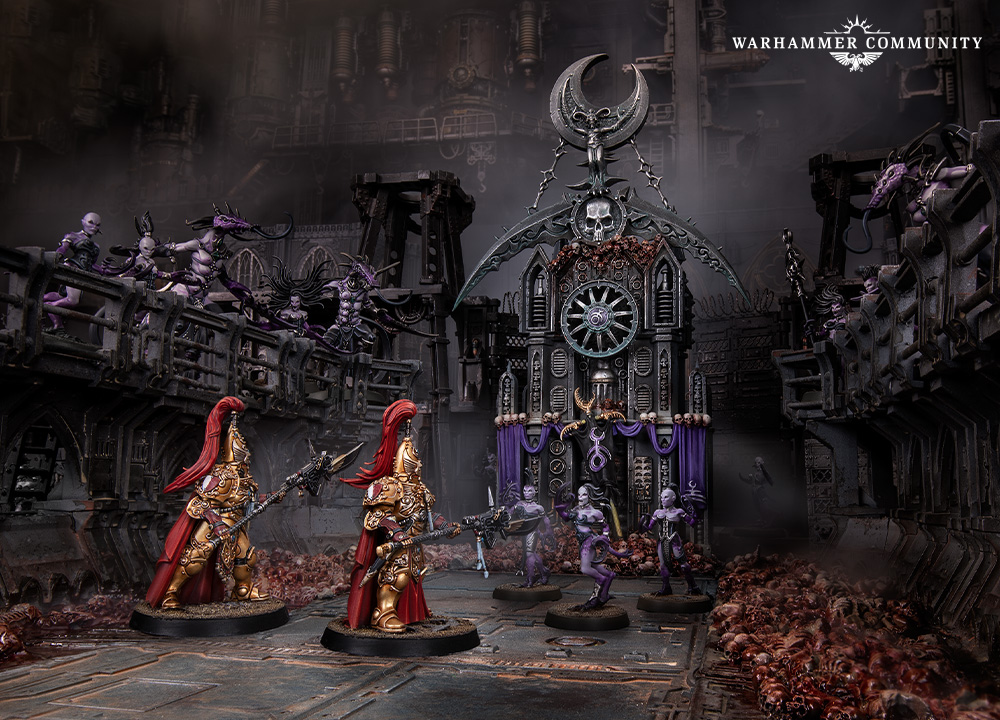
The list includes Heralds, Daemonettes, Seekers, Fiends and a Keeper of Secrets. A Herald can help bring in more of its kind. An Esoterist can give a Traitor Legion access to a Rapturous Host auxiliary detachment, while certain Praetors can take an Insidious Corruption upgrade. The mechanical details live in the Journal; the WarCom preview gives a substantial look at what the designers wanted these units to do. Players can build a daemon host or put a smaller intrusion beside the Traitors. Both fit a cluster where cult activity had already prepared the ground.
The name was older than the Imperium’s knowledge
There’s another reason I hesitate when an Imperial account sounds certain. Slaanesh’s birth is a huge event in Aeldari history, and it happened before the Heresy. Codex Supplement: Haemonculus Covens, in “C.M31 The Fall of the Eldar,” describes the new god’s arrival tearing out the heart of the Eldar empire. White Dwarf #415’s “Ruin and Disaster” connects the same catastrophe to the Eye of Terror and the fate of Aeldari souls. Those accounts offer a history of the god. The Heresy designers are describing a much narrower history of Imperial recognition.
I went down a distracting rabbit hole here. If an Aeldari survivor could name the danger, why didn’t a Custodian just ask one? Maybe one did. I can’t find that conversation in the sources I’m using, and the question assumes a level of trust and access that neither side owed the other. The new designers’ note sticks to what Imperial investigators recorded in their own archives.
The Aeldari had their own dreadful practical education. The Gathering Storm II: The Fracture of Biel-Tan, under “An Age of Dooms to Come,” describes spirit stones and infinity circuits among the craftworlders, pain inflicted by the Drukhari, and the Harlequins’ reliance on Cegorach as ways of living with Slaanesh’s claim on their souls. None of that had been prepared for the 606th Cohort down a mine shaft. I keep thinking of the ordinary people in those hives, who had no reason to know why their neighbours’ new devotions were dangerous.
A god you could describe before you could name
Plenty of quick summaries of Slaanesh spend their time on pleasure. I think White Dwarf #511’s “The Prince of Pleasure” gets closer to why these rules feel right: its designers describe dependence on sensation and the craving that follows it. Fulgrim’s sons keep seeking stronger experiences, and satisfaction keeps receding. The article also names martial perfection as one of their obsessions.
It also explains a problem for an investigator trying to sort a creature by appearance alone. A Keeper of Secrets is conspicuous; a cultist who has started treating every injury as an invitation is harder to place. The new Heresy article gives the daemon army a distinctive look and a set of behaviours, but the pattern has to be noticed across separate incidents. Someone must survive, report accurately and be believed. On Kol, investigators would have to account for the corrupted 606th Cohort as well.
Visions of Heresy calls Kyriss a servant of Slaanesh and describes Signus as his domain. The October designer’s note says later Imperial scholars applied the names to their archived records after the war. I read those accounts as two views at different distances: the setting’s account of what attacked Signus, and the Imperium’s account of what it had managed to learn. I can’t tell you the precise moment any individual Custodian learned the name. Neither source pins that down.
There is a small hobby upside to all this dreadful administration. An Assault on Kol force doesn’t need every model to announce a neatly labelled god to the defenders. Put the familiar Daemonettes beside a Traitor detachment, make the 606th look like men whose orders have curdled, and let the Loyalists work out the rest. I’d probably spend far too long painting the Rad Serpents’ markings on an auxiliary shoulder pad before anyone noticed them across the table.