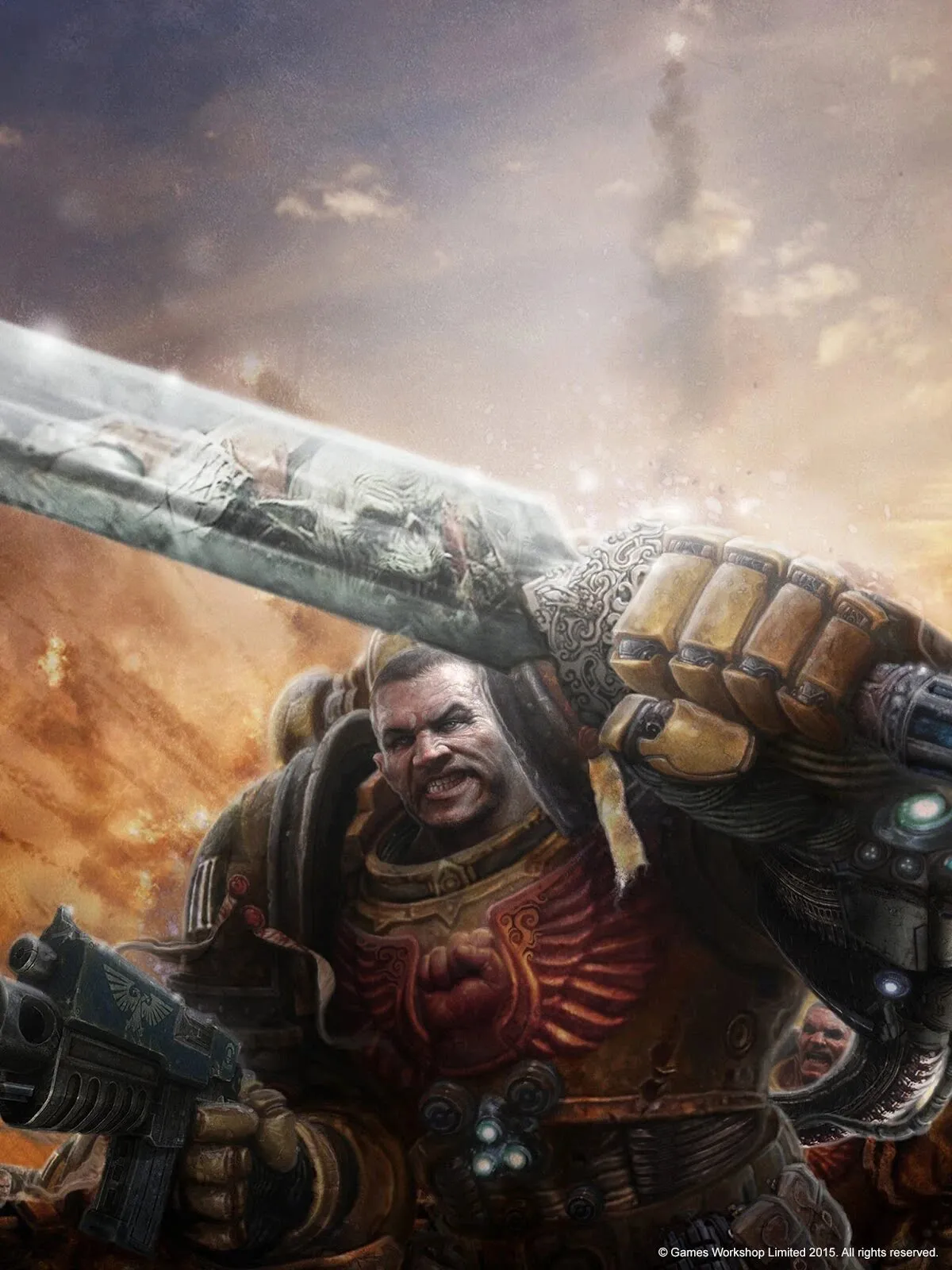
In 545.M32, the Imperial Fists Chapter got wiped out in about a week. Not down to a company or two limping home to rebuild around. Chapter Master dead, the Chapter’s fighting strength gone, and the man who ended up telling the tale wasn’t some senior officer who’d earned the job by rank. He was Captain Koorland, second company, and the honest reason he was in charge of what was left is that he was the highest-ranking Imperial Fist who hadn’t been killed yet.
It started on a planet called Ardamantua, where the Imperial Fists were fighting some minor insectoid xenos nobody much remembers now, the “Chromes.” Then the sky did something it wasn’t supposed to do. An object the size of a small moon blinked into existence in orbit, phasing in and out of real space before it settled into something solid: an Ork warship built on a planetoid scale. It broke the Imperial Fists fleet and ground presence within days. Chapter Master Cassus Mirhen died in the chaos, and the last transmissions out of the system described weapons fire that didn’t behave like weapons fire, more like localized earthquakes with a trigger. Koorland survived, got a garbled warning off, and watched the thing set course for Terra.
That’s the opening scene of the War of the Beast, a conflict most people who aren’t deep into Black Library know mainly as “the thing that explains why the Deathwatch exists,” if they know it at all. I’ve got a soft spot for anything that happens to Rogal Dorn’s sons, so I went and read more of it than the wiki summary.
The Last Wall wasn’t a metaphor
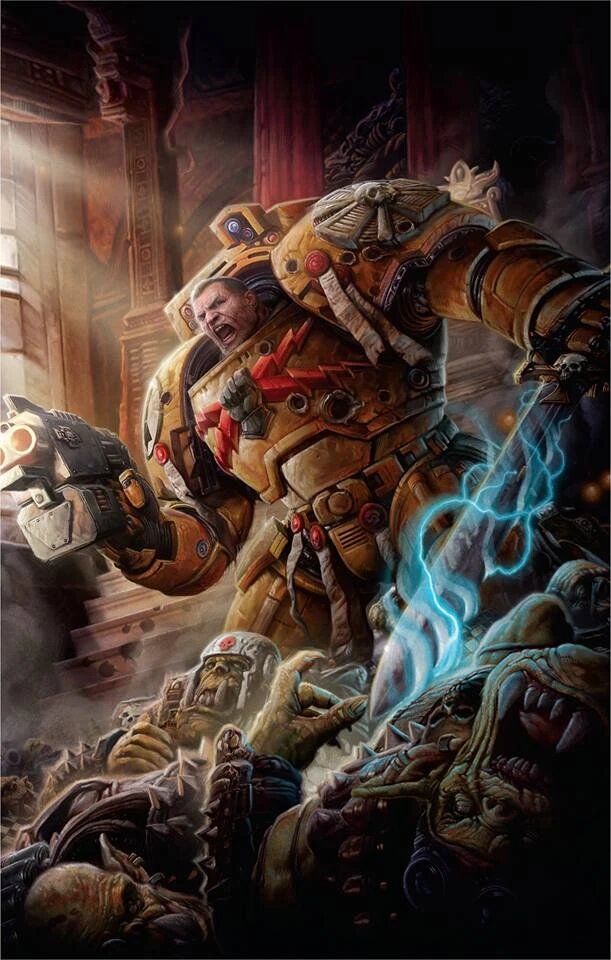
More Attack Moons showed up. Not one, several, each one a self-contained invasion fleet the size of a planetoid, teleporting and phase-shifting in ways Imperial tech couldn’t track reliably. The Ork behind all of it called himself only The Beast, reportedly ten meters tall, fluent in High Gothic, and organizing greenskin tribes that by every prior account of Ork psychology should have been too busy fighting each other to cooperate on this scale. One of these moons reached Sol. Terra got besieged for the first time since Horus, and the defense was bad enough that the High Lords threw untrained hive-city civilians at Ork guns in something called the Proletarian Crusade. Most of those volunteers didn’t have so much as a lasgun between four of them.
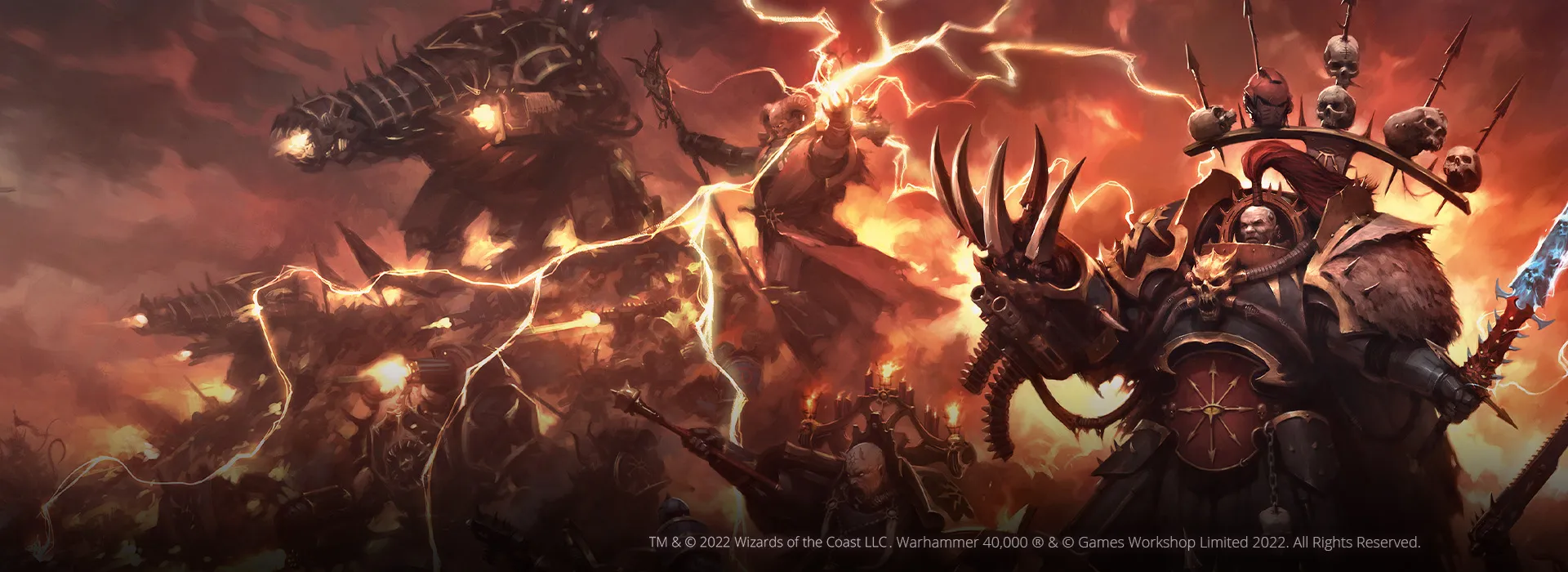
Koorland’s answer to all this was a document. Rogal Dorn had apparently left a standing order, sealed and unused for ten thousand years, called the Last Wall Protocol: if Terra was ever in mortal danger and the Imperial Fists couldn’t hold it alone, every successor Chapter descended from Dorn’s Legion was to reunite and fight as one force again. Black Templars, Crimson Fists, Fists Exemplar, Excoriators, even the secretive Iron Knights, all answering a summons that hadn’t been triggered since the Heresy itself. Not every summoned Chapter came quietly. A few captains argued the protocol had lapsed through ten thousand years of disuse, that silence that long functioned as an unwritten repeal. Koorland’s response, from what I’ve read, was to forward Dorn’s original seal and let the argument end itself. Twenty ships and about 2,800 Space Marines converged on Terra, High Marshal Bohemond of the Black Templars in the mix, and between them and the Navy they broke the siege by tearing the Attack Moon apart from the inside.
I want to sit on that number for a second, because it undersells itself if you read past it. 2,800 Space Marines was, at that moment, roughly the combined strength of six or seven full Chapters showing up as one army. It’s also nothing at all next to what the Beast’s WAAAGH! had already thrown at Terra. The Last Wall broke that siege because it hit somewhere the Orks weren’t ready to be hit, a scrappy multi-chapter force nobody on either side expected to exist a week earlier.
The High Lords’ reaction to being saved was, roughly, to be furious about it. Lord Commander Udin Macht Udo called the reunification borderline heretical and ordered everyone to disband back into their separate Chapters immediately, and also demanded the destruction of the original Imperial Fists be covered up so morale wouldn’t suffer. Koorland, to his credit, told his brothers to stand down and let the politics play out, at least for the moment.
Where the Deathwatch actually comes from
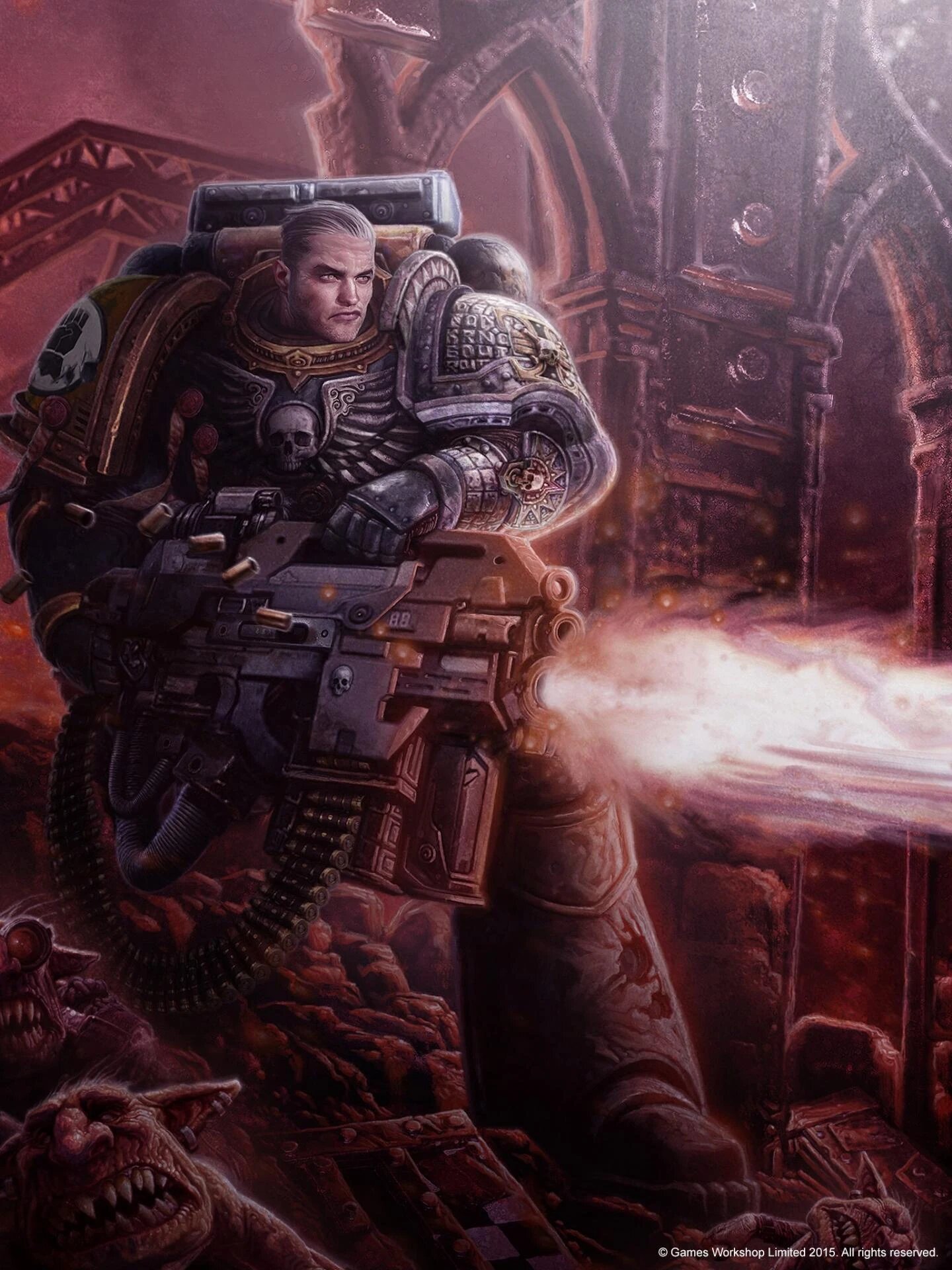
Here’s the part that always gets me. I’ve been running Imperial Fists since I got into the hobby, somewhere around 3,000 points now if you count the stuff still in primer, and for years I genuinely thought the Deathwatch was just a codex gimmick GW invented so players could mix chapter tactics in one kill team. It isn’t. It’s the direct institutional legacy of this specific war, founded in the middle of a coup Koorland staged against his own chain of command.
I mentioned that detail to Pete at my local store, who’s been slow-painting Salamanders for longer than I’ve been in the hobby and has read more Black Library than anyone else in our garage group. His response was something like “so the origin of the most disciplined multi-chapter task force in the Imperium is a Space Marine going full palace-coup on his own government,” and he wasn’t wrong.
Koorland staged a bloodless coup against the High Lords with help from Grand Master Vangorich of the Officio Assassinorum, more or less strong-armed the council into naming him Lord Commander of the Imperium, and used that authority to do something Guilliman’s Codex explicitly wasn’t supposed to allow: assemble permanent multi-chapter kill teams operating outside the normal chain of command. He needed something that could hunt Ork leadership with precision instead of throwing regiments into a meat grinder, and the political cost of admitting that was, apparently, worth it once Terra’s original Attack Moon woke back up and started dropping fresh Orks into the system a second time.
The teams that formed to deal with that got named the Deathwatch, in memory of everyone lost fighting the Beast, and they’ve been a standing institution ever since, permanent rather than a one-war improvisation. Trace it back to its actual origin point and the founding motive on record is that Koorland decided the existing chain of command was going to lose the war.
The black armor makes a different kind of sense once you know that context too. Those first kill-teams painted over their own Chapter colors specifically so nobody outside the unit could tell whose losses they were mourning, since half of them technically weren’t supposed to exist as separate detachments outside the Codex at all. It’s a small detail, and it’s the reason I can’t look at a modern Deathwatch shoulder pad, the little chapter icon tucked onto an otherwise black scheme, without thinking about why it’s there at all.
Six thrones, not one
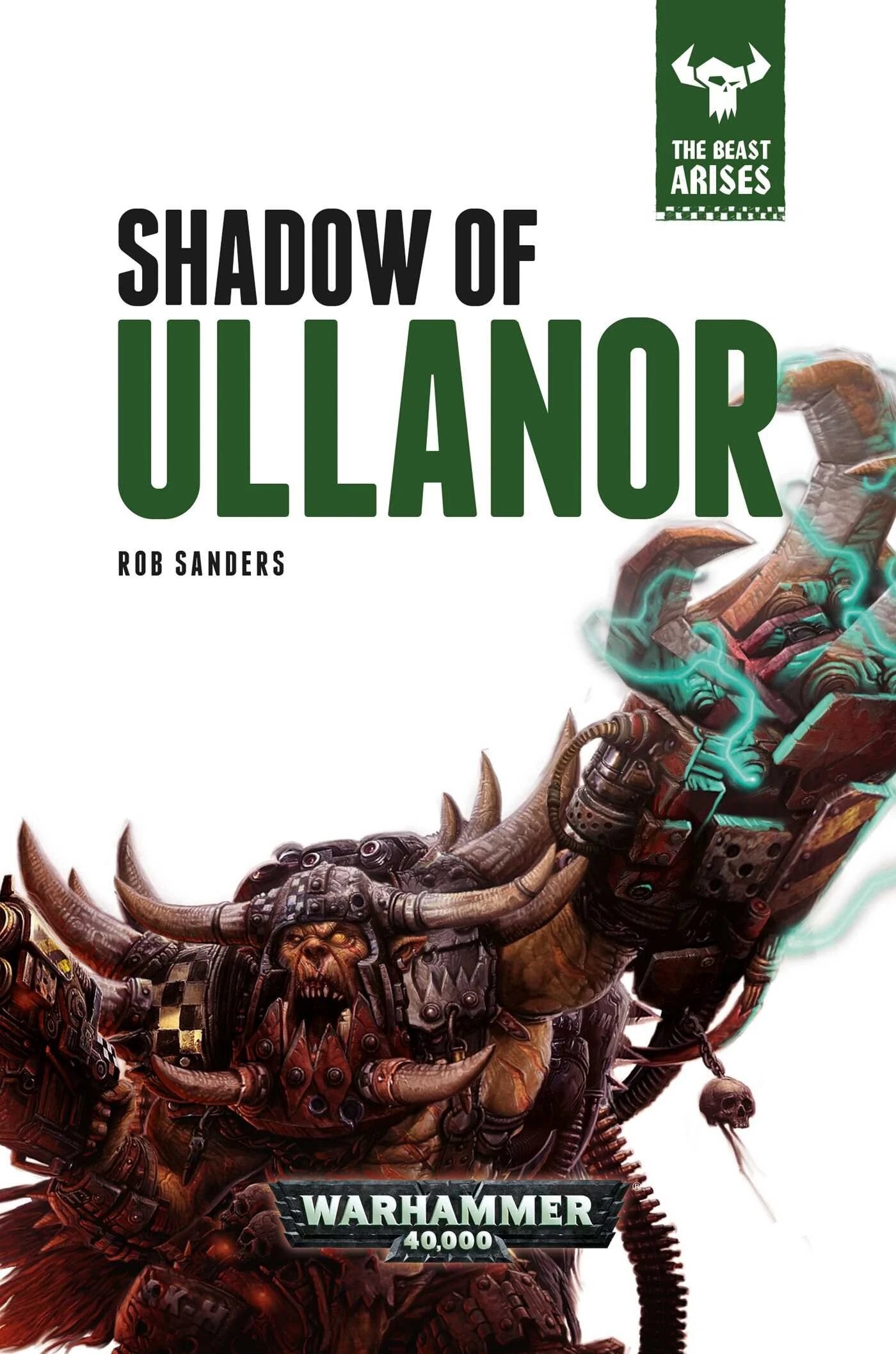
The part of this story that actually made me put the book down for a minute is what happened on the second assault on Ullanor, the Ork homeworld The Beast operated from. Koorland led a small strike team, Bohemond among them, straight into the Ork throne room to assassinate The Beast and end things cleanly. They found six thrones. Six statues. Six banners, hanging like they’d been there for years rather than however long the Beast’s WAAAGH! had actually existed. And on one of them, a warlord easily as massive as the one Vulkan had apparently already killed months earlier in a completely separate battle nobody at the time realized was preliminary.
The truth came out in that room. Six enormous Ork warlords, later called Prime-Orks, ran the entire WAAAGH! as something closer to a council than a single tyrant, and nothing in prior Ork lore accounts for cooperation like that. The best theories floating around afterward point at the Krork, the old, oversized Ork strain that supposedly predates the modern breed by tens of thousands of years, though nobody in the Imperium had proof either way. Koorland’s team killed the one on that throne and died fighting the rest, Koorland included, crushed underfoot by the same Beast Vulkan had already fought once. The chapter had technically stopped existing months before this, and now it had lost its second leader in the same war, a detail nobody back on Terra had a tidy way to explain to the public.
It took a third assault, an asteroid bombardment, a captured Ork psyker turned into a reverse-psychic weapon by the Sisters of Silence, and Chapter Master Maximus Thane pulling together a scratch Imperial Fists Chapter from a thousand volunteer veterans donated by every successor Chapter, before the last Prime-Ork went down. The Imperial Fists you can buy off the shelf today, the Chapter I’ve got a display cabinet slowly filling with, descends from that reconstruction. Not an unbroken line back to the original Legion. A patched-together replacement built out of other men’s donated veterans, put together fast enough that Thane’s own promotion papers probably weren’t finished before the parade happened.
Games Workshop’s own timeline puts the whole war at just under two years, 544 to 546.M32, which is fast by the standards of anything else that reshaped Imperial institutions this much. The Horus Heresy took a decade. This took less time than a single 40k codex cycle runs today.
The Ork technology involved never got fully explained either. Gravity beams that could crack a planet’s crust, phase-shifting hulls the size of moons, none of it fit anything Imperial tech-priests understood about Ork engineering before or since. The Adeptus Mechanicus spent decades picking through wreckage from Ullanor and Terra’s own debris field trying to reverse-engineer even a fraction of it. As far as I know from what I’ve read, they never really managed it.
What actually got left out of the story
The bit that doesn’t make it into most summaries, mine included until a paragraph ago, is the political aftermath. Vangorich, the Assassin who’d helped Koorland’s coup along, apparently decided the High Lords’ incompetence had cost enough lives and had every single one of them killed in a coordinated single strike, an event Imperial records call the Beheading. He ran Terra himself for a while afterward before being pushed out.
The other omission is the Sisters of Silence, who’d mostly vanished from the historical record after the Heresy and got rediscovered mid-war on a hidden fortress world, under siege by Orks themselves, which felt like a fairly on-the-nose bit of timing even for a war built on it. Koorland’s kill-teams broke that siege, recruited what was left of the Sisterhood, and used their psychic-null ability against the Beast’s WAAAGH field more than once afterward. It’s a whole subplot that would make a decent standalone feature on its own and mostly gets skipped in favor of the more cinematic Vulkan-versus-Beast material. I’ve read maybe a third of the actual Beast Arises novels covering all this and keep meaning to finish the series, which is a fairly normal state for my to-read pile generally.
It doesn’t come up much in current-edition fluff, even though the Deathwatch, the Last Wall, and Rogal Dorn’s sons themselves get name-dropped constantly without anyone explaining where the ideas came from. It’s also the closest real precedent the setting has for what happens if Ork tribes ever actually unite behind one leader instead of fighting each other, and the answer according to M32 was: almost everything. My local store’s Deathwatch player has no idea why his chapter tactics option exists, and honestly, before I actually sat down and read into this, neither did I.